7 Everyday Habits That Can Naturally Support Healthy Skin
Published: 27 Aug 2026
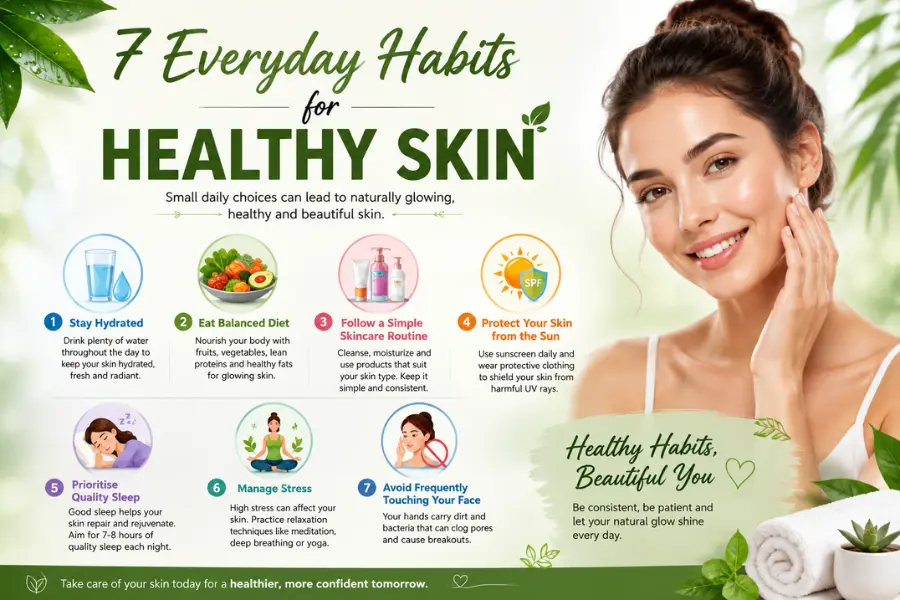
We are talking about 7 Everyday Habits That Can Naturally Support Healthy Skin. Healthy skin is often connected with expensive skincare products and complicated beauty routines. However, simple everyday habits can also suport healthy skin. The way you eat, sleep, manage stress, protect your skin, and follow a daily skincare routine can all contribute to a fresh and healthy-looking appearance.
Building good habits does not mean changing your entire lifestyle overnight. Small and consistent changes can support your overall wellness and help you maintain a simple approach to skin care. From drinking enough water to eating nutrient-rich foods, these daily practices can become part of a healthy lifestyle.

In this article, we will explore 7 everyday haits that can naturally support healthy skin and help you create a practical routine.
1. Stay Hydrated Throughout the Day
Proper hydration is an important part of a halthy lifestyle. Drinking water regularly supports many normal bodily functions and is an easy habit to add to your daily skincare routine.
Instead of waiting until you feel very thirsty, try keeping water nearby throughout the day. Your individual fluid needs may vary depending on your activity level, climate, and overall lifestyle.
You can also include water-rich foods in your meals, such as:
- Cucumber
- Watermelon
- Oranges
- Tomatoes
- Strawberries
These foods can contribute to your overall fluid intake while providing useful nutrients. Developing a consistent hydration habit is one of the simplest ways to support healthy skin as part of your everyday wellness routine.
2. Eat a Balanced Diet
What you eat can play an important role in supporting your overall health. A balanced diet containing a variety of whole foods can provide nutrients needed for normal body functions and skin health.
Try to include different types of foods, including:
Fruits and Vegetables
Colourful fruits and vegetables provide a variety of vitamins and naturally occurring antioxidant compounds. Adding more variety to your meals can be a simple step toward a healthier lifestyle.
Protein-Rich Foods
Protein is an important nutrient for the body. Depending on your dietary preferences, you may include foods such as eggs, Fish, beans, lentils, and other protein sources in balanced meals.
Healthy Fats
Foods such as nuts, seeds, avocados, and certain types of fish can be part of a nutritious diet.
There is no need to depend on a single “miracle food.” Instead, focus on variety and balance. A nutrient-rich diet, combined with other positive habits, can help support healthy skin and overall well-being.
3. Follow a Simple and Gentle Skincare Routine
A complicated skincare routine is not always necessary. In some cases, using too many products or changing products frequently can make your routine difficult to maintain.
A simple routine can focus on a few consistent steps.
Cleanse Gently
Wash your face using a suitable gentle cleanser to remove daily dirt, oil, and buildup. Avoid harsh scrubbing, as aggressive rubbing may cause discomfort.
Moisturise When Needed
A suitable moisturiser can help keep the skin feeling comfortable and support the skin barrier.
Stay Consistent
Consistency is an important part of any skincare routine. Instead of constantly trying new products, focus on a routine that works well for your individual needs.
If you are looking for more practical ideas for achieving a fresh and radiant appearance, you can explore these natural face glow tips.
Simple and gentle skincare habits can be easier to follow every day and may help support healthy skin over time.
4. Protect Your Skin from the Sun
Sun protection is an important part of daily skin care. Spending time outdoors can be enjoyable, but excessive exposure to ultraviolet radiation can affect the skin.
You can develop simple protective habits, such as:
- Seeking shade when appropriate
- Wearing protective clothing
- Using a hat during extended outdoor activities
- Wearing sunglasses
- Using broad-spectrum sunscreen according to its directions
Many people only think about sun protection when visiting the beach. However, regular outdoor activities such as walking, commuting, or spending time outside can also involve sun exposure.
Making sun protection part of your daily routine is a practical habit that can support healthy skin and long-term skin care.
5. Prioritise Quality Sleep
Sleep is an essential part of a healthy lifestyle. During busy periods, it can be tempting to sacrifice sleep for work, entertainment, or social media. However, maintaining a consistent sleep routine can support your overall well-being.
Try these simple habits:
- Go to bed at a similar time each night
- Wake up at a consistent time
- Reduce screen time before bed
- Create a comfortable sleeping environment
- Develop a relaxing bedtime routine
Everyone’s sleep needs can vary. The goal is to create a routine that allows you to get adequate, good-quality rest.
Good sleep, proper hydration, and balanced nutrition can work together as part of an overall approach to healthy skin and wellness.
6. Manage Everyday Stress
Stress is a normal part of life, but finding healthy ways to manage it is important for overall well-being. During stressful periods, people may forget healthy habits, skip meals, sleep less, or neglect their normal skincare routine.
You do not need an elaborate wellness plan to begin managing everyday stress. Try simple activities such as:
- Taking a short walk
- Practising deep breathing
- Listening to relaxing music
- Spending time with family or friends
- Taking breaks from screens
- Enjoying a favourite hobby
- Spending time outdoors
Even a few minutes of quiet time can help you pause during a busy day.
Developing practical stress-management habits can support a balanced lifestyle. When you take care of your overall well-being, it also becomes easier to maintain routines that support healthy skin.
7. Avoid Frequently Touching or Picking at Your Face
Many people touch their faces without noticing. This can happen while working, studying, using a phone, or simply thinking.
Try becoming more aware of unnecessary face touching. Frequent rubbing may irritate the skin, while picking at blemishes can potentially cause further damage.
You can reduce this habit by:
- Keeping your hands clean
- Avoiding picking at spots or blemishes
- Keeping your phone screen clean
- Taking regular breaks while working
- Becoming aware of when you touch your face most often
Gentle care and patience are important parts of maintaining a sustainable skincare routine. Avoid excessive scrubbing or constantly using harsh treatments in an attempt to achieve quick results.
A consistent approach is often easier to maintain and can support healthy skin as part of your regular self-care routine.
How to Build These Habits Into Your Daily Routine
Trying to change everything at once can feel overwhelming. A better approach is to start with one or two small habits.
For example, you could begin by:
- Drinking water regularly throughout the day.
- Adding an extra serving of vegetables to your meals.
- Following a simple morning and evening skincare routine.
- Creating a more consistent bedtime.
- Taking short breaks to relax during busy days.
Once these habits become part of your routine, you can gradually introduce other healthy lifestyle practices.
Remember that every person’s skin is different. A routine that works for one person may not work the same way for someone else. Pay attention to your individual needs and choose habits that are realistic and sustainable.
Conclusion
Supporting healthy skin does not have to involve an expensive or complicated routine. Simple everyday choices can contribute to a balanced approach to skincare and overall wellness.
Staying hydrated, eating nutritious foods, following a gentle skincare routine, practising sun protection, prioritising quality sleep, managing stress, and avoiding unnecessary face touching are seven practical habits to consider.
The most important factor is consistency. Start with small changes that fit naturally into your lifestyle and give yourself time to develop lasting habits. When daily self-care and positive lifestyle choices become part of your routine, they can create a strong foundation for healthy skin and a naturally fresh, radiant appearance.
FAQs
Here are some frequently asked questions and answers.
Protein is an essential nutrient that supports many normal body functions. Including a variety of protein-rich foods in a balanced diet can help meet your daily nutritional needs.
Some common protein sources include:
- Eggs
- Fish
- Chicken and other lean meats
- Beans
- Lentils
- Chickpeas
- Yoghurt and other dairy products
- Nuts and seeds
- Soy-based foods
In short, including enough protein as part of a balanced diet can help support your body’s everyday nutritional needs.
There are many foods that can provide protein while also contributing other important nutrients. The best choices can depend on your dietary preferences and overall eating pattern.
You may consider including:
- Eggs for a convenient source of protein
- Fish as part of a balanced diet
- Beans and lentils for plant-based protein
- Chicken or lean meat, if you eat meat
- Greek yoghurt or milk
- Nuts and seeds
- Tofu and other soy products
- Chickpeas in salads, soups, or main meals
Overall, choosing a variety of protein-rich foods can make your meals both nutritious and satisfying.
Adding protein to your meals does not have to be complicated. Try including a protein source at breakfast, lunch, dinner, or snacks according to your individual dietary needs.
Simple ideas include:
- Add eggs to your breakfast
- Mix beans or lentils into soups and curries
- Include fish or chicken with your main meal
- Choose yoghurt as a snack
- Add nuts or seeds to oatmeal or salads
- Use chickpeas in sandwiches or salads
- Try tofu in vegetable dishes
- Combine different plant-based protein sources in meals
With a few simple changes, adding protein-rich foods to your daily meals can become an easy part of your routine.
Yes, vegetarians can obtain protein from a wide variety of plant-based foods. Eating different protein sources throughout the day can help create a balanced and varied diet.
Good vegetarian options include:
- Lentils
- Beans
- Chickpeas
- Tofu
- Tempeh
- Soybeans
- Yoghurt and dairy products, if included in the diet
- Eggs, if included in the diet
- Nuts
- Seeds
Therefore, vegetarians can enjoy plenty of nutritious protein sources by including a variety of plant-based foods in their diet.
Protein is only one part of a healthy and balanced eating pattern. It is helpful to choose a variety of nutritious foods and consider your overall diet rather than focusing on only one nutrient.
Keep these points in mind:
Consider individual nutritional needs and preferences
Include a variety of protein sources
Choose foods that suit your dietary preferences
Add fruits and vegetables to your meals
Include whole grains where appropriate
Pay attention to portion sizes
Limit heavily processed foods when possible
Stay hydrated throughout the day
Ultimately, a balanced approach that includes protein along with other nutritious foods is an important part of healthy eating.
In short, protein-rich foods can be an important part of a balanced and nutritious diet. By including a variety of sources such as eggs, fish, beans, lentils, dairy products, nuts, and seeds, you can create healthy and satisfying meals that suit your dietary preferences and lifestyle.






- Be Respectful
- Stay Relevant
- Stay Positive
- True Feedback
- Encourage Discussion
- Avoid Spamming
- No Fake News
- Don't Copy-Paste
- No Personal Attacks
- Be Respectful
- Stay Relevant
- Stay Positive
- True Feedback
- Encourage Discussion
- Avoid Spamming
- No Fake News
- Don't Copy-Paste
- No Personal Attacks
