5 Essential Skincare Tips for a Simple Daily Routine
Published: 30 Aug 2026
Healthy-looking skin does not always require a complicated routine or a large
collection of beauty products. In fact, a simple and consistent skincare routine can be
easier to maintain and can help you take better care of your skin every day. The key
is to understand the basic steps, choose products according to your skin’s needs,
and avoid making your routine unnecessarily complicated.
Whether you are starting skincare for the first time or looking for a simpler routine,
these practical tips can help you build a daily skincare habit that fits easily into your
lifestyle.
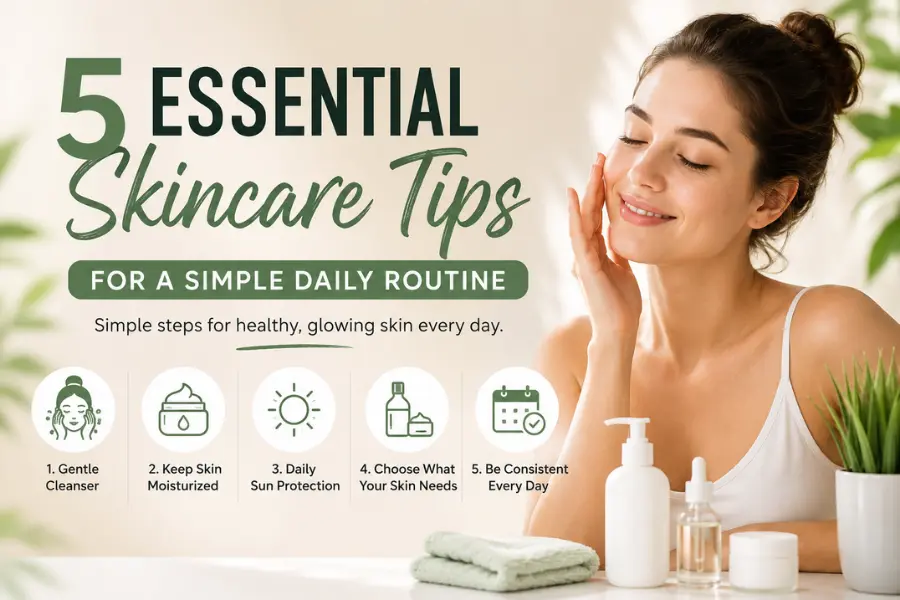
5 Essential Skincare Tips
The 5 Essential Skincare Tips can help you build a simple daily routine without using too many products. Good skincare is not about having a long routine; it is about choosing the right habits and following them regularly. These simple tips focus on keeping your skin clean, moisturised, protected, and healthy while helping you care for your skin according to its needs.
1. Start With a Gentle Cleanser
Cleansing is one of the most important steps in a basic skincare routine. Throughout
the day, the skin can collect sweat, excess oil, dust, makeup, and other impurities. A
suitable cleanser can help remove these without making your routine complicated.
Choose a gentle cleanser that suits your skin type. If your skin tends to feel dry or
tight after washing, look for a gentle formula that does not leave the skin feeling
stripped. If your skin becomes oily quickly, a cleanser designed for combination or
oily skin may be more suitable.
Avoid washing your face excessively. Over-cleansing can leave the skin feeling
uncomfortable and may interfere with its natural moisture balance. For most people,
cleansing in the morning and evening can be a simple starting point.
2. Keep Your Skin Properly Moisturized
Moisturizing is another essential part of a simple skincare routine. Even people with
oily or combination skin can benefit from using a suitable moisturizer. The goal is to
help maintain the skin’s moisture and keep it feeling comfortable.
When choosing a moisturizer, consider your skin type and personal preferences.
Lightweight gel or lotion textures may feel comfortable on oily or combination skin,
while richer creams can be useful for people who prefer a more nourishing texture.
Apply moisturizer after cleansing while the skin is slightly damp. This can make the
routine quick and easy to follow. Most importantly, choose a product that you enjoy
using regularly because consistency is often more practical than having a
complicated routine with many products.
3. Make Sun Protection a Daily Habit
Sun protection is an important part of daytime skincare. Regular exposure to
ultraviolet radiation can contribute to premature visible skin aging and other skin
concerns. Using a broad-spectrum sunscreen as part of your morning routine is
therefore a useful daily habit.
Choose a sunscreen that provides broad-spectrum protection and suits your skin
type. If you spend significant time outdoors, follow the product instructions regarding
application and reapplication.
Sunscreen should generally be the final step of your morning skincare routine before
makeup, if you wear it. Remember that sun protection is not only for sunny summer
days. UV exposure can occur throughout the year, so making sunscreen a regular
habit can help support long-term skin care.
4. Choose Products According to Your Skin’s Needs
More skincare products do not necessarily mean a better routine. Using too many
products at once can make it difficult to understand what works for your skin.
Before adding a new product, consider what you actually want to address. Your goal
might be hydration, a more comfortable skin feel, basic cleansing, or maintaining a
consistent routine.
It is also useful to introduce new products gradually rather than changing everything
at the same time. This makes it easier to notice how your skin responds to each
product.
For people who are unsure about which products to choose, a professional skincare
or pharmacy team can be a useful source of general product guidance. For example,
a trusted parapharmacie in Temara can help customers explore skincare and personal-care options according to their needs.
5. Keep Your Routine Simple and Consistent
One of the biggest skincare mistakes is creating a routine that is so complicated that
it becomes difficult to maintain. A basic routine can include cleansing, moisturizing,
and daytime sun protection. Additional products can be introduced only when they
have a clear purpose.
A simple morning routine might look like this:
Cleanser → Moisturizer → Sunscreen
An evening routine can be equally simple:
Cleanser → Moisturizer
Depending on your individual skincare goals, you may choose to add other products.
However, adding products one at a time can make your routine easier to manage.
Consistency is also important. Skincare products usually need regular use according
to their directions rather than occasional application. Building a routine that takes
only a few minutes can make it easier to continue over the long term.
5 at-home skincare tips to really improve your skin! | MY BEST SKIN EVER!

Pay Attention to How Your Skin Feels
Your skin can change with weather, lifestyle, age, stress, and other factors. A routine
that feels comfortable during one season may need small adjustments during
another.
Pay attention to signs such as excessive dryness, discomfort, or irritation. If a
product causes persistent irritation or an unexpected reaction, stop using it and
consider speaking with a qualified healthcare professional or dermatologist.
It is also important to remember that skincare products are not a substitute for
medical care. If you have a persistent or concerning skin condition, professional
advice is the safest approach.
Conclusion
A good skincare routine does not have to be complicated. Starting with a gentle
cleanser, maintaining moisture, using daily sun protection, selecting products
according to your needs, and staying consistent can create a practical foundation for
everyday skincare.
Instead of buying many products at once, focus on understanding your skin and
creating habits that you can realistically maintain. A simple routine can be easier to
follow, easier to adjust, and more enjoyable as part of your everyday self-care.
The most important thing is to give your skincare routine time and consistency while
choosing products carefully. With a straightforward approach, taking care of your
skin can become a simple and sustainable part of your daily lifestyle.
FAQs
Here are some Frequently Asked Questions About 5 Essential Skincare Tips:
The 5 Essential Skincare Tips focus on simple habits that can help keep your skin clean, hydrated, protected, and healthy. They include:
- Cleanse gently: Use a gentle cleanser to remove dirt, oil, sweat, and impurities without making your skin feel tight.
- Keep your skin moisturised: Apply a suitable moisturiser to help maintain hydration and support the skin barrier.
- Use daily sun protection: Apply broad-spectrum sunscreen during the day to help protect your skin from harmful UV rays.
- Choose suitable products: Select skincare products based on your skin type, concerns, and needs.
- Stay consistent: Follow your routine regularly instead of changing products or routines too often.
These simple habits can make your skincare routine easier to follow and more effective over time. Good skincare starts with simple steps done consistently.
A basic skincare routine is usually best followed every morning and evening, although some products are used only once a day. A simple routine can include:
- Morning: Gentle cleanser, moisturiser, and sunscreen.
- Evening: Gentle cleanser and moisturiser.
- Treatment products: Use according to the product instructions and your skin’s needs.
- Sunscreen: Reapply when needed, especially when spending extended time outdoors.
- Consistency: Give your routine time to work instead of changing products frequently.
Following a simple routine regularly can be easier than using many products occasionally. Consistency is one of the most important parts of good daily skincare.
Choosing products for your skin type and concerns can help you build a routine that feels comfortable and works for your needs. Consider these points:
- Dry skin: Look for hydrating and moisturising products.
- Oily skin: Choose lightweight, non-comedogenic formulas where appropriate.
- Sensitive skin: Prefer gentle, fragrance-free products when possible.
- Combination skin: Use lightweight products while giving extra moisture to dry areas.
- Specific concerns: Choose products designed for concerns such as dryness, uneven tone, or breakouts.
- Patch testing: Test a new product on a small area first if you are concerned about irritation.
No single skincare product works perfectly for everyone. The right products should suit your skin rather than simply following trends.
Daily sun protection is an important part of a healthy skincare routine because UV exposure can damage the skin. Adding sunscreen to your morning routine can help:
- Protect skin from harmful UV rays.
- Reduce the risk of sunburn.
- Help prevent premature signs of skin aging.
- Reduce the chance of developing uneven pigmentation from sun exposure.
- Support your overall skincare routine.
Choose a broad-spectrum sunscreen and apply it as directed. Reapply when needed, particularly during prolonged outdoor exposure. Daily sun protection is a simple habit that can make a big difference to long-term skin care.
Yes, a simple and consistent skincare routine can help support healthier-looking skin. You do not always need a large collection of products. Focus on the basics:
- Cleanse: Keep your skin clean without over-washing.
- Moisturise: Help maintain hydration and support the skin barrier.
- Protect: Use sunscreen during the day.
- Choose wisely: Select products that match your skin’s needs.
- Stay consistent: Give your routine enough time before deciding whether it works.
- Listen to your skin: Reduce or stop products that cause persistent irritation.
Simple skincare is often easier to maintain, especially for beginners. Healthy-looking skin comes from good habits, patience, and consistent daily care.






- Be Respectful
- Stay Relevant
- Stay Positive
- True Feedback
- Encourage Discussion
- Avoid Spamming
- No Fake News
- Don't Copy-Paste
- No Personal Attacks
- Be Respectful
- Stay Relevant
- Stay Positive
- True Feedback
- Encourage Discussion
- Avoid Spamming
- No Fake News
- Don't Copy-Paste
- No Personal Attacks
