Can I Use Retinol Under Eyes? Benefits, Risks, and Safe Application Tips
Published: 27 Jun 2026
Can I Use Retinol Under Eyes? This is one of the most common questions people ask when looking for effective anti-aging skincare. Retinol, a form of vitamin A, is well known for boosting skin cell turnover and collagen production, helping reduce fine lines, wrinkles, and uneven skin texture.
Many people consider using retinol under the eyes because the delicate eye area is often the first to develop under-eye wrinkles, crow’s feet, and signs of aging. While retinol offers impressive benefits, the skin around the eyes is thinner and more sensitive, making proper application essential.
So, is retinol safe under the eyes? The short answer is yes, when used correctly. Choosing the right product, starting with a low concentration, and following the correct application method can help minimize retinol irritation around the eyes, dryness, and redness.
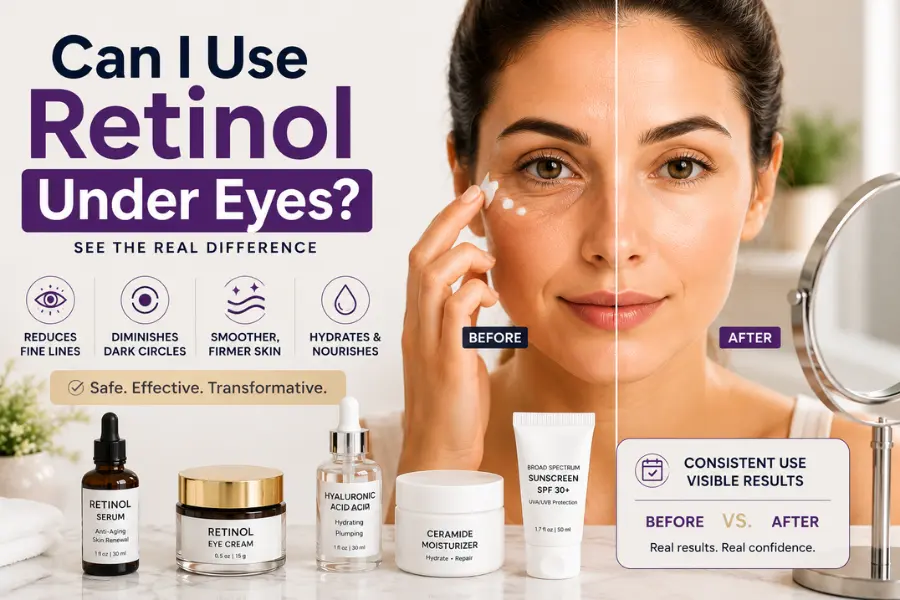
In this guide, you’ll learn whether you can use retinol under your eyes, its benefits and potential side effects, how to apply it safely, and expert tips for achieving smoother, younger-looking skin.
What Is Retinol and How Does It Work?
Retinol is one of the most researched and effective skincare ingredients for improving the appearance of aging skin. As a derivative of vitamin A, it helps accelerate skin cell turnover, encouraging old skin cells to shed while new, healthier cells rise to the surface. This process can reduce the appearance of fine lines, wrinkles, uneven skin tone, and rough texture with consistent use.
If you’re wondering, Can I Use Retinol Under Eyes, understanding how retinol works is the first step. Because the under-eye area has thinner skin than the rest of the face, choosing the right product and using it correctly is essential for achieving results while minimizing irritation.
Understanding Retinol and Other Retinoids
Retinoids are a family of vitamin A derivatives used in skincare to improve skin renewal and reduce visible signs of aging. While all retinoids work similarly, they differ in strength, how quickly they produce results, and their likelihood of causing irritation.
What Is Retinol?
Retinol is an over-the-counter form of vitamin A commonly found in serums, creams, and retinol eye cream products. After application, the skin converts retinol into its active form, retinoic acid, which stimulates collagen production and increases skin cell turnover. Although this conversion process makes retinol gentler than prescription retinoids, it also means results appear gradually over several weeks or months.
Difference Between Retinol, Retinaldehyde, and Retinoids
Although these terms are often used interchangeably, they have important differences:
| Ingredient | Strength | Availability | Best For |
| Retinol | Moderate | Over the counter | Beginners and long-term anti-aging care |
| Retinaldehyde (Retinal) | Stronger than retinol | Over the counter | Faster results with moderate irritation |
| Prescription Retinoids (such as tretinoin) | Strongest | Prescription only | Advanced signs of aging and acne treatment |
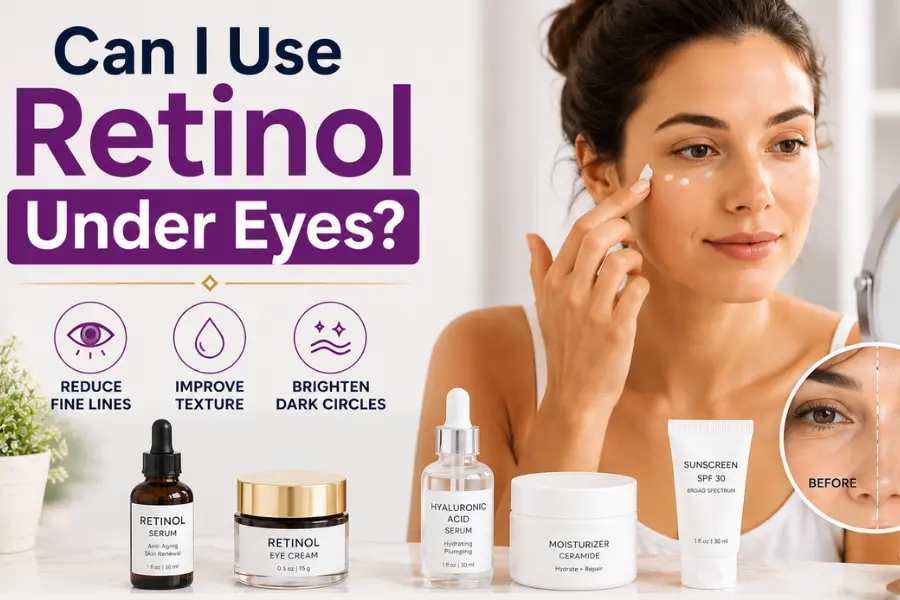
Retinaldehyde requires fewer conversion steps than retinol, allowing it to work more efficiently. Prescription retinoids are already close to their active form, making them more potent but also more likely to cause retinol irritation around the eyes, peeling, and dryness if not used correctly.
How Vitamin A Skincare Products Promote Skin Renewal
Vitamin A skincare products encourage the skin to replace damaged surface cells with fresh, healthy ones. As skin renewal speeds up, the complexion often becomes brighter, smoother, and more even. Regular use can also help reduce the appearance of sun damage, age spots, and rough patches while improving overall skin quality.
This renewal process is especially valuable for the delicate under-eye area, where aging signs such as under-eye wrinkles and crow’s feet become more noticeable over time.
The Role of Skin Cell Turnover and Collagen Production
One of the biggest reasons retinol is so effective is its ability to increase skin cell turnover while stimulating collagen production. Collagen is the structural protein responsible for keeping skin firm, smooth, and elastic. As collagen naturally declines with age, the skin begins to sag, and wrinkles become more visible.
By encouraging new collagen formation and replacing older skin cells, retinol under the eyes can gradually soften fine lines, improve skin firmness, and create a healthier-looking complexion. Consistent use, combined with daily sunscreen, delivers the best long-term results.
Is Retinol Safe Around Your Eyes? Eye Doctor Explains

Why Retinol Is Used in Anti-Aging Skincare
Retinol has become a gold standard in anti-aging skincare because it targets multiple signs of aging at once instead of addressing just one concern. Dermatologists frequently recommend it for preventing and reducing fine lines, improving skin texture, fading discoloration, and supporting healthier-looking skin over time.
Retinol Anti-Aging Benefits
The primary reason people use retinol is its ability to improve visible signs of aging. Regular use may provide several long-term benefits, including:
- Increased collagen production for firmer skin.
- Reduced appearance of fine lines and wrinkles.
- Improved skin cell turnover for fresher-looking skin.
- Smoother and more even skin tone.
- Better overall skin texture and elasticity.
- Reduced the appearance of sun damage and age spots.
While results are gradual, consistency often leads to noticeable improvements after several weeks of proper use.
Retinol for Smoother Skin and Improved Skin Texture
By removing dull, damaged surface cells and encouraging healthy new cell growth, retinol helps refine skin texture. Many users notice smoother skin, smaller-looking pores, and a brighter complexion after incorporating retinol into their skincare routine.
These improvements also enhance the effectiveness of moisturizers and other skincare products by allowing them to absorb more evenly into renewed skin.
Retinol for Youthful Eyes and Wrinkle Reduction
The skin around the eyes naturally loses collagen faster than other areas of the face, making crow’s feet, under-eye wrinkles, and fine lines more noticeable with age. When applied correctly, retinol under the eyes can help improve skin firmness, soften wrinkles, and create a smoother, more youthful appearance.
However, because this area is especially delicate, it’s important to use a gentle retinol eye cream or a low-strength retinol product designed for sensitive skin. If you’re asking, Can I Use Retinol Under Eyes, the answer is yes, but safe application, gradual introduction, and proper moisturization are key to minimizing irritation while maximizing results.
Can I Use Retinol Under Eyes?
The answer to Can I Use Retinol Under Eyes is yes, but it should be done with care. The skin beneath the eyes is much thinner and more delicate than the rest of the face, making it more prone to dryness and irritation. When used correctly, retinol under the eyes can help reduce under-eye wrinkles, crow’s feet, and other visible signs of aging by boosting collagen production and increasing skin cell turnover.
For beginners, it’s best to start with a low-strength retinol product or a specially formulated retinol eye cream. Apply it only a few nights per week, follow with a hydrating moisturizer, and always wear broad-spectrum sunscreen during the day, as retinol can make the skin more sensitive to sunlight.
Is Retinol Safe Under the Eyes?
Yes, retinol is safe under the eyes for most people when used properly. Many dermatologists recommend retinol for improving fine lines, wrinkles, and crow’s feet, provided users choose the right concentration and avoid overusing the product. Eye creams containing retinol are often formulated with soothing ingredients like hyaluronic acid, ceramides, and peptides to reduce the risk of irritation.
Experts generally recommend introducing retinol gradually. Applying it once or twice a week at first allows the skin to adjust before increasing frequency. If you experience persistent redness, burning, or peeling, reduce usage or consult a dermatologist.
Why the Under Eye Area Is Delicate
The under-eye area has some of the thinnest skin on the body and contains fewer oil glands than the rest of the face. As a result, it loses moisture more quickly and is more susceptible to environmental damage. This is why signs of aging, such as under-eye wrinkles, fine lines, and dark circles, often appear here first.
Because the skin is so delicate, applying too much retinol or using a product that is too strong can weaken the skin barrier and lead to retinol irritation around the eyes, dryness, flaking, or redness. Gentle application and proper hydration are essential for keeping this area healthy.
Benefits Versus Risks
Using retinol under the eyes offers several proven benefits, but it’s important to understand the potential risks before adding it to your skincare routine.
Benefits
- Helps reduce under-eye wrinkles and crow’s feet.
- Stimulates collagen production for firmer-looking skin.
- Increases skin cell turnover for smoother texture.
- Improves the appearance of uneven skin tone.
- Supports long-term anti-aging skincare goals.
Potential Risks
- Dryness and flaking.
- Temporary redness or mild burning.
- Increased skin sensitivity.
- Retinol irritation around the eyes if overused.
- Weakened skin barrier when applied too frequently or in excessive amounts.
Most side effects are temporary and can often be avoided by using a gentle formula, applying only a small amount, and moisturizing regularly.
Can You Put Retinol Under Your Eyes?
Yes, you can put retinol under your eyes, but placement and technique matter. A pea-sized amount is usually enough for the entire face, including the eye area. Gently dab the product along the orbital bone (the bone surrounding the eye) instead of applying it directly against the lower lash line or on the eyelids unless the product specifically states it is safe for those areas.
Choosing a dedicated retinol eye cream can be a safer option for beginners because these products are designed to be gentler on sensitive skin.
Areas Where Retinol Can Be Applied Safely
For most people, retinol can be safely applied to the following areas:
- The under-eye area along the orbital bone.
- The outer corners of the eyes where crow’s feet develop.
- Around the brow bone, avoiding direct contact with the eyes.
- The forehead, cheeks, chin, and neck, following the product instructions.
Avoid applying retinol:
- Directly on the eyelids unless specifically instructed by the product.
- Too close to the lash line.
- Inside the eyes or on irritated or broken skin.
Common Mistakes People Make When Using Retinol Around the Eyes
Many cases of retinol irritation around the eyes result from improper use rather than the ingredient itself. Avoid these common mistakes:
- Using too much retinol instead of a thin layer.
- Starting with a high-strength formula instead of a beginner-friendly concentration.
- Applying retinol every night before the skin has adjusted.
- Skipping moisturizer and leaving the skin dehydrated.
- Forgetting to apply broad-spectrum sunscreen during the day.
- Combining retinol with strong exfoliating acids or other potentially irritating active ingredients without guidance.
- Applying the product too close to the eyes or directly on the eyelids when it is not intended for those areas.
By following the correct application method and introducing retinol gradually, most people can enjoy its anti-aging benefits while minimizing the risk of irritation and keeping the delicate eye area healthy.
Benefits of Using Retinol Under Eyes
One of the main reasons people ask Can I Use Retinol Under Eyes is because they want to reduce visible signs of aging and improve the appearance of tired-looking eyes. When used correctly, retinol under the eyes can help smooth wrinkles, support firmer skin, and promote a more youthful appearance over time.
Unlike quick-fix treatments that only provide temporary results, retinol works at a deeper level by encouraging skin cell turnover and boosting collagen production. These processes help improve the overall quality and resilience of the delicate under-eye area.
Retinol for Under Eye Wrinkles
Under-eye wrinkles develop naturally as collagen and elastin levels decline with age. Sun exposure, repetitive facial expressions, and lifestyle factors can accelerate this process, making fine lines more noticeable over time.
How Retinol Helps Reduce Under-Eye Wrinkles
Retinol helps reduce the appearance of under-eye wrinkles by stimulating collagen production and encouraging the skin to generate new, healthy cells. Increased collagen can make the skin appear firmer and smoother, while improved skin cell turnover helps refine texture and reduce the visibility of aging signs.
With consistent use, many people notice:
- Softer fine lines.
- Improved skin firmness.
- Smoother under-eye texture.
- A more refreshed and youthful appearance.
Results typically develop gradually, with noticeable improvements often appearing after several weeks or months of regular use.
Retinol for Crow’s Feet and Fine Lines Around Eyes
Crow’s feet are among the most common signs of aging around the eyes. These small wrinkles form at the outer corners of the eyes due to repeated facial expressions such as smiling and squinting.
Because retinol encourages collagen production, it can help soften the appearance of crow’s feet and fine lines around the eyes over time. While it may not completely eliminate deep wrinkles, regular use can make them less noticeable and help prevent new lines from becoming more prominent.
Can Retinol Help Dark Circles?
Many people use retinol under their eyes, hoping to improve the appearance of dark circles. However, the effectiveness of retinol depends largely on the underlying cause of the discoloration.
Understanding Different Causes of Dark Circles
Not all dark circles are the same. Common causes include:
- Genetics and naturally thinner skin.
- Aging-related collagen loss.
- Visible blood vessels beneath the skin.
- Hyperpigmentation caused by excess melanin.
- Lack of sleep and fatigue.
- Allergies and chronic eye rubbing.
- Dehydration and poor lifestyle habits.
Identifying the cause is important because some types of dark circles respond better to retinol than others.
Does Retinol Work for Dark Circles?
Retinol may help improve certain types of dark circles, especially those related to aging and thinning skin. By stimulating collagen production, retinol can gradually thicken the skin and make underlying blood vessels less visible. It may also help improve skin texture and support a brighter, more even-looking under-eye area.
However, retinol is generally less effective for:
- Genetic dark circles.
- Dark circles caused by allergies.
- Temporary discoloration from lack of sleep.
For these concerns, additional treatments or lifestyle changes may be needed.
Realistic Expectations
While retinol is a powerful skincare ingredient, it is not a miracle cure. Improvements in under-eye wrinkles, crow’s feet, and some forms of dark circles usually take time and require consistent use.
Most users can realistically expect:
- Gradual softening of fine lines.
- Improved skin smoothness.
- Better firmness and elasticity.
- A brighter, healthier-looking eye area.
Patience is essential, as significant results often take several weeks to become visible.
Retinol for Skin Renewal and Collagen Production
One of the most valuable benefits of retinol under the eyes is its ability to support both skin renewal and collagen production. These processes play a crucial role in maintaining youthful, healthy-looking skin.
As we age, the skin naturally produces less collagen and renews itself more slowly. This can lead to wrinkles, sagging, and a dull appearance. Retinol helps counteract these effects by encouraging the skin to regenerate more efficiently.
How Collagen Affects the Under-Eye Area
Collagen is the protein responsible for providing structure, firmness, and elasticity to the skin. In the delicate under-eye area, declining collagen levels can make the skin thinner and more prone to under-eye wrinkles, crow’s feet, and visible signs of aging.
By supporting new collagen formation, retinol helps strengthen the skin’s structure and improve its overall appearance. This can lead to smoother, firmer-looking skin and reduced visibility of fine lines over time.
Long-Term Anti-Aging Benefits
The greatest strength of retinol is its ability to deliver cumulative results. With consistent use, it can help:
- Reduce visible signs of aging.
- Improve skin texture and smoothness.
- Support ongoing collagen production.
- Enhance skin firmness and elasticity.
- Minimize the appearance of under-eye wrinkles and crow’s feet.
- Promote healthier, more resilient skin.
For those wondering Can I Use Retinol Under Eyes, the long-term benefits are one of the strongest reasons why retinol remains a trusted ingredient in anti-aging skincare. When used properly, it can help maintain a smoother, firmer, and more youthful-looking eye area for years to come.
Risks and Side Effects of Retinol Around the Eyes
While retinol under the eyes offers impressive anti-aging benefits, it’s important to understand the potential risks before adding it to your routine. Because the under-eye area has thinner, more delicate skin than the rest of the face, it is more vulnerable to irritation, dryness, and sensitivity.
If you’re wondering, Can I Use Retinol Under Eyes, the answer is yes—but using the wrong product, applying too much, or increasing usage too quickly can lead to unwanted side effects. Fortunately, most reactions are temporary and can be minimized by introducing retinol gradually, moisturizing regularly, and protecting your skin with broad-spectrum sunscreen.
Retinol Irritation Around Eyes
One of the most common side effects is retinol irritation around the eyes. Mild irritation is often part of the skin’s adjustment period, especially for beginners or those with sensitive skin.
Why Irritation Occurs
Retinol speeds up skin cell turnover, causing old skin cells to shed more quickly. While this process improves skin over time, it can temporarily weaken the skin barrier as it adjusts to the ingredient.
Several factors can increase the likelihood of irritation, including:
- Starting with a high-strength retinol product.
- Applying retinol too frequently.
- Using excessive amounts.
- Combining retinol with strong exfoliating acids or harsh skincare products.
- Having naturally sensitive or dry skin.
Introducing retinol slowly allows the skin to build tolerance and reduces the risk of irritation.
Retinol Burning Under Eyes
Some users experience a mild stinging or burning under the eyes during the first few applications. This sensation is usually temporary and often improves as the skin adapts.
However, intense burning, severe discomfort, or persistent pain is not considered normal. If these symptoms occur, stop using the product immediately and allow your skin to recover before consulting a dermatologist if needed.
Under Eye Redness From Retinol
Another common reaction is under-eye redness from retinol. Mild redness often appears during the first few weeks as the skin adjusts to increased skin cell turnover.
To reduce redness:
- Use retinol only two or three nights per week when starting.
- Apply a fragrance-free moisturizer after retinol.
- Avoid rubbing or scrubbing the eye area.
- Wear broad-spectrum sunscreen every morning.
If redness becomes severe or lasts for several weeks, discontinue use and seek professional advice.
Dry Skin Under Eyes From Retinol
Because the eye area contains fewer oil glands, dry skin under the eyes from retinol is a common concern. Increased cell turnover can temporarily reduce the skin’s ability to retain moisture until it adapts.
Fortunately, dryness usually improves with consistent moisturizing and a gradual introduction to retinol.
Causes of Dryness and Flaking
Several factors contribute to dryness, including:
- Accelerated skin cell turnover.
- A temporarily weakened skin barrier.
- Overuse of retinol.
- Lack of moisturizing ingredients such as hyaluronic acid and ceramides.
- Cold weather or low humidity.
Using a hydrating eye cream alongside retinol can help maintain moisture and improve comfort.
Retinol Peeling Under Eyes
Retinol peeling under the eyes often occurs during the first few weeks of treatment. This peeling is usually a sign that old skin cells are being replaced with healthier ones.
Although light peeling can be expected, excessive peeling may indicate that the product is too strong or is being used too often. Reducing application frequency and increasing hydration can help the skin recover more comfortably.
Retinol Causing Flaky Skin
If retinol-causing flaky skin becomes noticeable, avoid picking or rubbing the affected area. Instead:
- Apply a nourishing moisturizer containing ceramides.
- Reduce retinol use temporarily.
- Avoid additional exfoliating products until the skin heals.
- Resume retinol gradually once the skin barrier has recovered.
Most cases of flaking improve within a few weeks as the skin becomes more tolerant.
Can Retinol Damage the Under-Eye Area?
When used correctly, retinol does not permanently damage the under-eye area. However, repeated misuse can temporarily weaken the skin barrier, leading to persistent irritation and discomfort.
The key to preventing problems is using the appropriate concentration, applying only a small amount, and allowing your skin time to adjust.
Signs of Overuse
Using retinol under the eyes too often or applying too much can result in:
- Persistent redness.
- Severe dryness.
- Burning or stinging.
- Excessive peeling.
- Increased skin sensitivity.
- Tight, uncomfortable skin.
These symptoms usually indicate that your skin barrier needs time to recover.
Eye Irritation From Retinol
Eye irritation from retinol can occur if the product migrates into the eyes through blinking, sweating, or rubbing the face. This may cause watering, burning, or temporary discomfort.
To reduce this risk:
- Apply retinol along the orbital bone rather than directly next to the lash line.
- Allow the product to absorb before lying down.
- Wash your hands after application.
- Avoid rubbing your eyes.
If retinol accidentally enters the eyes, rinse thoroughly with cool water. Seek medical advice if irritation persists.
Retinol Sensitivity Around Eyes
Some individuals naturally experience greater retinol sensitivity around the eyes, particularly those with:
- Sensitive skin.
- Eczema or rosacea.
- A weakened skin barrier.
- Dry skin conditions.
In these cases, choosing a gentle retinol eye cream, using lower concentrations, or applying retinol less frequently may help reduce irritation.
Overusing Retinol Under Eyes
Overusing retinol under the eyes is one of the most common mistakes beginners make. More product does not produce faster results. Instead, it increases the risk of irritation without improving effectiveness.
To avoid overuse:
- Start with a low-strength retinol.
- Apply only a pea-sized amount for the entire face.
- Use retinol one to three nights per week initially.
- Follow with a moisturizer to support the skin barrier.
- Increase frequency only after your skin has adjusted.
By using retinol under the eyes correctly and listening to your skin, you can enjoy its long-term anti-aging benefits while minimizing dryness, irritation, and other unwanted side effects.
How to Apply Retinol Under Eyes Safely
If you’re asking Can I Use Retinol Under Eyes, knowing the correct application method is just as important as choosing the right product. Since the under-eye area is delicate and more prone to irritation, applying retinol under the eyes carefully can help you enjoy its anti-aging benefits while minimizing dryness, redness, and peeling.
The key is to start slowly, use only a small amount, and support your skin with moisturizing ingredients. Consistency and patience are more effective than using large amounts of retinol.
Step-by-Step Application Guide
Following the correct routine helps reduce the risk of retinol irritation around the eyes and allows your skin to adapt comfortably.
How to Apply Retinol Under Eyes Safely
Follow these simple steps for safe application:
- Cleanse your face with a gentle, fragrance-free cleanser and pat your skin dry.
- Wait until your skin is completely dry, as applying retinol to damp skin can increase irritation.
- Use only a pea-sized amount of retinol for your entire face.
- Gently dab a tiny portion along the orbital bone beneath each eye rather than directly under the lash line.
- Avoid applying retinol on the eyelids or too close to the eyes unless the product specifically states it is safe.
- Allow the product to absorb for a few minutes before applying moisturizer.
- Finish with a hydrating eye cream or moisturizer to protect the skin barrier.
This method allows retinol under the eyes to work effectively while reducing the chances of burning or excessive dryness.
Choosing the Correct Amount
One of the biggest mistakes people make is using too much retinol. A pea-sized amount is generally enough for the entire face, including the eye area. Applying more product does not produce faster results. It only increases the likelihood of retinol irritation around the eyes, peeling, and redness.
A thin, even layer is all that’s needed. Consistent application over time is far more effective than using excessive amounts.
Applying Moisturizer After Retinol
Using a moisturizer after retinol is highly recommended, especially around the eyes. Moisturizers containing ceramides, hyaluronic acid, glycerin, or peptides help restore hydration and strengthen the skin barrier.
If you have sensitive skin, you can also try the “retinol sandwich method.” Apply a light layer of moisturizer before retinol, then another layer afterward. This technique helps reduce irritation while allowing retinol under the eyes to remain effective.
How Often Should I Use Retinol Under Eyes?
The ideal frequency depends on your skin type, the strength of the product, and your experience with retinol. Starting slowly gives your skin time to build tolerance and lowers the risk of irritation.
Beginner Schedules
If you’re new to retinol under the eyes, follow this beginner-friendly schedule:
- Weeks 1–2: Apply once or twice per week.
- Weeks 3–4: Increase to two or three nights per week if your skin is comfortable.
- After one month, gradually increase to every other night if there are no signs of irritation.
- Long-Term: Many people tolerate nightly use, but only after their skin has fully adjusted.
There’s no need to rush. Slow and consistent use usually produces the best long-term results.
Gradual Introduction Methods
Introducing retinol gradually helps your skin adapt while minimizing dryness and peeling. Helpful strategies include:
- Choose a low-strength retinol formula.
- Avoid combining retinol with strong exfoliating acids on the same night.
- Keep your skincare routine simple and hydrating.
- Reduce application frequency if irritation develops.
- Wear broad-spectrum sunscreen (SPF 30 or higher) every morning.
Listening to your skin is more important than following a strict schedule.
Can I Use Retinol Under My Eyes Every Night?
Many people ask, Can I use retinol under my eyes every night? The answer depends on your skin’s tolerance.
Beginners should not start with a nightly application. Instead, build up gradually over several weeks. Once your skin adapts without redness, peeling, or excessive dryness, you may be able to use retinol under your eyes every night.
If irritation returns, reduce usage to every other night or a few times per week. Consistency matters more than frequency, and using retinol too often can delay progress by damaging the skin barrier.
What Strength Retinol Is Best for the Under Eyes?
Choosing the right concentration is one of the most important steps for safe and effective use. Because the under-eye area is thinner than the rest of the face, stronger isn’t always better.
Most dermatologists recommend starting with the lowest effective concentration and increasing strength only if your skin tolerates it well.
Beginner-Friendly Concentrations
For most beginners, the following concentrations are suitable:
| Retinol Strength | Best For |
| 0.1%–0.3% | Beginners and sensitive skin |
| 0.3%–0.5% | Regular users with good tolerance |
| 0.5%–1% | Experienced users under careful use |
Dedicated retinol eye creams often contain lower concentrations designed specifically for the delicate eye area, making them an excellent option for first-time users.
What Percentage of Retinol Is Safe for Beginners?
For beginners, 0.1% to 0.3% retinol is generally considered the safest starting point. These lower concentrations provide effective anti-aging benefits while reducing the risk of retinol irritation around the eyes, dryness, and peeling.
If your skin remains comfortable after several months of consistent use, you may consider moving to a slightly stronger formula if needed. However, higher percentages do not always produce dramatically better results and often increase the likelihood of side effects.
For anyone wondering Can I Use Retinol Under Eyes, starting with a gentle concentration, following a gradual schedule, and moisturizing regularly is the safest and most effective approach for achieving smoother, healthier-looking skin.
Best Ingredients to Pair With Retinol Around Eyes
If you’re wondering Can I Use Retinol Under Eyes without experiencing excessive dryness or irritation, pairing retinol with the right skincare ingredients can make a significant difference. While retinol is highly effective for reducing under-eye wrinkles, crow’s feet, and improving skin texture, it can temporarily weaken the skin barrier during the adjustment period.
Hydrating and barrier-supporting ingredients such as hyaluronic acid, ceramides, and peptides work well alongside retinol under the eyes. These ingredients help replenish moisture, strengthen the skin barrier, and enhance anti-aging results while reducing the risk of irritation.
Retinol and Hyaluronic Acid
One of the best ingredient combinations in skincare is retinol and hyaluronic acid. While retinol encourages skin cell turnover and collagen production, hyaluronic acid attracts and retains water within the skin, helping it stay soft, smooth, and hydrated.
Using these two ingredients together creates a balanced routine that delivers anti-aging benefits while minimizing dryness.
Can I Use Retinol and Hyaluronic Acid Together?
Yes, you can use retinol and hyaluronic acid together, and dermatologists often recommend this combination. In fact, hyaluronic acid complements retinol by replacing moisture that may be lost as skin adjusts to increased cell turnover.
A simple nighttime routine may look like this:
- Cleanse your face.
- Apply retinol.
- Follow with a hyaluronic acid serum or moisturizer.
- Finish with a nourishing eye cream if needed.
Some people also apply hyaluronic acid before retinol to provide an extra layer of hydration, especially if they have sensitive skin.
Benefits of Hydration
Combining retinol with hyaluronic acid offers several hydration benefits:
- Helps reduce dryness caused by retinol.
- Keeps the under-eye area plump and hydrated.
- Improves skin softness and elasticity.
- Supports a healthier skin barrier.
- Reduces the appearance of dehydration lines.
- Makes retinol under the eyes more comfortable for beginners.
This combination is particularly helpful for people with dry or mature skin.
Retinol and Ceramides
Another excellent pairing is retinol and ceramides. Ceramides are naturally occurring lipids that help hold skin cells together and maintain a strong, healthy skin barrier.
Because retinol can temporarily disrupt the barrier while accelerating skin cell turnover, replenishing ceramides helps keep the skin protected and resilient.
Supporting the Skin Barrier
The skin barrier protects against moisture loss, pollution, bacteria, and environmental damage. When this barrier becomes compromised, the skin may feel dry, tight, or irritated.
Products containing ceramides help:
- Restore the skin’s protective barrier.
- Lock in moisture.
- Reduce water loss.
- Improve overall skin resilience.
- Support a healthier recovery while using retinol under the eyes.
Maintaining a healthy skin barrier is one of the best ways to enjoy retinol’s long-term benefits without unnecessary discomfort.
Reducing Irritation
Pairing retinol with ceramides can significantly reduce common side effects such as:
- Retinol irritation around the eyes.
- Dryness and flaking.
- Tight or uncomfortable skin.
- Mild redness.
- Increased sensitivity.
Many retinol eye creams already include ceramides because they help balance the skin while allowing retinol to work effectively.
Retinol and Peptides
Peptides are another valuable ingredient to combine with retinol. These short chains of amino acids act as building blocks for proteins like collagen and elastin, helping maintain firm, youthful-looking skin.
Unlike retinol, peptides are generally gentle and suitable for most skin types, making them an excellent addition to an anti-aging routine.
Peptides for Additional Anti-Aging Support
Using peptides alongside retinol can provide complementary benefits, including:
- Supporting collagen production.
- Improving skin firmness.
- Softening fine lines and under-eye wrinkles.
- Enhancing skin elasticity.
- Promoting smoother skin texture.
- Strengthening the skin’s natural repair process.
Many advanced eye creams combine both ingredients to maximize anti-aging results while remaining gentle enough for the delicate eye area.
Comparison of Retinol vs Peptides for Under Eyes
Although both ingredients target aging skin, they work differently.
| Feature | Retinol | Peptides |
| Primary Action | Increases skin cell turnover and collagen production | Supports collagen-building and skin repair |
| Wrinkle Reduction | Excellent | Good |
| Skin Firmness | Excellent | Very Good |
| Irritation Risk | Moderate, especially for beginners | Very Low |
| Best For | Under-eye wrinkles, crow’s feet, skin renewal | Sensitive skin, maintenance, hydration support |
Rather than choosing retinol vs peptides for the under eyes, many dermatologists recommend using them together. Retinol stimulates collagen production and accelerates skin renewal, while peptides help strengthen and repair the skin. This combination can deliver noticeable anti-aging improvements with less irritation than using retinol alone.
By pairing retinol under the eyes with hyaluronic acid, ceramides, and peptides, you can create a well-balanced skincare routine that promotes hydration, protects the skin barrier, and maximizes long-term anti-aging results while minimizing unwanted side effects.
Retinol Comparisons for the Under Eye Area
If you’re wondering Can I Use Retinol Under Eyes, you may also be curious about how retinol compares with other popular skincare ingredients. While retinol is considered one of the most effective ingredients for reducing under-eye wrinkles, crow’s feet, and improving skin texture, it isn’t the only option available.
Some ingredients focus on hydration, others target pigmentation, while stronger retinoids provide faster results but come with a higher risk of irritation. Understanding these differences can help you choose the best treatment for your skin type and concerns.
Retinol vs Retinal for Under Eyes
Both retinol and retinal (retinaldehyde) belong to the retinoid family and are derived from vitamin A, but they differ in potency and speed of results.
Key Differences
The skin converts retinol into retinal, and then into retinoic acid, the active form that produces anti-aging effects. Since retinal requires one less conversion step, it works faster than retinol while still being available without a prescription.
| Feature | Retinol | Retinal (Retinaldehyde) |
| Strength | Moderate | Stronger than retinol |
| Speed of Results | Gradual | Faster |
| Availability | Over the counter | Over the counter |
| Irritation Risk | Moderate | Slightly higher |
| Best For | Beginners and long-term use | Experienced users seeking faster results |
Which Is Better for Sensitive Skin?
For most people with sensitive skin, retinol is usually the better starting point because it works more gradually and is generally less irritating. Those with good skin tolerance who want faster improvements in under-eye wrinkles may benefit from retinal, provided they introduce it slowly and moisturize regularly.
Retinol vs Hyaluronic Acid for Wrinkles
Although these ingredients are often used together, retinol and hyaluronic acid have very different roles in skincare.
Benefits and Limitations of Each Ingredient
| Retinol | Hyaluronic Acid |
| Stimulates collagen production | Deeply hydrates the skin |
| Increases skin cell turnover | Helps retain moisture |
| Reduces fine lines and wrinkles over time | Plumps dehydration lines temporarily |
| Improves skin texture | Supports the skin barrier |
| May cause dryness during adjustment | Suitable for nearly all skin types |
If your goal is long-term wrinkle reduction, retinol is the stronger choice. If your skin feels dry or dehydrated, hyaluronic acid is an excellent companion ingredient that improves comfort without replacing retinol’s anti-aging benefits.
Retinol vs Vitamin C for Dark Circles
Both retinol and vitamin C can improve the appearance of the eye area, but they target different concerns.
Which Ingredient Targets Specific Concerns?
Choose retinol if your main concerns include:
- Under-eye wrinkles.
- Crow’s feet.
- Loss of firmness.
- Rough skin texture.
- Long-term anti-aging skincare.
Choose vitamin C if your primary concern is:
- Hyperpigmentation-related dark circles.
- Dull skin.
- Uneven skin tone.
- Protection against environmental damage.
- Brighter-looking skin.
For many people, the best approach is using vitamin C in the morning and retinol under the eyes at night, allowing each ingredient to provide its unique benefits without overwhelming the skin.
Retinol vs Bakuchiol Around Eyes
Bakuchiol has gained popularity as a plant-derived alternative to retinol. While it offers anti-aging benefits, it works differently and is generally much gentler on sensitive skin.
Natural Alternatives
Unlike retinol, bakuchiol is not a vitamin A derivative. Instead, it is extracted from the Psoralea corylifolia plant and has been studied for its ability to improve fine lines, skin firmness, and overall texture with a lower risk of irritation.
Although promising, research on bakuchiol is not as extensive as the decades of evidence supporting retinol.
Who May Benefit From Bakuchiol?
Bakuchiol may be a good option for people who:
- Have sensitive skin.
- Experience frequent retinol irritation around the eyes.
- Prefer plant-based skincare ingredients.
- Are new to anti-aging skincare.
- Cannot tolerate traditional retinoids.
However, for reducing under-eye wrinkles and stimulating collagen production, retinol generally has stronger scientific evidence supporting its effectiveness.
Retinol Eye Cream vs Face Retinol
Many people ask whether they should use a dedicated retinol eye cream or simply apply their regular facial retinol around the eyes.
Which Option Is Safer Around the Eyes?
In most cases, retinol eye cream is the safer choice for the delicate under-eye area because it is specifically formulated for thinner, more sensitive skin.
Retinol Eye Cream
- Lower retinol concentration.
- Often contains ceramides, hyaluronic acid, and peptides.
- Lower risk of irritation.
- Ideal for beginners and sensitive skin.
Face Retinol
- May contain higher concentrations.
- Designed for thicker facial skin.
- Can be used around the eyes only if the product instructions allow it.
- Requires extra caution during application.
If you’re just starting and asking Can I Use Retinol Under Eyes, a dedicated retinol eye cream is often the safest place to begin.
Retinol vs Tretinoin for Eye Wrinkles
Both retinol and tretinoin belong to the retinoid family, but they differ significantly in strength and availability.
Strength, Effectiveness, and Irritation Risk
| Feature | Retinol | Tretinoin |
| Availability | Over the counter | Prescription only |
| Strength | Moderate | Very strong |
| Speed of Results | Gradual | Faster |
| Irritation Risk | Moderate | High |
| Best For | Beginners and long-term maintenance | Advanced photoaging and severe wrinkles under medical supervision |
Tretinoin works more quickly because it is already in its active form, but it is also much more likely to cause peeling, redness, and retinol sensitivity around the eyes. For this reason, tretinoin should only be used around the eye area if specifically recommended by a dermatologist.
For most people looking to improve under-eye wrinkles, retinol offers the best balance of effectiveness, safety, and long-term results. When used consistently and paired with hydrating ingredients, it can provide significant anti-aging benefits while minimizing irritation.
Choosing the Best Retinol for Under Eyes
If you’ve decided that Can I Use Retinol Under Eyes has a “yes” answer for your skincare routine, the next step is choosing the right product. Not all retinol products are created equal, and selecting a formula designed for the delicate under-eye area can help you achieve better results while minimizing irritation.
The best retinol eye cream should balance effectiveness with hydration. Look for products that combine retinol with soothing ingredients to support the skin barrier and reduce common side effects like dryness and redness.
Best Retinol Eye Cream Features
A high-quality retinol eye cream should provide anti-aging benefits while remaining gentle enough for daily or regular use around the eyes.
What to Look for in a Retinol Eye Cream
When shopping for a retinol eye cream, consider the following features:
- A low-strength retinol concentration suitable for the delicate eye area.
- Hydrating ingredients like hyaluronic acid and glycerin.
- Barrier-repairing ingredients such as ceramides.
- Peptides to support collagen production.
- Fragrance-free or low-irritant formulations.
- Ophthalmologist-tested or dermatologist-tested products, when available.
- Packaging that protects retinol from light and air, such as opaque tubes or airless pumps.
Choosing products with these characteristics can improve comfort while delivering effective anti-aging skincare benefits.
Best Retinol for Sensitive Eyes
People with sensitive skin often worry about retinol irritation around the eyes, but selecting a gentle formula can greatly reduce this risk.
Ingredients That Reduce Irritation
Look for retinol eye creams that contain calming and moisturizing ingredients, including:
- Hyaluronic acid for deep hydration.
- Ceramides strengthen the skin barrier.
- Peptides for additional anti-aging support.
- Niacinamide to soothe and reinforce the skin barrier.
- Glycerin for lasting moisture.
- Squalane to soften and nourish the skin.
These ingredients help balance the effects of retinol, making it easier for beginners and those with sensitive skin to build tolerance over time.
Dermatologist-Recommended Retinol Eye Cream Options
Many dermatologists recommend starting with gentle, fragrance-free products that contain lower concentrations of retinol. While product recommendations vary depending on skin type and individual concerns, several characteristics consistently appear in dermatologist-approved formulas.
Common Product Characteristics
Products frequently recommended by skincare professionals often include:
- Low to moderate retinol concentrations.
- Added moisturizing ingredients.
- Minimal fragrance and alcohol.
- Barrier-supporting ingredients like ceramides.
- Packaging that preserves ingredient stability.
- Formulas designed specifically for the eye area.
Rather than focusing solely on brand names, prioritize formulations that match your skin’s needs.
Drugstore Retinol Eye Cream Choices
Many excellent drugstore retinol eye creams offer effective anti-aging benefits without a high price tag. These products often include moisturizing ingredients alongside retinol, making them suitable for beginners.
When comparing options, choose products that are:
- Fragrance-free whenever possible.
- Designed specifically for the eye area.
- Suitable for sensitive skin.
- Backed by positive clinical testing or dermatologist recommendations.
A higher price does not always guarantee better performance.
Affordable Retinol Eye Creams
An affordable retinol eye cream can still deliver noticeable improvements in under-eye wrinkles, crow’s feet, and skin texture. Focus on ingredient quality rather than luxury packaging.
Many budget-friendly formulas include:
- Retinol.
- Hyaluronic acid.
- Ceramides.
- Peptides.
- Nourishing emollients to reduce dryness.
Consistency is often more important than purchasing the most expensive product.
Retinol Eye Serum Alternatives
Some people prefer a lightweight retinol eye serum instead of a cream. Serums typically absorb more quickly and often contain higher concentrations of active ingredients.
You may prefer a retinol eye serum if you:
- Have oily or combination skin.
- Prefer lightweight skincare.
- Layer multiple skincare products.
- Want fast absorption.
Eye creams, however, generally provide more hydration and barrier support, making them a better choice for dry or sensitive skin.
Retinol Eye Cream Reviews: What Matters Most?
Reading retinol eye cream reviews can help narrow your options, but it’s important to evaluate products based on evidence rather than marketing claims.
Reading Labels and Evaluating Claims
When comparing products, pay attention to:
- The position of retinol in the ingredient list.
- Supporting ingredients like ceramides, hyaluronic acid, and peptides.
- Whether the product is fragrance-free.
- Packaging that protects the stability of retinol.
- Independent customer reviews discussing long-term results.
- Clinical testing or dermatologist recommendations, when available.
Be cautious of claims such as “erases wrinkles overnight” or “instant permanent results.” Retinol is highly effective, but it works gradually by increasing skin cell turnover and supporting collagen production. Visible improvements typically require consistent use over several weeks or months.
For anyone asking Can I Use Retinol Under Eyes, choosing a well-formulated product with gentle, hydrating ingredients is one of the best ways to maximize results while minimizing irritation. A quality retinol eye cream doesn’t have to be expensive. It simply needs the right ingredients, an appropriate concentration, and consistent use.
Who Should Avoid Retinol Around the Eyes?
Although the answer to Can I Use Retinol Under Eyes is yes for many people, retinol is not suitable for everyone. Certain skin conditions, increased sensitivity, and specific life stages may make the delicate under-eye area more vulnerable to irritation or other unwanted effects.
If you have a pre-existing skin condition, extremely sensitive skin, or are pregnant or breastfeeding, it’s important to take extra precautions before using retinol under the eyes. When in doubt, consult a dermatologist or healthcare professional for personalized advice.
Is Retinol Safe for Sensitive Skin Around Eyes?
Yes, retinol is safe for sensitive skin around the eyes in some cases, but it requires a cautious approach. Because sensitive skin has a weaker skin barrier, it is more likely to develop retinol irritation around the eyes, redness, dryness, or peeling during the adjustment period.
Special Considerations
If you have sensitive skin, follow these tips to reduce the risk of irritation:
- Choose a low-strength retinol (around 0.1% to 0.3%).
- Use a retinol eye cream formulated specifically for the eye area.
- Apply retinol only once or twice a week when starting.
- Follow with a moisturizer containing ceramides, hyaluronic acid, or glycerin.
- Avoid combining retinol with strong exfoliating acids on the same night.
- Wear broad-spectrum sunscreen (SPF 30 or higher) every day.
- Stop using the product if severe irritation develops and allow your skin to recover.
If your skin remains persistently irritated despite these precautions, retinol may not be the best option for your skin type.
Can I Use Retinol Under Eyes If I Have Eczema?
People with eczema should be especially cautious when considering retinol under the eyes. Since eczema weakens the skin barrier, retinol can increase dryness, burning, and irritation, particularly during flare-ups.
If you have eczema, it’s generally best to avoid applying retinol to areas affected by active inflammation unless your dermatologist specifically recommends it.
Precautions and Alternatives
If you have eczema but want to address signs of aging around the eyes:
- Avoid using retinol during eczema flare-ups.
- Focus on repairing the skin barrier with ceramides and fragrance-free moisturizers.
- Introduce retinol only after your skin has fully recovered.
- Perform a patch test before applying it around the eyes.
- Start with the lowest available concentration and use it sparingly.
If retinol continues to cause irritation, consider gentler alternatives such as:
- Bakuchiol, a plant-based ingredient with anti-aging properties.
- Peptides to support collagen production.
- Hyaluronic acid for hydration and plumper-looking skin.
- Niacinamide to strengthen the skin barrier and reduce sensitivity.
While these alternatives may not deliver the same level of wrinkle reduction as retinol, they are often better tolerated by people with sensitive or eczema-prone skin.
Can Pregnant Women Use Retinol?
One of the most common safety questions is whether pregnant women can use retinol. Most healthcare professionals and dermatologists advise avoiding topical retinol and other retinoids during pregnancy as a precaution.
Although the amount of retinol absorbed through the skin is considered low, there is not enough high-quality evidence to confirm that topical retinol is completely safe during pregnancy. Because oral vitamin A derivatives are known to pose risks to fetal development, experts generally recommend avoiding topical retinoids as well.
Safety Recommendations and Professional Guidance
If you are pregnant, planning to become pregnant, or breastfeeding, consider these recommendations:
- Avoid retinol, retinal, and prescription retinoids unless specifically advised by your healthcare provider.
- Inform your dermatologist or obstetrician about all skincare products you use.
- Choose pregnancy-friendly alternatives such as hyaluronic acid, vitamin C, or peptides for hydration and anti-aging support.
- Always read product labels, as some skincare products may contain hidden vitamin A derivatives.
If you’re unsure whether a product is safe, consult your healthcare provider before applying it around the delicate under-eye area.
For most healthy adults, retinol under the eyes can be an effective addition to an anti-aging routine. However, people with sensitive skin, eczema, or those who are pregnant or breastfeeding should take additional precautions or consider gentler alternatives to protect the skin while maintaining healthy, youthful-looking eyes.
Retinol Under Eyes Before and After: What Results Can You Expect?
If you’re wondering Can I Use Retinol Under Eyes, you’re probably also curious about how long it takes to see results. While retinol under the eyes is one of the most effective treatments for under-eye wrinkles, crow’s feet, and improving skin texture, it does not produce overnight changes.
Instead, retinol works gradually by increasing skin cell turnover and stimulating collagen production. The key to success is consistent use, proper application, and patience. Most people notice subtle improvements first, followed by more visible anti-aging benefits over the following months.
Timeline of Improvements
Everyone’s skin responds differently, depending on factors such as age, skin type, retinol strength, and consistency of use. However, there is a general timeline that many users can expect.
How Long Does Retinol Take to Work Under Eyes?
For most people, visible improvements begin within 8 to 12 weeks, although some may notice smoother skin earlier. Deeper under-eye wrinkles and crow’s feet often require several months of consistent use before significant changes become noticeable.
Remember that using more retinol or applying it more frequently will not speed up results. In fact, overuse can increase irritation and slow your progress.
Weeks 1–4
During the first month, your skin is primarily adjusting to retinol rather than showing dramatic improvements.
You may experience:
- Mild dryness or flaking.
- Temporary redness.
- Slight retinol irritation around the eyes.
- Smoother skin texture.
- Better product absorption after skincare.
At this stage, continue using moisturizer and avoid increasing the frequency too quickly.
Months 2–3
By the second or third month, many users begin noticing clearer improvements.
Common changes include:
- Softer under-eye wrinkles.
- Reduced appearance of fine lines.
- Less noticeable crow’s feet.
- Brighter, smoother-looking skin.
- Improved skin firmness and elasticity.
- More even skin texture.
These improvements occur because collagen production is increasing and the skin is renewing itself more efficiently.
Long-Term Results
After 3 to 6 months of consistent use, the long-term benefits of retinol under the eyes become more noticeable.
Many people experience:
- Firmer-looking skin.
- Continued reduction in under-eye wrinkles.
- Smoother crow’s feet.
- Improved skin resilience.
- Better overall skin texture.
- Healthier and more youthful-looking eyes.
With continued use, retinol can also help slow the appearance of new signs of aging by supporting ongoing collagen production and skin renewal.
Setting Realistic Expectations
Although retinol is one of the most effective over-the-counter anti-aging skincare ingredients, it’s important to understand what it can and cannot do.
What Retinol Can and Cannot Do
What Retinol Can Do
- Reduce the appearance of under-eye wrinkles.
- Soften crow’s feet.
- Improve skin texture and smoothness.
- Stimulate collagen production.
- Increase skin cell turnover.
- Improve skin firmness over time.
- Help some types of dark circles caused by thinning skin.
What Retinol Cannot Do
- Remove deep wrinkles overnight.
- Permanently eliminate dark circles caused by genetics or visible blood vessels.
- Replace cosmetic procedures for severe skin laxity.
- Deliver instant results after only a few applications.
- Work effectively without consistent use of a daily broad-spectrum sunscreen.
For anyone asking Can I Use Retinol Under Eyes, the most realistic expectation is gradual improvement rather than immediate transformation. With patience, proper application, and a consistent skincare routine, retinol under the eyes can significantly improve the appearance of fine lines, crow’s feet, and under-eye wrinkles, helping the eye area look smoother, firmer, and more youthful over time.
FAQs
Here are some frequently asked questions about Can I Use Retinol Under Eyes and their answers.
Yes, you can use retinol under your eyes every day once your skin has built up tolerance. Beginners should start by applying retinol only one or two nights per week and gradually increase the frequency over several weeks. If you experience dryness, peeling, or retinol irritation around your eyes, reduce usage until your skin recovers.
Yes, retinol is safe under the eyes when used correctly. Choose a low-strength retinol eye cream or a gentle retinol product designed for sensitive skin. Apply only a small amount along the orbital bone, avoid getting it into your eyes, and always follow with a moisturizer and broad-spectrum sunscreen during the day.
Retinol does not usually worsen dark circles, but it can make them appear more noticeable temporarily if it causes dryness or irritation. When used consistently, retinol may improve dark circles caused by thinning skin by boosting collagen production. However, it is less effective for dark circles caused by genetics, allergies, or lack of sleep.
If retinol gets too close to your eyes, it may cause burning, watering, redness, or irritation. In most cases, these symptoms are temporary. Rinse your eyes thoroughly with cool water if the product accidentally gets inside them, and avoid applying retinol directly along the lash line unless the product specifically states it is safe for that area.
Yes, you can use retinol around your eyes if your goal is to reduce under-eye wrinkles, crow’s feet, and improve skin firmness. For the best results, use a product specifically formulated for the delicate eye area and introduce it gradually to minimize irritation.
Yes. Retinol is one of the most effective over-the-counter ingredients for reducing the appearance of crow’s feet. Increasing skin cell turnover and stimulating collagen production helps soften fine lines and improve skin elasticity over time. Consistent use is essential, as results typically appear after several weeks or months.
Absolutely. Beginners can safely use retinol under the eyes by starting with a low-strength retinol formula, such as 0.1% to 0.3%, and applying it only once or twice a week initially. Gradually increasing the frequency allows the skin to adapt while reducing the risk of irritation and peeling.
There is no single ideal age to begin using retinol under the eyes. Many skincare professionals recommend starting in your mid-20s to early 30s as a preventive anti-aging measure, especially if you’re beginning to notice fine lines or crow’s feet. People with premature signs of aging may also benefit from introducing retinol earlier with proper guidance.
For most beginners, a 0.1% to 0.3% retinol concentration is the safest choice for the under-eye area. People with previous retinol experience may tolerate 0.3% to 0.5% formulas, while higher strengths should be used with caution because they carry a greater risk of retinol irritation around the eyes.
Yes, you can use a retinol eye cream every day if your skin tolerates it well. Begin with a few applications per week and gradually work up to nightly use if you experience no persistent redness, dryness, or peeling. Pairing your retinol eye cream with hyaluronic acid, ceramides, and daily broad-spectrum sunscreen can help maintain healthy, hydrated skin while maximizing its anti-aging benefits.
Final Verdict: Can I Use Retinol Under Eyes?
The answer to Can I Use Retinol Under Eyes is yes, for most people, it can be a safe and highly effective addition to an anti-aging skincare routine when used correctly. Retinol under the eyes helps stimulate collagen production, increase skin cell turnover, and improve the appearance of under-eye wrinkles, crow’s feet, and overall skin texture. However, because the eye area is delicate, proper application and patience are essential for achieving the best results.
Like any active skincare ingredient, retinol has both benefits and potential side effects. While it can visibly reduce signs of aging over time, it may also cause temporary dryness, redness, peeling, or retinol irritation around the eyes, especially during the first few weeks. Fortunately, these effects can usually be minimized by starting with a low-strength formula, applying only a small amount, and using hydrating ingredients such as hyaluronic acid, ceramides, and peptides to support the skin barrier.
Safe Application Recommendations
To use retinol under the eyes safely and effectively:
- Start with a low-strength retinol (0.1%–0.3%) if you’re a beginner.
- Apply only a pea-sized amount for the entire face.
- Gently apply retinol along the orbital bone, avoiding the eyelids and lash line unless the product specifically states otherwise.
- Use retinol one or two nights per week at first and gradually increase the frequency as your skin adjusts.
- Follow with a moisturizer containing ceramides or hyaluronic acid to reduce dryness.
- Wear broad-spectrum sunscreen (SPF 30 or higher) every morning to protect your skin from UV damage.
Who Should Use Retinol Around the Eyes and Who Should Avoid It?
Retinol is a good choice for people who:
- Want to reduce under-eye wrinkles and crow’s feet.
- Are you looking to improve skin texture and firmness?
- Want to support long-term collagen production.
- Can introduce retinol gradually and follow a consistent skincare routine.
You should avoid or postpone using retinol under your eyes if you:
- Have an active eczema flare-up or severely irritated skin.
- Experience persistent retinol sensitivity around the eyes despite using gentle formulas.
- If you are pregnant or planning to become pregnant, unless advised otherwise by your healthcare provider.
- Have an eye infection, broken skin, or another condition that requires medical treatment.
If you’re unsure whether retinol is suitable for your skin, consult a dermatologist before starting treatment.
Key Takeaways for Achieving Smoother, Younger-Looking Skin Safely
The most important thing to remember is that retinol delivers gradual, long-term results, not overnight transformations. Consistent use, the right product, and proper skincare habits are the keys to success.
To get the best results:
- Be patient, visible improvements often take 8 to 12 weeks, with continued benefits over several months.
- Avoid using more retinol than recommended, as this increases irritation without improving results.
- Keep your skin hydrated with barrier-supporting ingredients.
- Protect your skin daily with broad-spectrum sunscreen.
- Stay consistent with your routine rather than expecting immediate changes.
When used correctly, retinol under the eyes remains one of the most effective ways to reduce fine lines, crow’s feet, and under-eye wrinkles while improving skin firmness and overall texture. By following safe application practices and choosing products suited to your skin type, you can enjoy healthier, smoother, and more youthful-looking eyes for years to come.





- Be Respectful
- Stay Relevant
- Stay Positive
- True Feedback
- Encourage Discussion
- Avoid Spamming
- No Fake News
- Don't Copy-Paste
- No Personal Attacks
- Be Respectful
- Stay Relevant
- Stay Positive
- True Feedback
- Encourage Discussion
- Avoid Spamming
- No Fake News
- Don't Copy-Paste
- No Personal Attacks
