Can Ceramides Cause Breakouts? The Complete Guide for Acne-Prone Skin
Published: 20 Jul 2026
Ceramides are natural lipids (fats) found in the outer layer of your skin. They help build a strong skin barrier, lock in moisture, and protect your skin from dryness, irritation, and environmental damage. Healthy ceramide levels keep your skin soft, smooth, and balanced.
If you’ve recently started using a ceramide cream or moisturiser and noticed pimples, clogged pores, or small bumps, you may wonder, “Can ceramides cause breakouts?” It’s a common concern, especially for people with oily or acne-prone skin.
In most cases, ceramides themselves do not cause acne. They are generally considered non-comedogenic, meaning they are not known to clog pores. However, some ceramide products contain heavy oils, waxes, or other ingredients that may trigger breakouts in certain skin types. Your skin type, the product formula, and how your skin reacts to new products all play an important role.

In this guide, you’ll learn whether ceramides can cause breakouts, why some people experience acne after using ceramide products, how to tell the difference between a true breakout and skin irritation, and how to choose the best ceramide products for healthy, clear skin.
What Are Ceramides?
Ceramides are natural lipids (fats) that make up nearly 50% of the outer layer of your skin. They act like a protective glue, holding skin cells together to create a strong skin barrier. This barrier helps prevent moisture loss while protecting your skin from pollution, bacteria, and other environmental irritants.
Over time, your skin’s natural ceramide levels can decrease due to ageing, excessive cleansing, harsh skincare products, sun exposure, and certain skin conditions like eczema. When this happens, your skin may become dry, tight, sensitive, or more prone to irritation. Using skincare products with ceramides can help restore the skin barrier and improve overall skin health.
What Do Ceramides Do for Your Skin?
Ceramides play an important role in keeping your skin healthy and balanced. Their main job is to strengthen the skin barrier, which helps lock in moisture and reduce transepidermal water loss (TEWL). As a result, your skin stays hydrated, smooth, and more resistant to everyday damage.
They also help calm redness, reduce irritation, and support the skin’s natural healing process. This is why ceramides are commonly recommended for people with dry, sensitive, or acne-prone skin, especially those using treatments like retinol or benzoyl peroxide, which can weaken the skin barrier.
Natural vs Synthetic Ceramides
There are two main types of ceramides used in skincare: natural ceramides and synthetic ceramides.
Natural ceramides are found in healthy skin and can also come from plant sources such as rice, wheat, and soy. Synthetic ceramides, often called skin-identical ceramides, are created in laboratories to closely match the ceramides naturally found in human skin.
Both types are designed to repair the skin barrier, improve hydration, and reduce dryness. Most high-quality skincare products use synthetic ceramides because they are stable, effective, and consistent in performance.
Why Your Skin Needs Ceramides
Your skin naturally loses ceramides as you get older, making it harder to retain moisture and defend against external irritants. Without enough ceramides, the skin barrier becomes weaker, which can lead to dryness, flaking, itching, increased sensitivity, and irritation.
Adding ceramides to your skincare routine helps restore this protective barrier, improves hydration, and supports healthier-looking skin. Whether your skin is dry, oily, combination, or sensitive, maintaining healthy ceramide levels can help keep it balanced, comfortable, and better protected every day.
Can Ceramides Cause Breakouts?
The simple answer is no, ceramides themselves do not usually cause breakouts. They are naturally found in your skin and are mainly used to repair the skin barrier and keep your skin hydrated. However, if you notice acne after using a ceramide product, the cause is often the overall product formula, your skin type, or another ingredient rather than the ceramides themselves.
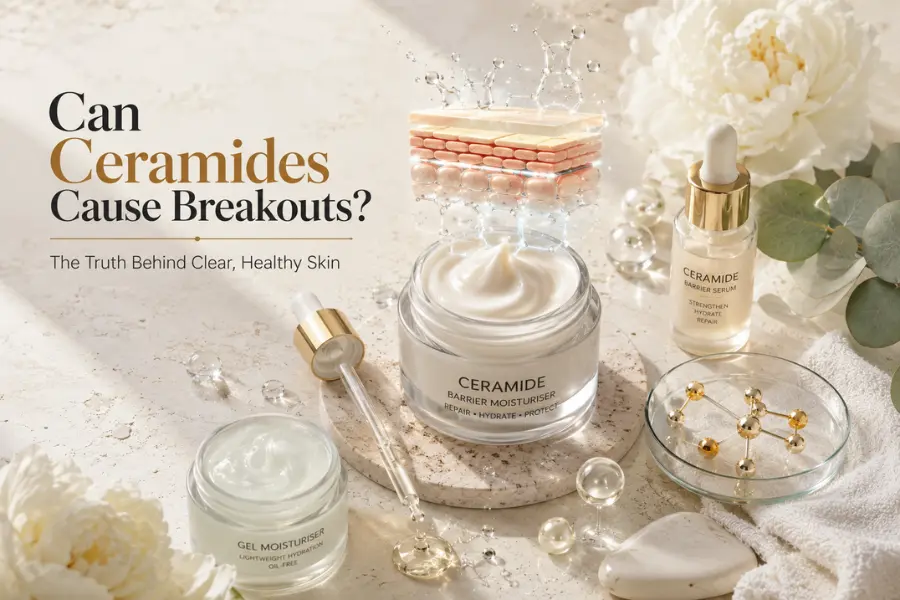
Some people may experience breakouts after switching to a new moisturiser because it contains heavy oils, waxes, or other ingredients that can clog pores. This is why it’s important to look at the full ingredient list instead of blaming ceramides alone.
The Short Answer
Ceramides are generally considered non-comedogenic, which means they are not known to clog pores or directly cause acne. In fact, they help strengthen the skin’s natural barrier, reduce moisture loss, and support healthier skin.
If a ceramide product causes pimples, it is usually because of other ingredients in the formula or because the product is too rich for your skin type. Choosing a lightweight, non-comedogenic product can help reduce this risk.
What Dermatologists Say
Most dermatologists recommend ceramides because they help restore a damaged skin barrier without increasing acne. They are often suggested for people with dry, sensitive, or acne-prone skin, especially those using treatments such as retinol, benzoyl peroxide, or salicylic acid, which can dry out the skin.
Experts also point out that healthy skin is less likely to become irritated or inflamed. By repairing the skin barrier, ceramides can make your skin more comfortable and better able to tolerate acne treatments.
Are Ceramides Comedogenic?
No, ceramides are not considered comedogenic. They do not have a reputation for blocking pores or increasing oil production. Instead, they help replace the natural lipids your skin loses over time.
That said, not every ceramide product is suitable for every skin type. Some creams contain additional ingredients, such as coconut oil, cocoa butter, or other rich emollients, which may clog pores in people with oily or acne-prone skin.
Can Ceramides Clog Pores?
Ceramides themselves do not clog pores. They work by repairing the outer layer of your skin rather than sitting inside your pores. However, a thick moisturiser containing ceramides and other pore-clogging ingredients may feel too heavy for some people and contribute to breakouts.
If you have oily or acne-prone skin, choose a lightweight, oil-free, and non-comedogenic ceramide product. This allows you to enjoy the barrier-repair benefits of ceramides while reducing the chance of clogged pores or unwanted breakouts.
Damaged Skin Barrier | How to repair | What Face wash, serum, sunscreen to use?

Why Do Some People Break Out After Using Ceramide Products?
If ceramides are generally safe for the skin, why do some people notice breakouts after using ceramide creams or moisturisers? In most cases, the problem is not the ceramides themselves. Instead, it is often caused by the product’s full formula, using the wrong product for your skin type, or introducing new skincare products too quickly.
Understanding the real reason behind these breakouts can help you choose the right product and avoid unnecessary irritation.
Heavy Moisturising Formulas
Many ceramide creams are made for dry or damaged skin, so they often have a rich and creamy texture. While these formulas work well for dry skin, they may feel too heavy for people with oily or acne-prone skin.
A thick moisturiser can trap excess oil, sweat, and dead skin cells on the surface, making clogged pores and breakouts more likely. If you have oily skin, choose a lightweight gel or lotion with ceramides instead of a heavy cream.
Comedogenic Ingredients Mixed with Ceramides
Ceramides are usually non-comedogenic, but they are rarely the only ingredient in a skincare product. Some ceramide moisturisers contain ingredients that may clog pores, especially if your skin is naturally oily.
Ingredients such as certain plant oils, butters, or rich emollients may increase the risk of breakouts in some people. Always check the full ingredient list and look for products labelled non-comedogenic if you are prone to acne.
Using Too Many New Products at Once
Starting several new skincare products at the same time can make it difficult to identify what is causing a breakout. If you add a ceramide moisturiser, a new cleanser, and a serum together, you won’t know which product your skin is reacting to.
To avoid confusion, introduce one new product at a time and use it for at least one to two weeks before adding another. This makes it easier to monitor how your skin responds.
Skin Purging vs Real Breakouts
Many people mistake a normal breakout for skin purging, but they are not the same. Skin purging usually happens with ingredients that increase cell turnover, such as retinol, salicylic acid, or glycolic acid. Ceramides do not speed up skin cell turnover, so they are unlikely to cause purging.
If new pimples appear after using a ceramide product, they are more likely to be a regular breakout caused by another ingredient or a product that does not suit your skin type.
Allergic Reaction or Irritation
Although rare, some people may develop an allergic reaction or skin irritation after using a ceramide product. In most cases, the reaction is caused by added ingredients such as fragrance, preservatives, or certain plant extracts rather than the ceramides.
If you notice redness, itching, burning, swelling, or a rash after applying the product, stop using it immediately. Performing a patch test before using any new skincare product can help reduce the risk of irritation.
Can Ceramides Cause Acne or Are They Being Blamed Unfairly?
Many people assume that a new skincare product is responsible when they suddenly develop acne. If the product contains ceramides, they may quickly blame this ingredient. However, ceramides are rarely the actual cause of breakouts. In most cases, the problem is linked to other ingredients, an unsuitable product formula, or changes in your skincare routine.
Understanding what is really causing your skin to react can help you avoid unnecessary product changes and choose skincare that works better for your skin type.
The Difference Between Acne and Product-Related Breakouts
Acne is a long-term skin condition that develops when pores become clogged with excess oil, dead skin cells, and bacteria. It often appears on the face, chest, back, or shoulders and may include blackheads, whiteheads, papules, and pustules.
A product-related breakout, on the other hand, happens after using a skincare product that does not suit your skin. These breakouts often appear shortly after introducing a new product and may improve once you stop using it. If your skin becomes red, itchy, or irritated as well, the reaction may be caused by another ingredient rather than the ceramides.
Ingredients That Usually Cause Clogged Pores
Ceramides themselves are not known to clog pores, but some ingredients commonly found in moisturisers may increase the risk of breakouts in certain people. Rich plant oils, heavy butters, waxes, and some fatty esters can feel too heavy for oily or acne-prone skin.
This does not mean these ingredients are harmful for everyone. People with dry skin often benefit from richer formulas, while those with oily skin may do better with a lightweight, non-comedogenic moisturiser. Reading the full ingredient list is more helpful than judging a product by one ingredient alone.
Why Ceramides Often Get the Blame
Ceramides often get blamed because they are the featured ingredient on the product label. When a breakout appears after using a new ceramide cream, many people assume the ceramides are responsible without considering the rest of the formula.
In reality, ceramides are added to skincare products to repair the skin barrier, improve hydration, and reduce dryness. If a product causes acne, the real cause is usually another ingredient, a formula that is too rich for your skin type, or introducing a new product too quickly. Choosing a product that matches your skin type and applying it correctly can help you enjoy the benefits of ceramides without unwanted breakouts.
Are Ceramides Good for Acne-Prone Skin?
Yes, ceramides can be very beneficial for acne-prone skin. Although many people with acne avoid moisturisers because they worry about clogged pores, the right ceramide product can actually improve skin health. By repairing the skin barrier and preventing moisture loss, ceramides help keep your skin balanced and better able to tolerate acne treatments.
The key is to choose a lightweight, non-comedogenic ceramide product that suits your skin type. This allows you to enjoy the benefits of ceramides without making your skin feel greasy or heavy.
Benefits for Acne-Prone Skin
Acne treatments often focus on reducing excess oil and clearing pores, but they can also leave the skin dry, tight, and irritated. Ceramides help replace the natural lipids your skin loses, making it feel softer and more comfortable.
Regular use of ceramides can improve hydration, reduce irritation, and support a healthier skin barrier. Healthy skin is less likely to become inflamed and is better able to protect itself from everyday environmental stress.
Strengthening the Skin Barrier
A strong skin barrier is important for every skin type, including acne-prone skin. When the barrier is damaged, your skin loses moisture more easily and becomes more sensitive to irritants.
Ceramides help repair this protective barrier by filling the gaps between skin cells. This reduces transepidermal water loss (TEWL), improves hydration, and helps your skin stay smooth, calm, and resilient.
Reducing Dryness from Acne Treatments
Many acne-fighting ingredients, such as retinol, benzoyl peroxide, and salicylic acid, can cause dryness, peeling, and redness. While these treatments are effective against acne, they may weaken the skin barrier if used too often.
Using a ceramide moisturiser after your acne treatment helps restore lost moisture and reduces irritation. This can make your skincare routine more comfortable and encourage you to use your acne treatments consistently.
Helping Skin Recover Faster
After an acne breakout, your skin needs time to repair itself. Ceramides support this natural recovery process by strengthening the skin barrier and keeping the skin well hydrated.
A healthy barrier helps reduce irritation, improves overall skin comfort, and supports smoother-looking skin over time. While ceramides do not treat acne directly, they create a healthier environment that allows your skin to recover more effectively and tolerate acne treatments better.
Who Is Most Likely to Experience Breakouts?
Although ceramides themselves do not usually cause breakouts, some people are more likely to experience skin problems after using ceramide products. In most cases, the issue is related to the product formula, skin type, or how the product is used. Knowing your skin type can help you choose the right ceramide product and reduce the risk of clogged pores.
Oily Skin
People with oily skin naturally produce more sebum, which can mix with dead skin cells and block pores. A thick ceramide cream may feel too heavy and increase the chance of breakouts if it also contains comedogenic ingredients.
If you have oily skin, choose a lightweight, oil-free, and non-comedogenic ceramide moisturiser. Gel or lotion formulas usually work better than rich creams.
Combination Skin
Combination skin has both oily and dry areas, making it more difficult to find the right moisturiser. A heavy ceramide cream may feel comfortable on dry areas but can leave the T-zone feeling greasy.
A lightweight ceramide lotion is often the best choice because it hydrates dry patches without making oily areas feel heavier. You can also apply a richer cream only where your skin needs extra moisture.
Sensitive Skin
People with sensitive skin usually benefit from ceramides because they help repair and strengthen the skin barrier. However, sensitive skin may react to added ingredients such as fragrance, essential oils, or certain preservatives.
Choose a fragrance-free ceramide product with a simple ingredient list. Always perform a patch test before applying a new product to your entire face.
People Using Rich Creams
Rich ceramide creams are designed for very dry or damaged skin, but they may not be suitable for everyone. If your skin is naturally oily or acne-prone, a heavy cream can trap excess oil and leave your skin feeling greasy.
Instead of avoiding ceramides completely, switch to a lighter formula that provides the same barrier-repair benefits without adding unnecessary heaviness.
People with Fungal Acne Concerns
If you have fungal acne (Malassezia folliculitis), choosing skincare products requires extra care. Ceramides themselves are not known to feed Malassezia, but some creams contain fatty acids, oils, or esters that may not be suitable for fungal acne-prone skin.
Look for products specifically labelled as fungal acne-friendly or review the full ingredient list before buying. If you’re unsure, consult a dermatologist to find products that match your skin’s needs.
How to Choose a Ceramide Product That Won’t Cause Breakouts
Choosing the right ceramide product is just as important as the ingredients it contains. Since every skin type is different, a product that works well for one person may not suit another. If you have oily or acne-prone skin, selecting a lightweight formula with skin-friendly ingredients can help you enjoy the benefits of ceramides without increasing the risk of breakouts.
Look for Non-Comedogenic Products
When shopping for a ceramide moisturiser, choose products labelled non-comedogenic. This means the formula is designed to minimise the risk of clogged pores and breakouts.
Although no product can guarantee it will never cause acne, non-comedogenic formulas are generally a safer choice for people with oily or acne-prone skin.
Oil-Free vs Cream Formulas
The best formula depends on your skin type. If you have oily or combination skin, an oil-free lotion or lightweight moisturiser is usually the better option because it hydrates the skin without feeling greasy.
If your skin is dry, dehydrated, or has a damaged skin barrier, a richer ceramide cream may provide the extra moisture your skin needs. Choosing the right texture helps reduce the chance of unwanted breakouts.
Gel Moisturisers
Gel moisturisers are an excellent option for people with oily, combination, or acne-prone skin. They are lightweight, absorb quickly, and provide hydration without leaving a heavy or sticky feeling.
Many gel formulas also contain soothing ingredients such as hyaluronic acid, glycerin, or niacinamide, making them ideal for everyday use.
Read the Ingredient List Carefully
Don’t focus only on the word ceramides. Always read the full ingredient list to see what else is included in the product.
If your skin is prone to breakouts, avoid formulas with heavy oils, excessive fragrance, or ingredients that have previously irritated your skin. A simple formula with fewer unnecessary ingredients is often the safest choice.
Patch Testing Before Full Use
Before applying any new ceramide product to your entire face, perform a patch test. Apply a small amount behind your ear or on your inner arm and wait 24 to 48 hours to check for redness, itching, or irritation.
If your skin remains comfortable and shows no signs of a reaction, you can start using the product on your face. Patch testing is a simple step that can help prevent unwanted irritation or breakouts.
Ingredients That Work Well with Ceramides
Ceramides work well with many popular skincare ingredients because they help strengthen the skin barrier and reduce moisture loss. Pairing ceramides with the right ingredients can improve hydration, soothe irritation, and make your skincare routine more effective. These combinations are suitable for most skin types, including dry, sensitive, and acne-prone skin.
Niacinamide
Niacinamide and ceramides are one of the best skincare combinations. Niacinamide helps reduce redness, control excess oil, minimise the appearance of pores, and support the skin barrier. When used together, these ingredients keep the skin hydrated while improving its overall texture and resilience.
This combination is especially beneficial for people with acne-prone or sensitive skin, as it helps calm irritation without making the skin feel heavy.
Hyaluronic Acid
Hyaluronic acid attracts and holds water in the skin, while ceramides help seal that moisture into the skin barrier. Together, they provide long-lasting hydration and leave the skin feeling soft, smooth, and plump.
This pairing works well for all skin types, especially dry and dehydrated skin, because it helps prevent moisture loss throughout the day.
Glycerin
Glycerin is a gentle humectant that draws moisture from the environment into the skin. When combined with ceramides, it helps improve hydration and keeps the skin barrier healthy.
This combination is suitable for daily use and is commonly found in moisturisers designed for sensitive or dry skin.
Panthenol
Panthenol, also known as provitamin B5, is known for its soothing and healing properties. It helps reduce redness, relieve irritation, and improve skin comfort.
When used with ceramides, panthenol supports faster skin barrier repair and is particularly helpful after using active ingredients such as retinol or salicylic acid.
Peptides
Peptides are short chains of amino acids that help support the skin’s natural repair process and improve its firmness. While peptides work to strengthen the skin, ceramides help protect it by restoring the skin barrier.
Using these ingredients together can improve skin texture, maintain hydration, and support healthier-looking skin over time.
Squalane
Squalane is a lightweight moisturising ingredient that helps soften the skin without leaving a greasy feeling. Unlike some heavier oils, it is generally suitable for oily and acne-prone skin.
When paired with ceramides, squalane provides extra hydration, strengthens the skin barrier, and helps keep the skin smooth and comfortable without increasing the risk of clogged pores.
Ingredients That May Increase the Risk of Breakouts
Ceramides are generally safe for most skin types, but the other ingredients in a skincare product can sometimes increase the risk of clogged pores or breakouts. If you have oily, acne-prone, or sensitive skin, it’s worth checking the full ingredient list before buying a ceramide moisturiser.
Coconut Oil
Coconut oil is a rich moisturising ingredient that helps soften dry skin. However, it may feel too heavy for people with oily or acne-prone skin and can increase the risk of clogged pores in some individuals.
If your skin breaks out easily, you may prefer a ceramide product that uses lighter moisturising ingredients instead of coconut oil.
Heavy Plant Butters
Ingredients such as shea butter, cocoa butter, and other rich plant butters provide deep hydration and are ideal for very dry skin. However, some people with oily skin may find these ingredients too rich.
If your skin becomes greasy or develops breakouts after using heavy creams, switching to a lightweight ceramide lotion or gel may be a better option.
Certain Esters
Some skincare products contain fatty esters, which improve texture and help products spread smoothly over the skin. While many esters are well tolerated, certain types may not suit everyone, especially those with acne-prone or fungal acne-prone skin.
If you frequently experience breakouts after trying new moisturisers, compare ingredient lists to identify ingredients that may not work well for your skin.
Thick Occlusive Ingredients
Occlusive ingredients create a protective layer that helps prevent moisture loss. While this is beneficial for dry or damaged skin, very thick formulas may feel heavy on oily skin and trap excess oil and dead skin cells.
If you have acne-prone skin, choose a non-comedogenic ceramide product with a lighter texture instead of a rich occlusive cream.
Fragrances (for Sensitive Skin)
Fragrance does not usually clog pores, but it can irritate sensitive skin. Irritation may cause redness, itching, or inflammation, which some people mistake for acne.
If your skin reacts easily, choose a fragrance-free ceramide product with a simple ingredient list. This can help reduce irritation while still giving you the barrier-repair benefits of ceramides.
How to Add Ceramides to Your Skincare Routine
Adding ceramides to your skincare routine is simple and beneficial for most skin types. They work best when applied after cleansing to help restore the skin barrier and lock in moisture. Whether you have dry, oily, combination, or acne-prone skin, using ceramides consistently can improve your skin’s overall health.
Morning Routine
Start your morning by washing your face with a gentle cleanser. If you use a serum, apply it first, then follow with a ceramide moisturiser to keep your skin hydrated throughout the day.
Finish your routine with a broad-spectrum sunscreen (SPF 30 or higher). Sunscreen protects your skin from UV damage, while ceramides help maintain a healthy skin barrier.
Simple morning routine:
- Gentle cleanser
- Serum (optional)
- Ceramide moisturiser
- Sunscreen (SPF 30+)
Evening Routine
Your evening routine is the best time to repair your skin after a long day. Cleanse your face to remove dirt, oil, makeup, and sunscreen. If you use active ingredients such as retinol, salicylic acid, or azelaic acid, apply them first.
Once the active product has absorbed, apply a ceramide moisturiser to reduce dryness and strengthen the skin barrier while you sleep.
Simple evening routine:
- Gentle cleanser
- Treatment serum or acne medication (if needed)
- Ceramide moisturiser
How Often Should You Use Ceramides?
Most people can use ceramides once or twice a day. Daily use helps keep the skin barrier healthy and prevents moisture loss.
If you are using a ceramide product for the first time, start with once a day for a few days. If your skin feels comfortable and shows no signs of irritation, you can increase it to morning and night.
Layering Products Correctly
Applying skincare products in the correct order helps each one work more effectively. A simple rule is to apply products from the lightest texture to the thickest.
For example, apply a water-based serum first, followed by your ceramide moisturiser, and finish with sunscreen in the morning. At night, apply your treatment products before your ceramide moisturiser. This routine helps hydrate your skin while keeping the skin barrier strong and protected.
Common Mistakes When Using Ceramide Products
Ceramides are easy to add to your skincare routine, but using them incorrectly may reduce their benefits or make your skin feel uncomfortable. Avoiding a few common mistakes can help you get the best results while lowering the risk of irritation or breakouts.
Applying Too Much Product
Using more ceramide moisturiser does not make it work better. Applying a thick layer can leave your skin feeling greasy and may contribute to clogged pores if you have oily or acne-prone skin.
A pea-sized amount is usually enough for your entire face. Apply a little more only if your skin feels very dry or tight.
Choosing the Wrong Formula
Not every ceramide product is suitable for every skin type. A rich cream that works well for dry skin may feel too heavy on oily or combination skin.
Choose a product based on your skin’s needs. Lightweight lotions or gel moisturisers are often better for oily skin, while thicker creams are ideal for dry or damaged skin barriers.
Ignoring Your Skin Type
Your skin type should always guide your skincare choices. Using products that are too rich or too light may not give you the results you expect.
If you have acne-prone skin, look for a non-comedogenic ceramide moisturiser. If your skin is dry or sensitive, choose a nourishing formula that provides long-lasting hydration.
Mixing Too Many Active Ingredients
Using several powerful ingredients at the same time can overwhelm your skin. Combining retinol, benzoyl peroxide, glycolic acid, and salicylic acid in one routine may increase dryness, redness, and irritation.
Ceramides work well with many active ingredients, but it’s best to introduce new products gradually. This makes it easier to see how your skin responds and helps protect your skin barrier.
Expecting Overnight Results
Ceramides help repair and strengthen the skin barrier, but they do not provide instant results. Your skin needs time to recover and rebuild its natural protective layer.
With regular use, many people notice smoother and more hydrated skin within a few weeks. Consistency is the key to getting the full benefits of ceramides, so don’t stop using them if you don’t see immediate changes.
Signs You Should Stop Using a Ceramide Product
Most ceramide products are safe and well tolerated, but not every formula works for every skin type. If your skin develops unusual or persistent reactions after using a new product, it may be time to stop using it. In many cases, the reaction is caused by another ingredient in the formula rather than the ceramides themselves.
Persistent Breakouts
A few pimples can happen for many reasons, but if you continue to develop new breakouts for several weeks after starting a ceramide product, it may not be the right formula for your skin.
Stop using the product for a short time and see if your skin improves. If the breakouts disappear, consider switching to a lightweight, non-comedogenic ceramide moisturiser.
Burning
A mild tingling sensation may occur if your skin barrier is already damaged, but burning that continues after application is not normal. This may be a sign that your skin is reacting to one of the ingredients in the product.
Wash the product off if the burning is severe or does not improve. Avoid using it again until you know what caused the reaction.
Itching
Persistent itching after applying a ceramide product may indicate skin irritation or an allergic reaction to ingredients such as fragrance, preservatives, or plant extracts.
If the itching continues or becomes worse, stop using the product and choose a fragrance-free formula with a simpler ingredient list.
Swelling
Swelling is not a normal response to ceramides. If your face, eyelids, or lips become swollen after applying a skincare product, stop using it immediately.
Wash your face with lukewarm water and seek medical advice as soon as possible, especially if the swelling is severe or affects your breathing.
Rash
A rash with redness, small bumps, or irritation may be a sign that your skin does not tolerate the product well. While ceramides are usually gentle, other ingredients in the formula can sometimes trigger a reaction.
Discontinue the product and allow your skin to recover before trying another moisturiser. If the rash does not improve within a few days or becomes more severe, consult a dermatologist for proper evaluation and treatment.
Can Ceramides Be Used with Other Active Ingredients?
Yes, ceramides can be safely used with most active skincare ingredients. In fact, they are often recommended alongside treatments that may cause dryness, redness, or irritation. Ceramides help strengthen the skin barrier, making it easier for your skin to tolerate active ingredients without becoming overly dry or sensitive.
Retinol
Retinol is a powerful ingredient that helps reduce acne, improve skin texture, and minimise the appearance of fine lines. However, it can also cause dryness and irritation, especially when you first start using it.
Applying a ceramide moisturiser after retinol helps restore moisture, soothe the skin, and reduce irritation. This combination is ideal for keeping your skin comfortable while still enjoying the benefits of retinol.
Salicylic Acid
Salicylic acid is commonly used to unclog pores and treat acne. While it is effective, frequent use can sometimes leave the skin feeling dry or tight.
Using ceramides after salicylic acid helps replenish lost moisture and strengthens the skin barrier. This can reduce dryness without affecting the acne-fighting benefits of salicylic acid.
Benzoyl Peroxide
Benzoyl peroxide helps kill acne-causing bacteria and reduce inflammation, but it is also known for causing dryness, peeling, and irritation.
A ceramide moisturiser can help calm the skin and restore hydration after applying benzoyl peroxide. This combination is especially helpful for people with sensitive or acne-prone skin.
Vitamin C
Vitamin C is an antioxidant that helps brighten the skin, improve uneven skin tone, and protect against environmental damage. It works well with ceramides because the two ingredients have different roles in a skincare routine.
While vitamin C helps improve skin appearance, ceramides strengthen the skin barrier and lock in moisture. Together, they help keep the skin healthy, hydrated, and radiant.
Azelaic Acid
Azelaic acid is often used to treat acne, redness, and post-inflammatory marks. Although it is generally gentle, some people may experience mild dryness or irritation when they first start using it.
Pairing azelaic acid with a ceramide moisturiser helps reduce discomfort and supports the skin barrier. This allows your skin to stay hydrated while benefiting from the anti-inflammatory and acne-fighting effects of azelaic acid.
Myths vs Facts About Ceramides
There are many myths about ceramides, especially when it comes to breakouts and acne-prone skin. Understanding the facts can help you choose the right skincare products and use them with confidence.
| Myth | Fact |
| Ceramides always clog pores. | False. Ceramides themselves are generally considered non-comedogenic and are not known to clog pores. The overall product formula is more important than ceramides alone. |
| Ceramides cause acne. | False. Ceramides do not directly cause acne. If you experience breakouts, they are more likely caused by other ingredients, a heavy formula, or a product that doesn’t suit your skin type. |
| Oily skin doesn’t need ceramides. | False. Even oily skin needs a healthy skin barrier. Ceramides help maintain hydration and reduce irritation without increasing oil production when used in the right formula. |
| Ceramides should only be used on dry skin. | False. People with dry, oily, combination, sensitive, and acne-prone skin can all benefit from ceramides. The key is choosing a product that matches your skin type. |
| More ceramides mean better results. | False. Applying large amounts of ceramide products won’t improve results faster. Consistent daily use and the right skincare routine are more important than using extra product. |
Frequently Asked Questions
Many people still have questions about ceramides, especially whether they can cause breakouts, clog pores, or work well with other skincare ingredients. Below are clear, expert-backed answers to the most common questions to help you use ceramides safely and get the best results for your skin.
Ceramides themselves do not clog pores. They are naturally found in the skin and help repair the skin barrier rather than blocking pores. Most dermatologists consider ceramides non-comedogenic, making them suitable for most skin types.
However, the complete product formula matters. Some ceramide creams also contain heavy oils, waxes, or other ingredients that may increase the risk of clogged pores in people with oily or acne-prone skin.
To reduce the risk of breakouts, choose a product that is:
- Non-comedogenic
- Oil-free (if you have oily skin)
- Lightweight and fast-absorbing
- Suitable for your skin type
Ceramides alone are unlikely to clog pores. Choosing the right formula for your skin type is the key to preventing breakouts.
In most cases, ceramides do not cause pimples. If you notice new breakouts after using a ceramide product, another ingredient in the formula is often responsible.
Breakouts may also occur if:
- The moisturiser is too rich for your skin.
- You started several new skincare products at the same time.
- Your skin is reacting to fragrance or preservatives.
- The product does not suit your skin type.
If pimples continue for several weeks, stop using the product and try a lighter ceramide formula.
Yes. Ceramides are safe for oily skin and can actually improve skin health. Many people think oily skin does not need moisturiser, but this is a common misconception.
When your skin becomes dehydrated, it may produce even more oil to compensate. Ceramides help maintain a healthy skin barrier, keeping the skin balanced and hydrated.
If you have oily skin, look for:
- Lightweight gel or lotion formulas
- Non-comedogenic moisturisers
- Fragrance-free products if your skin is sensitive
Yes, ceramides are safe for oily skin when you choose a lightweight, non-comedogenic product.
Yes. Ceramides are gentle enough for daily use. Most people can use them once or twice a day without any problems.
For best results:
- Apply after cleansing.
- Use morning and evening if your skin tolerates it.
- Follow with sunscreen during the day.
Daily use helps keep the skin barrier healthy and reduces moisture loss over time.
No. Ceramides do not usually cause skin purging.
Skin purging happens when ingredients such as retinol, glycolic acid, or salicylic acid speed up skin cell turnover. Ceramides do not work this way.
If you develop new pimples after using a ceramide product, it is more likely to be:
- A normal breakout
- A reaction to another ingredient
- A product that is too heavy for your skin
No, ceramides do not cause skin purging because they do not increase skin cell turnover.
The best ceramide products are those that hydrate the skin without clogging pores.
Look for products that are:
- Non-comedogenic
- Lightweight gel or lotion formulas
- Fragrance-free if possible
- Free from unnecessary heavy oils and rich butters
- Suitable for oily or acne-prone skin
If you’re unsure, perform a patch test before using a new product on your entire face.
Yes. Ceramides and retinol work very well together.
Retinol is effective for treating acne and improving skin texture, but it can also cause dryness and irritation. Ceramides help repair the skin barrier and reduce these side effects.
A simple evening routine is:
- Cleanse your face.
- Apply retinol.
- Wait a few minutes if needed.
- Finish with a ceramide moisturiser.
This routine helps keep your skin hydrated while allowing retinol to work effectively.
Not necessarily. First, try to identify the real cause of the breakout.
Ask yourself:
- Did you start other new skincare products?
- Is the moisturiser very thick or greasy?
- Does the product contain ingredients that have irritated your skin before?
If the breakouts continue for two to four weeks or become worse, stop using the product and switch to a lighter non-comedogenic ceramide moisturiser. If the reaction is severe or accompanied by swelling or a rash, consult a dermatologist.
Neither ingredient is better. They simply do different jobs.
Ceramides help:
- Repair the skin barrier
- Prevent moisture loss
- Reduce dryness and irritation
Hyaluronic acid helps:
- Attract water into the skin
- Improve hydration
- Make the skin feel plumper
The best approach is to use both together. Hyaluronic acid provides hydration, while ceramides help lock that moisture into the skin for longer-lasting results.
The time varies depending on your skin condition and the product you use.
Many people notice:
- Within a few days: Skin feels softer and more hydrated.
- Within 2–4 weeks: The skin barrier becomes stronger, and dryness and irritation begin to improve.
- Within 4–8 weeks: Consistent use may lead to healthier, smoother, and more balanced skin.
For the best results, use ceramides consistently and combine them with a gentle skincare routine that matches your skin type.
Ceramides are one of the most effective ingredients for repairing the skin barrier and improving skin hydration. For most people, they do not cause breakouts. Choosing a product that matches your skin type, checking the ingredient list, and using it consistently can help you enjoy the full benefits of ceramides while keeping your skin healthy, balanced, and clear.
Final Thoughts
So, can ceramides cause breakouts? In most cases, the answer is no. Ceramides are naturally found in your skin and play an essential role in maintaining a healthy skin barrier, preventing moisture loss, and protecting the skin from irritation. They are generally considered non-comedogenic, making them suitable for most skin types, including acne-prone skin.
If you experience breakouts after using a ceramide product, the cause is usually not the ceramides themselves. Instead, it is often related to the overall product formulation, heavy moisturising ingredients, or your skin’s individual reaction to certain ingredients. That’s why it’s important to look beyond the label and check the complete ingredient list before choosing a product.
To get the best results, select a ceramide product that matches your skin type. If you have oily or acne-prone skin, choose a lightweight, non-comedogenic formula. If your skin is dry or sensitive, a richer moisturiser may provide the extra hydration your skin needs.
Finally, introduce new skincare products gradually rather than changing your entire routine at once. This makes it easier to identify any reactions and allows your skin time to adjust. With the right product and consistent use, ceramides can help strengthen your skin barrier, improve hydration, and support healthier, clearer skin over time.

How Long to Wait Between Skincare Steps: The Complete Guide to Better Product Absorption





- Be Respectful
- Stay Relevant
- Stay Positive
- True Feedback
- Encourage Discussion
- Avoid Spamming
- No Fake News
- Don't Copy-Paste
- No Personal Attacks
- Be Respectful
- Stay Relevant
- Stay Positive
- True Feedback
- Encourage Discussion
- Avoid Spamming
- No Fake News
- Don't Copy-Paste
- No Personal Attacks
