Why Your Face Gets Oily After Moisturiser and How to Keep It Shine-Free
Published: 13 Mar 2026
Taking care of your skin should make it feel fresh, balanced, and healthy. However, many people experience a frustrating problem after applying skincare products. Instead of feeling smooth and hydrated, they notice their face gets oily after moisturiser, leaving the skin looking shiny and greasy within a short time. This can be confusing, especially when the goal of using moisturiser is to keep the skin properly hydrated.
Moisturisers are designed to support the skin’s natural barrier and maintain the right balance of hydration. In most cases, they should help the skin feel soft and comfortable rather than overly oily. When the face becomes greasy soon after application, it may indicate that the product, its ingredients, or your skincare routine are not suitable for your skin type.
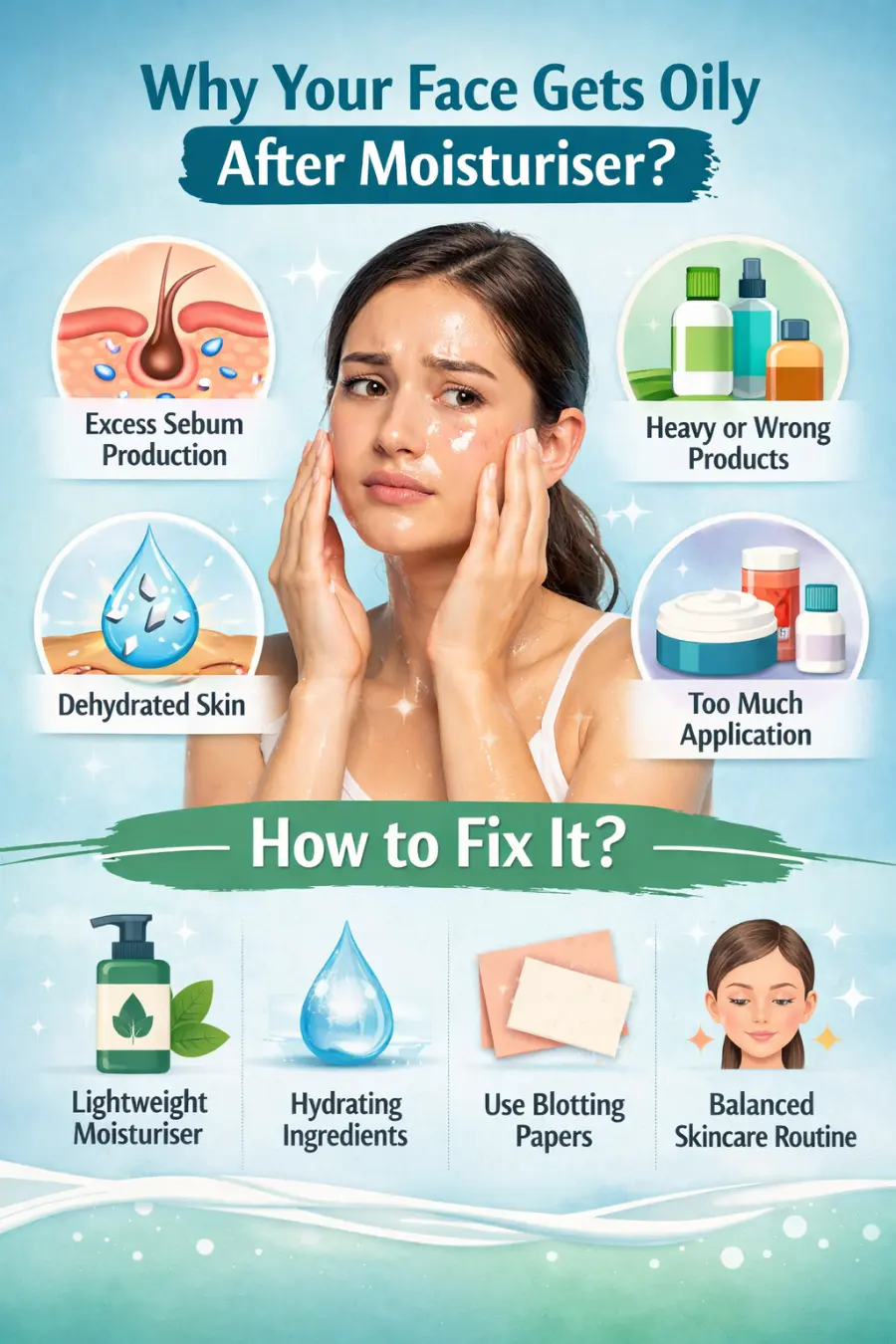
If you’ve ever wondered why your face gets oily after moisturiser, you’re not alone. In this article, we will explore the common reasons behind this issue and share practical tips to help you choose the right moisturiser and keep your skin balanced and healthy.
Is It Normal for Your Face to Get Oily After Moisturiser?
Yes, in many cases, it can be completely normal for your face to get oily after moisturiser, especially depending on your skin type. Everyone’s skin behaves differently, and the way your skin reacts to skincare products often depends on how much natural oil it already produces. Some people naturally have oilier skin, which can make their faces look shiny even after applying lightweight skincare products.
Your Skin Naturally Produces Sebum
Your skin naturally produces sebum, an oily substance secreted by the sebaceous glands. This oil plays an important role in protecting the skin and preventing dryness. However, when moisturiser is applied, it can sometimes mix with the skin’s natural oils. This combination may create a shiny or greasy appearance, making it seem like the moisturiser is causing excess oil.
Different Skin Types React Differently
Skin type also plays a big role in how moisturiser behaves on your face. Oily skin produces more sebum throughout the day, which can make products feel heavier on the skin. Combination skin usually has oily areas, especially in the T-zone (forehead, nose, and chin), while other areas remain normal or dry.
Dehydrated Skin Can Also Produce More Oil
Dehydrated skin, on the other hand, lacks water rather than oil, and it may produce extra sebum to compensate. Because of these differences, some people may notice their faces get oily after moisturising, even when using products meant to hydrate the skin.
Why Your Skin Feels Sticky After Applying Moisturiser?
Common Reasons Your Face Gets Oily After Moisturiser
There are several reasons why your face gets oily after moisturiser, and in many cases, the issue is related to the product you’re using or how it fits into your skincare routine. Understanding these common causes can help you adjust your routine and keep your skin balanced.
Using the Wrong Moisturiser for Your Skin Type
One of the most common reasons a face gets oily after moisturiser is using a product that is not suitable for your skin type. Moisturisers come in different textures, including heavy creams, lotions, and lightweight gels.
Heavy creams are usually designed for people with very dry skin. They contain richer ingredients that lock in moisture, but can feel too thick for oily or combination skin. If you have naturally oily skin and use a rich cream, it may sit on the surface, giving your skin a greasy appearance. Lightweight gel or water-based moisturisers are often a better option for skin that tends to produce more oil.
Your Skin Might Be Dehydrated
Sometimes oily skin is actually a sign of dehydration. When the skin lacks water, it may try to protect itself by producing more oil. As a result, your face gets oily after moisturiser because the skin is already producing excess sebum to compensate for the lack of hydration.
Many people confuse dehydrated skin with oily skin, but they are not the same. Dehydrated skin needs more water-based hydration, while oily skin produces excess oil. Using hydrating ingredients, such as hyaluronic acid, can help restore balance.
Applying Too Much Product
Using too much moisturiser can also make your skin appear greasy. In most cases, only a small amount is needed to properly hydrate the skin. A pea-sized amount is often enough for the entire face.
When too much product is applied, it may not fully absorb into the skin. Instead, it forms a layer on the surface, which can make the face get oily after moisturiser and leave the skin looking shiny.
Ingredients That May Feel Greasy
Some skincare ingredients naturally feel heavier on the skin. While these ingredients can be beneficial for dry skin, they may not work well for people with oily or combination skin types.
Certain oils, silicones, and thick emollients can create a smooth, protective layer, but they may also make the skin look shiny. If your face gets oily after moisturiser, it may help to check the ingredient list and look for lighter formulas that absorb more quickly.
Your Skincare Routine Order
Your overall skincare routine can also affect how moisturiser behaves on your skin. Using several hydrating or heavy products at once can create too many layers on the skin.
For example, applying a hydrating serum, then a thick moisturiser, and finally sunscreen may cause products to build up. When too many layers are applied, the skin may not properly absorb everything, which can make your face feel oily after moisturiser. Simplifying your routine can sometimes help reduce excess shine.
How to Stop Your Face from Getting Oily After Moisturiser
If your face gets oily after moisturiser, a few small adjustments to your skincare routine can make a big difference. Choosing the right products and applying them correctly can help your skin stay hydrated without looking greasy.
Choose the Right Moisturiser
Selecting the right moisturiser for your skin type is one of the most important steps. If you have oily or combination skin, heavy creams may feel too rich and sit on the surface of the skin. Instead, look for gel or water-based moisturisers, which are lighter and absorb more quickly.
It is also helpful to choose non-comedogenic formulas. These products are designed not to clog pores, which makes them a better option for people who struggle with excess oil or breakouts.
Use the Right Amount
Applying too much product can easily make your skin look shiny. In most cases, a pea-sized amount of moisturiser is enough to cover the entire face. Using more than necessary can leave a layer of product on the skin, which may make your face feel oily after moisturiser.
Apply Moisturiser on Slightly Damp Skin
Applying moisturiser when your skin is slightly damp can improve absorption. After cleansing your face, gently pat it dry, but leave a little moisture on the skin. This helps the moisturiser lock in hydration and blend more naturally with your skin.
Look for Oil-Control Ingredients
Certain skincare ingredients can help balance oil production while keeping the skin hydrated. When choosing a moisturiser, look for ingredients that support oil control without drying out the skin.
Some helpful ingredients include:
- Niacinamide, which helps regulate oil production and improve skin texture
- Hyaluronic acid, which provides hydration without adding heaviness
- Aloe vera, known for its lightweight and soothing properties
These ingredients can help prevent the problem where your face gets oily after moisturiser, while still keeping your skin properly hydrated.
Simplify Your Skincare Routine
Using too many skincare products at once can create heavy layers on the skin. For example, combining multiple serums, thick moisturisers, and sunscreen may cause products to build up on the surface.
Keeping your routine simple and using lightweight formulas can help your skin better absorb products and reduce the chance that your face gets oily after moisturiser.
Best Moisturiser Types for Oily or Combination Skin
Choosing the right type of moisturiser is very important if your face gets oily after moisturiser. Lightweight formulas can hydrate the skin without leaving a greasy layer. Here are some of the best moisturiser types for oily or combination skin.
Gel Moisturisers
Gel moisturisers are one of the best options for oily or combination skin. They have a light, water-based texture that absorbs quickly into the skin without feeling heavy. Gel formulas usually contain hydrating ingredients like hyaluronic acid and aloe vera, which help keep the skin moisturised without adding extra oil. Because they are lightweight, they are less likely to make your face get oily after moisturiser.
Oil-Free Moisturisers
Oil-free moisturisers are specially designed for people who struggle with excess oil. These products provide hydration without including heavy oils that can clog pores or create shine. Many oil-free formulas also include ingredients that help control sebum production, making them a good choice for people whose faces get oily after moisturiser.
Lightweight Lotions
Lightweight lotions offer a balance between hydration and comfort. They are usually thinner than creams but slightly richer than gel moisturisers. This makes them suitable for combination skin, where some areas may need more hydration than others. A good lightweight lotion can moisturise the skin while still feeling breathable and non-greasy.
When Oily Skin May Indicate a Skincare Problem
Sometimes, if your face gets oily after moisturiser, it may be a sign that something in your skincare routine is affecting your skin’s natural balance. Certain habits or products can disrupt the skin barrier, leading the skin to produce more oil than usual.
Over-Exfoliation
Exfoliating the skin too often can remove not only dead skin cells but also the natural oils that protect the skin. When this protective layer is stripped away, the skin may try to compensate by producing more oil. As a result, you may notice that your face becomes oily after moisturising because the skin is trying to restore its natural balance.
Damaged Skin Barrier
The skin barrier plays an important role in keeping moisture inside the skin and protecting it from external irritants. If this barrier becomes damaged due to harsh products or excessive treatments, the skin may struggle to retain hydration. In response, it may produce extra oil, which can make the face appear greasy even after applying moisturiser.
Using Harsh Cleansers
Cleansers that are too strong or contain harsh ingredients can strip the skin of its natural oils. While this may temporarily make the skin feel clean, it can actually trigger more oil production later in the day. When the skin becomes too dry from harsh cleansing, it often produces excess sebum, which can make your face feel oily after moisturiser.
Quick Skincare Tips to Control Oil
If your face gets oily after moisturiser, a few simple skincare habits can help keep excess oil under control without drying out your skin. Maintaining a balanced routine is key to keeping your skin healthy and less greasy throughout the day.
Gentle Cleansing
Using a gentle cleanser is important for maintaining the skin’s natural balance. Washing your face with a mild cleanser twice a day can remove dirt, sweat, and excess oil without stripping the skin. Harsh cleansers may cause the skin to produce even more oil, so it’s better to choose a formula designed for oily or combination skin.
Using Sunscreen Daily
Many people skip sunscreen because they worry it will make their skin look oily. However, using a lightweight, oil-free sunscreen every day helps protect the skin from sun damage and prevents skin problems that may increase oil production. Look for non-greasy or gel-based sunscreens that absorb quickly into the skin.
Blotting Papers Instead of Over-Washing
If your skin becomes shiny during the day, it can be tempting to wash your face multiple times. However, over-washing can actually make the skin produce more oil. Instead, use blotting papers to gently absorb excess oil without disturbing your skincare products. This simple step can help reduce shine on your face after moisturising.
FAQs
Here are some detailed answers to common questions about why your face gets oily after moisturiser:
Even if you use products specifically formulated for oily skin, your face can still get oily after moisturising for several reasons. Overproduction of sebum, applying too much product, or layering multiple skincare products can all contribute to a shiny appearance. Additionally, dehydrated skin may overcompensate by producing more oil, even if you’re using lightweight or oil-free moisturisers. Choosing the right amount, formula, and application method is key to preventing excess shine.
No, skipping moisturiser is generally not recommended, even for oily skin. Moisturising helps maintain the skin’s natural barrier and prevents dehydration. Oily skin can still become dehydrated, which may actually increase oil production. The solution is to use a lightweight, non-comedogenic, water-based moisturiser rather than heavy creams. Proper hydration helps regulate sebum production and keeps the skin healthy.
Yes, dehydration can sometimes make the skin appear more oily. When your skin lacks water, it may signal the sebaceous glands to produce more oil to compensate. This is why some people with oily skin also experience flakiness or dryness in certain areas. Using hydrating ingredients like hyaluronic acid, aloe vera, or glycerin can replenish moisture without adding excess oil.
For oily skin, the best moisturisers are lightweight, non-greasy, and non-comedogenic. Some ideal options include:
- Gel moisturisers – absorb quickly, hydrate without heaviness.
- Oil-free moisturisers – provide hydration without clogging pores.
- Lightweight lotions – suitable for combination skin, breathable and hydrating.
Look for ingredients that balance oil production, such as niacinamide, hyaluronic acid, or aloe vera, to keep skin hydrated without increasing shine.
Yes, applying too many layers of serums, moisturisers, and sunscreens can make the skin appear greasy. Overloading the skin creates a barrier that doesn’t absorb fully, which can make your face get oily after moisturiser. Simplifying your routine and using lighter formulas can help reduce excess shine.
Absolutely. Using too much moisturiser can leave a layer of product on your skin, making it look oily. Typically, a pea-sized amount is enough for the entire face. Focus on spreading it evenly and gently massaging it in to improve absorption.
Yes, some ingredients may feel heavy on the skin or add shine. Oils, silicones, and thick emollients can create a greasy layer, especially for oily or combination skin. For a lightweight feel, choose water-based moisturisers with ingredients like hyaluronic acid, aloe vera, or niacinamide, which hydrate without contributing to oiliness.
Instead of washing your face multiple times, which can increase oil production, try blotting papers or a gentle tissue to absorb excess oil. Lightweight, mattifying primers or powders can also help temporarily reduce shine. Maintaining a consistent skincare routine with gentle cleansing and appropriate moisturisers will keep your skin balanced throughout the day.
Understanding why your face gets oily after moisturiser can help you make smarter skincare choices. Most issues are easily managed by selecting the right product, using the proper amount, and maintaining a balanced routine. With these adjustments, you can keep your skin hydrated, healthy, and shine-free throughout the day.
Conclusion
Experiencing a shiny, greasy feeling after applying skincare is a common concern. Your face gets oily after moisturiser for several reasons, including using the wrong product for your skin type, applying too much, dehydrated skin, heavy ingredients, or layering multiple products. Sometimes, it may also indicate issues like a compromised skin barrier or over-exfoliation.
The good news is that this problem can usually be managed with simple adjustments. Choosing a lightweight, non-comedogenic moisturiser, applying the right amount, using oil-control ingredients, and maintaining a balanced skincare routine can help your skin stay hydrated without looking greasy. By understanding your skin’s needs and selecting products wisely, you can achieve a healthy, balanced complexion without excess oil.






NQGlumbTboihvRXSFVxyX