Urea in Skincare: How It Helps Dry, Rough, and Flaky Skin
Published: 12 Nov 2026
Dry, rough, and flaky skin can make everyday life uncomfortable. Sometimes, regular moisturizers aren’t enough to keep skin soft and hydrated. This is where urea in skincare can make a real difference. Urea is a well-known skincare ingredient that helps attract moisture, soften rough areas, and improve overall skin texture.
Many skincare products contain urea because of its moisturizing and skin-softening properties. It is commonly found in creams, lotions, and specialized foot-care products. Depending on its concentration, urea can help with mild dryness or thicker, rough patches of skin.

In this guide, we will explain what urea is, how it works, its main benefits, different concentrations, and how to use urea cream safely.
What Is Urea in Skincare?
Urea is a naturally occurring substance found in the outer layer of healthy human skin. It is part of the skin’s Natural Moisturizing Factor (NMF), which helps maintain hydration and keep the skin soft.
Urea in modern skincare products is usually synthetically produced. It is chemically identical to the urea naturally found in the skin and is widely used in moisturizers, body creams, and foot treatments.
Understanding Urea as a Skincare Ingredient
Urea is a humectant, meaning it attracts and holds water in the skin’s outer layer. This helps reduce dryness and makes the skin feel smoother.
At higher concentrations, it also has keratolytic properties. This means it helps loosen the buildup of dead skin cells, making thick and rough areas easier to soften.
How Urea Works on the Skin
Urea works in two main ways:
- Hydration: It attracts water and helps the outer skin layer retain moisture.
- Exfoliation: At higher concentrations, it helps loosen dead skin cells and soften thickened skin.
These properties make urea useful for people dealing with dry, rough, flaky, or hardened skin.
Top Urea Cream Benefits for Skin
Dermatologists and skincare professionals recommend urea-based products for certain skin concerns for several reasons. Here are some key benefits of urea cream.
1. Provides Deep Hydration
One of urea’s main benefits is its ability to attract and retain moisture. It helps improve the skin’s water content in the outer layer.
Regular use of an appropriate urea moisturizer can help reduce tightness, dryness, and roughness.
2. Softens Rough and Flaky Skin
Rough and flaky skin often develops when dead skin cells build up on the surface. Urea helps soften these areas and improve skin texture.
It can be especially helpful for rough elbows, knees, hands, and feet.
3. Supports the Skin Barrier
A healthy skin barrier helps protect the body from external irritants and reduces excessive moisture loss.
Urea supports normal skin hydration and helps maintain a comfortable skin surface. Keeping the skin moisturized is an important part of maintaining a healthy skin barrier.
4. Helps Remove Dead Skin Cells
At higher concentrations, urea works as a gentle keratolytic ingredient. It helps loosen dead skin cells that can make skin look thick, dry, and uneven.
This can improve the appearance and feel of rough areas without relying on harsh physical scrubbing.
5. Helps Improve Very Dry Skin
People with very dry skin may experience itching, tightness, flaking, and discomfort.
Urea-based creams can help improve hydration and soften dry areas. They are often used on the hands, legs, arms, and feet.
6. Helps Soften Thick and Rough Skin
Thickened skin can develop on the heels, soles, elbows, and knees because of pressure, friction, or dryness.
Higher-strength urea products can help soften hardened skin and make it easier to manage.
How Does Urea Help Dry Skin?
Urea is especially useful for dry skin because it is naturally involved in the skin’s moisture-retention system.
Urea as a Natural Moisturizing Factor (NMF)
Natural Moisturizing Factors are substances naturally present in the skin’s outer layer. These substances help attract water and maintain hydration.
Urea is an important component of this system.
When the skin lacks enough moisture, it can become rough, flaky, and uncomfortable. Applying a urea moisturizer helps increase hydration in the outer skin layer.
Why Urea Is Helpful for Rough and Flaky Skin
Urea provides both moisturizing and skin-softening benefits.
At lower concentrations, it mainly helps hydrate dry skin. At higher concentrations, it can also loosen dead skin buildup.
This combination makes it a useful ingredient for people who struggle with persistent roughness and flaking.
Different Urea Concentrations and Their Uses
Urea skincare products are available in different concentrations. The right strength depends on your skin condition and where you want to use the product.
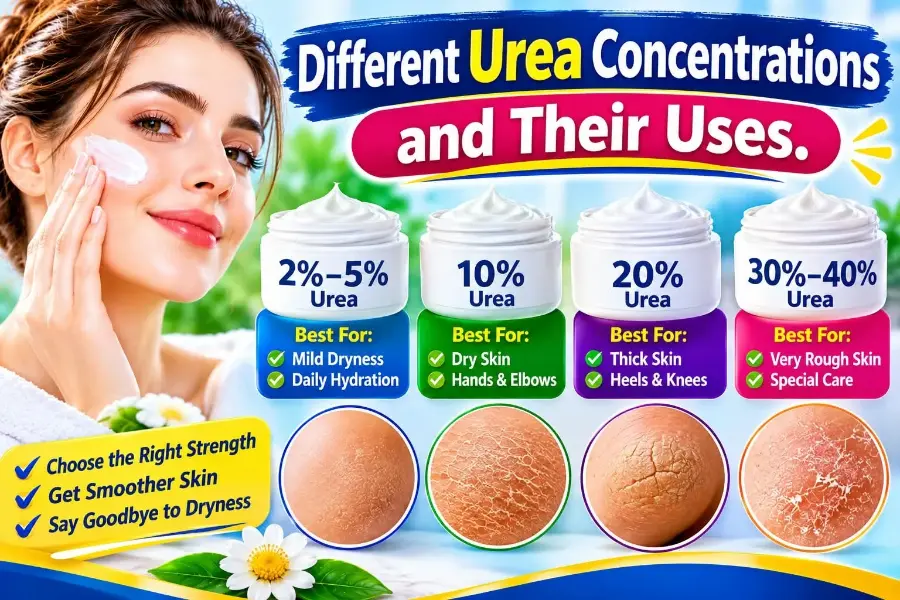
2%–5% Urea: Everyday Hydration
Low concentrations are mainly used to moisturize and support normal skin hydration.
They may be suitable for:
- Mildly dry skin.
- Everyday body moisturizing.
- Skin that needs extra hydration.
10% Urea: Dry and Rough Skin
A 10% urea cream provides stronger moisturizing benefits and some mild skin-softening action.
It is commonly used for:
- Rough hands.
- Dry legs and arms.
- Rough elbows and knees.
- Mildly thickened skin.
20% Urea: Thick and Very Rough Skin
A 20% urea product has stronger keratolytic properties and can help soften thicker areas of skin.
It may be used for:
- Thickened heels.
- Rough feet.
- Hardened skin patches.
Use these products as directed, as they may cause irritation.
30%–40% Urea: Very Thick Skin
Higher-strength urea products are designed for specific areas with very thick or hardened skin.
They are commonly used in specialized foot-care products and certain nail treatments.
These concentrations are not intended for everyday use on the entire body or face. Follow professional advice and product directions when using them.
Urea Moisturizer vs. Regular Moisturizer
Both urea moisturizers and regular moisturizers help keep skin hydrated, but they work slightly differently.
Key Differences
Regular Moisturizer:
- Helps reduce skin dryness.
- May contain ingredients such as glycerin, oils, and ceramides.
- Suitable for everyday hydration.
- Usually does not provide significant exfoliation.
Urea Moisturizer:
- Attracts and retains water.
- Helps soften rough and flaky skin.
- Higher concentrations help loosen dead skin cells.
- Available in different strengths for different skin concerns.
Which One Should You Choose?
The best choice depends on your skin condition.
- For normal or mildly dry skin, a regular moisturizer may be enough.
- For dry and rough skin, a low- or medium-strength urea moisturizer may help.
- For thickened heels and hardened skin, a higher-strength urea product may be more suitable.
Who Should Use Urea in Skincare?
Urea-based products can help different skin types and concerns.
People With Dry Skin
People who experience tightness, dryness, and roughness may benefit from urea moisturizers.
People With Rough and Flaky Skin
Urea can help soften dry patches and improve uneven skin texture.
People With Cracked Heels
A suitable urea foot cream can soften thick, dry skin around the heels. Deep, painful, or bleeding cracks need medical attention.
People With Thickened Skin on Elbows and Knees
Urea creams can help soften hardened areas caused by friction and dryness.
How to Use Urea Cream Correctly
Using urea cream properly can help you get better results while reducing irritation.
Step 1: Clean the Skin Gently
Wash the area with lukewarm water and a gentle cleanser. Avoid very hot water, as it can worsen dryness.
Step 2: Apply a Small Amount
Apply a thin layer of urea cream to the affected area. Start with a small amount and follow the product instructions.
Step 3: Massage Until Absorbed
Gently spread the cream over the skin until it is absorbed. Avoid rubbing too hard, especially if the skin is already irritated.
Step 4: Follow the Recommended Routine
Use the product as directed. Avoid applying high-strength urea products more frequently than recommended.
Pharmacists also play an important role in helping people understand skincare ingredients, product safety, and how to use different treatments properly. Their knowledge of medicines and healthcare products can help consumers make informed skincare decisions. If you are interested in exploring this healthcare profession, read our guide on how to become a pharmacist to learn about the required education, qualifications, skills, and career opportunities.
How Often Should You Apply Urea Cream?
The frequency depends on the product concentration and your skin condition.
- Low-strength products may be suitable for daily use.
- Medium-strength products should be used according to their instructions.
- High-strength products may require less frequent or targeted application.
Consistency matters, but using more cream doesn’t necessarily mean faster results.
Possible Side Effects and Precautions
Although urea is generally well tolerated, some people may experience mild irritation, especially when using higher concentrations.
Common Side Effects
Possible side effects include:
- Mild stinging or burning.
- Temporary redness.
- Itching or irritation.
- Discomfort on sensitive skin.
These effects may be more noticeable on damaged or cracked skin.
When Should You Avoid Urea Cream?
Avoid applying urea products to:
- Open wounds.
- Bleeding or deeply cracked skin.
- Severely irritated areas.
- Skin with an active infection unless advised by a healthcare professional.
Avoid contact with the eyes and other sensitive areas.
Is Urea Safe for Sensitive Skin?
Urea can suit some people with sensitive skin, but the right concentration matters.
If you have sensitive skin:
- Start with a lower concentration.
- Perform a patch test before regular use.
- Avoid applying it to irritated or broken skin.
- Stop using it if you experience persistent burning or redness.
If you have a skin condition or are unsure which product to choose, consult a dermatologist.
Can You Use Urea With Other Skincare Ingredients?
Urea can work well with several common skincare ingredients. Combining suitable ingredients may help improve hydration and skin comfort.
Urea and Hyaluronic Acid
Hyaluronic acid attracts water and helps keep the skin hydrated. When used with urea, these ingredients can complement each other in a moisturizing routine.
Urea and Ceramides
Ceramides help support the skin barrier and reduce moisture loss. A moisturizer containing both urea and ceramides can help dry skin.
Urea and Glycerin
Glycerin is another popular humectant that attracts moisture. Together, glycerin and urea can provide effective hydration.
Urea and Niacinamide
Niacinamide supports the skin barrier and helps improve overall skin appearance. It can be used alongside urea in a suitable skincare routine.
Ingredients to Use Carefully Alongside Urea
Be careful when combining higher-strength urea products with strong exfoliating ingredients such as glycolic acid, lactic acid, or salicylic acid.
Using several exfoliating products together may increase dryness and irritation. Introduce new products gradually.
Best Areas of the Body to Use Urea Cream
Urea creams can be used on different parts of the body, depending on their concentration and product instructions.
Face
Some low-strength urea moisturizers are formulated for facial use. However, the face can be more sensitive than other body areas, so choose a product specifically designed for facial skin.
Hands
Frequent handwashing and exposure to cleaning products can dry out and roughen hands. A suitable urea hand cream can help restore softness.
Feet and Cracked Heels
Feet often develop thick, dry skin from pressure and friction. Urea foot creams can help soften hardened skin and improve rough heels.
Elbows and Knees
These areas commonly become rough and thick. Urea creams can help improve their texture and hydration.
Legs and Arms
Dryness and flaking can affect large areas of the body. A suitable urea body lotion can help maintain moisture and soften rough skin.
You May Also Like
Explore these helpful skincare guides to learn more about skin hydration, common skin conditions, moisturizing ingredients, and effective skincare routines.
1. Common Hand Skin Diseases: Causes, Symptoms, and Treatment
Learn about common hand skin conditions, including dryness, eczema, fungal infections, itching, and cracked skin. Discover their possible causes, symptoms, treatment options, and preventive measures in our guide.
2. Beginner Skincare Routine for Sensitive Skin
Building a skincare routine for sensitive skin requires choosing gentle products and avoiding potential irritants. Explore our beginner skincare routine for sensitive skin to learn about cleansing, moisturizing, sun protection, and daily skincare habits.
3. Skin Burns After Moisturiser: What to Do Now
Burning, stinging, or redness after applying moisturizer can indicate irritation or sensitivity to certain ingredients. Read our guide on what to do when your skin burns after moisturizer to understand possible causes and helpful precautions.
4. Ectoin in Skincare: Benefits, Uses, and Safety Guide
Ectoin is a skincare ingredient known for its moisturizing and skin-protective properties. Discover ectoin’s benefits and uses in skincare, and learn how it may help support the skin barrier and complement other moisturizing ingredients.
5. Skincare Routine Steps: Morning and Night
Following a consistent skincare routine can help maintain hydration and support healthy-looking skin. Read our guide to morning and nighttime skincare routine steps to learn how to organize your daily cleansing, moisturizing, and sun protection practices.
Keep exploring SkincareHost for more helpful skincare guides, ingredient information, and practical tips for healthier-looking skin.
FAQs
Urea is a popular skincare ingredient that helps hydrate and soften skin. Here are some common questions about its benefits, uses, and safety.
Urea is a multifunctional skincare ingredient that helps improve skin hydration and texture.
- Attracts and retains moisture in the skin.
- Softens rough, dry, and flaky areas.
- Helps loosen dead skin cells at higher concentrations.
- Supports smoother and healthier-looking skin.
In short: Urea keeps the skin hydrated, soft, and smooth while helping reduce roughness.
Yes, urea is an effective ingredient for managing dry skin because it helps maintain moisture.
- Attracts water into the outer skin layer.
- Reduces dryness and tightness.
- Softens rough and flaky patches.
- Helps improve overall skin texture.
In short: Urea is a good choice for people who experience persistent dryness and rough skin.
Yes, many low-strength urea creams are suitable for everyday skincare when used correctly.
- Apply according to the product instructions.
- Use low-strength formulations for regular moisturizing.
- Avoid applying strong concentrations without professional advice.
- Stop using the product if significant irritation develops.
In short: Daily use is generally suitable for low-strength products, but the right frequency depends on the concentration and your skin condition.
Yes, urea can help reduce flaky skin by improving hydration and softening accumulated dead skin cells.
- Moisturizes dry and dehydrated skin.
- Softens rough and flaky patches.
- Helps loosen dead skin buildup.
- Improves skin smoothness with regular use.
In short: Urea helps make flaky skin softer, smoother, and better hydrated.
Some people with sensitive skin can tolerate low-strength urea products, but use caution.
- Choose products with lower urea concentrations.
- Perform a patch test before regular use.
- Avoid applying it to broken or severely irritated skin.
- Discontinue use if you experience burning, redness, or persistent irritation.
In short: Low-strength urea may suit sensitive skin, but individual reactions can vary.
Yes, certain low-concentration urea moisturizers are specifically formulated for facial skin.
- Choose a product labeled for facial use.
- Start with a low concentration.
- Avoid strong body and foot creams on your face.
- Keep the product away from your eyes.
- Follow the manufacturer’s instructions.
In short: Facial urea products can help moisturize dry skin, but always choose a formulation designed for the face.
The time to see results depends on your skin condition and the urea concentration.
- Hydration may improve within a few days.
- Roughness may gradually decrease with regular use.
- Thickened skin may require several weeks of consistent treatment.
- Follow the recommended application instructions.
In short: Urea cream can provide noticeable softness within days, while more stubborn skin problems may take longer to improve.
Both urea and glycerin are beneficial moisturizing ingredients, but they offer slightly different skincare benefits.
- Urea: Attracts moisture and helps soften rough skin.
- Glycerin: Attracts and retains water to improve hydration.
- Urea: Higher concentrations also help loosen dead skin cells.
- Glycerin: Primarily supports moisture retention.
- Combination: Some moisturizers contain both ingredients for complementary benefits.
In short: Neither ingredient is universally better. Urea is useful for dry, rough skin, while glycerin is an excellent everyday moisturizing ingredient.
Choosing the right urea skincare product can help reduce dryness, roughness, and flakiness. Consider your skin type, product concentration, and individual needs to get the best results.
Final Thoughts
Urea is a valuable ingredient in modern skincare because it helps improve hydration, soften rough patches, and reduce flaky skin. Its moisturizing and skin-softening properties make it useful for a range of skin concerns.
The right concentration is important. Lower concentrations are generally used for hydration, while higher concentrations are designed for thicker, harder skin.
If you have dry, rough, or flaky skin, adding a suitable urea moisturizer to your routine may improve comfort and texture. Choose the right product, follow its instructions, and give your skin time to respond.
Healthy skin starts with consistent care and the right ingredients.





- Be Respectful
- Stay Relevant
- Stay Positive
- True Feedback
- Encourage Discussion
- Avoid Spamming
- No Fake News
- Don't Copy-Paste
- No Personal Attacks
- Be Respectful
- Stay Relevant
- Stay Positive
- True Feedback
- Encourage Discussion
- Avoid Spamming
- No Fake News
- Don't Copy-Paste
- No Personal Attacks
