Ocevia vs Prescription Melasma Creams: How Do They Compare?
Published: 6 Sep 2026
What is Ocevia vs Prescription Melasma Creams? Melasma can be one of the more persistent forms of facial pigmentation. While some people improve with consistent skincare and sun protection, others may eventually need prescription treatment under a dermatologist’s guidance.
This often leads to an important question: How does an over-the-counter brightening cream such as Ocevia compare with prescription melasma creams?
The answer isn’t simply that one is “better” than the other. Prescription treatments and non-prescription skincare can serve different purposes depending on pigmentation severity, skin sensitivity, treatment goals, and how long the product is intended to be used.
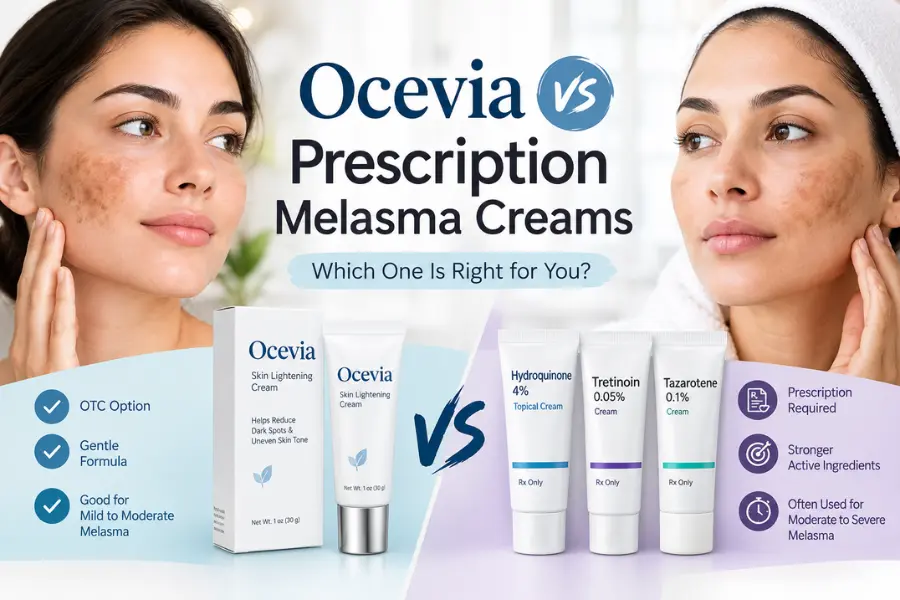
Understanding the differences can help people make more informed decisions about their skincare routine and know when professional advice may be appropriate.
What Are Prescription Melasma Creams?
One of the best-known prescription approaches for melasma is triple combination cream (TCC).
Traditional TCC contains three active ingredients:
- Hydroquinone 4%
- Tretinoin 0.05%
- Fluocinolone acetonide 0.01%
Each ingredient has a different role.
Hydroquinone primarily inhibits melanin production and is one of the most established topical depigmenting ingredients used in dermatology.
Tretinoin, a retinoid, increases epidermal cell turnover and helps disperse melanin-containing cells. It can also improve the effectiveness of other topical ingredients.
Fluocinolone acetonide is a corticosteroid that reduces inflammation and can decrease irritation from the other ingredients.
Together, these ingredients target different aspects of pigmentation and inflammation, which is one reason triple combination therapy can be effective for melasma.
However, prescription-strength treatment is not necessarily designed for indefinite, unsupervised use.
How Long Are Prescription Melasma Creams Typically Used?
Use prescription melasma treatments as directed by a dermatologist.
Triple combination therapy is generally used as a short-course treatment, with duration and frequency adjusted based on the patient’s response and tolerance.
This is particularly important because each component has potential side effects.
Hydroquinone, particularly with prolonged or inappropriate use, has been associated with exogenous ochronosis, a condition that can cause persistent blue-black or dark pigmentation.
Tretinoin can cause dryness, redness, scaling, and irritation, especially as the skin adapts to treatment.
Topical corticosteroids can also cause problems when used incorrectly or for prolonged periods, including skin thinning and other steroid-related changes.
For people with pigmentation-prone skin, irritation itself can be problematic because inflammation may contribute to post-inflammatory pigmentation.
For these reasons, prescription treatment is best approached as part of a supervised treatment plan, rather than as a cream to use indefinitely without professional guidance.
What Is Ocevia Skin Brightening Cream?
Ocevia is an over-the-counter skin-brightening cream formulated around several non-steroidal, non-hydroquinone ingredients.
According to its formulation, the key actives include:
- TYROSTAT-09 (Rumex Occidentalis Extract) – 1%
- Alpha Arbutin – 1%
- Niacinamide – 3%
- Ethyl Ascorbic Acid – 0.5%
- Vitamin E – 1%
These ingredients approach pigmentation through different mechanisms.
TYROSTAT-09
TYROSTAT-09 is a botanical ingredient described as a tyrosinase inhibitor. Tyrosinase is an important enzyme involved in melanin production.
The source material for this article cites research in which TYROSTAT-09 was evaluated for melasma and showed results comparable to hydroquinone.
Alpha Arbutin
Alpha arbutin is another ingredient commonly used in pigmentation-focused skincare. It works by influencing tyrosinase activity and is frequently included in products designed for uneven skin tone and dark spots.
Niacinamide
Niacinamide, also known as vitamin B3, has a different approach. Rather than primarily targeting melanin production, it can help reduce melanosome transfer to surrounding skin cells.
It is also widely used to support the skin barrier and can be useful in routines where maintaining skin tolerance is important.
Ethyl Ascorbic Acid
Ethyl Ascorbic Acid is a stable vitamin C derivative. Vitamin C derivatives are commonly used in brightening skincare because of their antioxidant properties and their role in pigmentation-focused routines.
Vitamin E
Vitamin E provides antioxidant and skin-conditioning support and complements other antioxidant ingredients in a skincare formulation.
Ocevia vs Prescription Melasma Creams: The Key Differences
The biggest difference isn’t simply the number of ingredients in each formula. It is how they are intended to be used.
Prescription triple combination therapy is a more intensive treatment approach involving hydroquinone, a retinoid, and a corticosteroid.
Ocevia instead uses a combination of non-hydroquinone, non-steroid brightening ingredients intended for regular skincare use.
| Factor | Prescription TCC | Ocevia |
|---|---|---|
| Hydroquinone | Yes | No |
| Tretinoin | Yes | No |
| Corticosteroid | Yes | No |
| Alpha Arbutin | No | 1% |
| Niacinamide | No | 3% |
| TYROSTAT-09 | No | 1% |
| Vitamin C derivative | No | 0.5% Ethyl Ascorbic Acid |
| Intended use | Supervised treatment | Regular skincare |
| Access | Prescription treatment | OTC |
| Long-term use | Requires medical guidance | Designed for ongoing use |
| Main consideration | Potency and side-effect management | Gradual, multi-ingredient brightening |
The comparison shows why these products shouldn’t necessarily be viewed as direct substitutes.
Which Option Is More Appropriate for Melasma?
The right choice depends heavily on the individual situation.
For someone with mild pigmentation or early melasma, a consistent skincare routine with appropriate Ocevia skin-brightening ingredients and daily sun protection may be a reasonable starting point.
For someone with severe, persistent, or treatment-resistant melasma, a dermatologist may recommend a prescription treatment such as triple combination therapy.
This is where the distinction between treatment and maintenance becomes important.
Prescription therapy may be used for a defined period to achieve greater initial improvement, while a non-prescription brightening routine may subsequently be used as part of ongoing skincare.
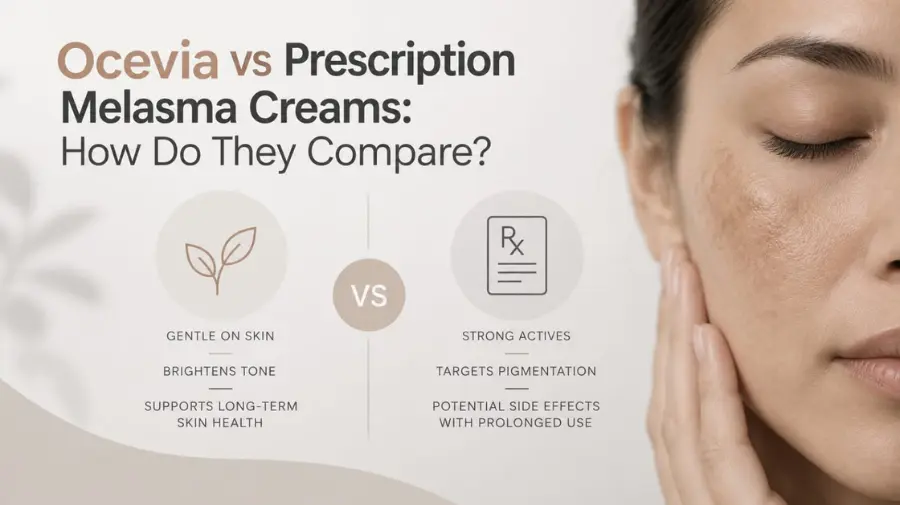
Anyone considering prescription-strength melasma treatment should follow their dermatologist’s instructions rather than extending treatment on their own.
What About Indian Skin?
Melasma and post-inflammatory pigmentation can be particularly challenging for people with medium-to-deep skin tones because inflammation and irritation can themselves contribute to pigmentation.
This makes tolerance an important consideration when selecting skincare.
People comparing non-prescription options may want to consider the ingredients, their concentrations, the formulation, their own skin sensitivity, and whether the product fits into a consistent routine.
For readers who want to explore this topic further, this guide to melasma creams recommended by dermatologists provides additional information on factors to consider when choosing a melasma cream for Indian skin.
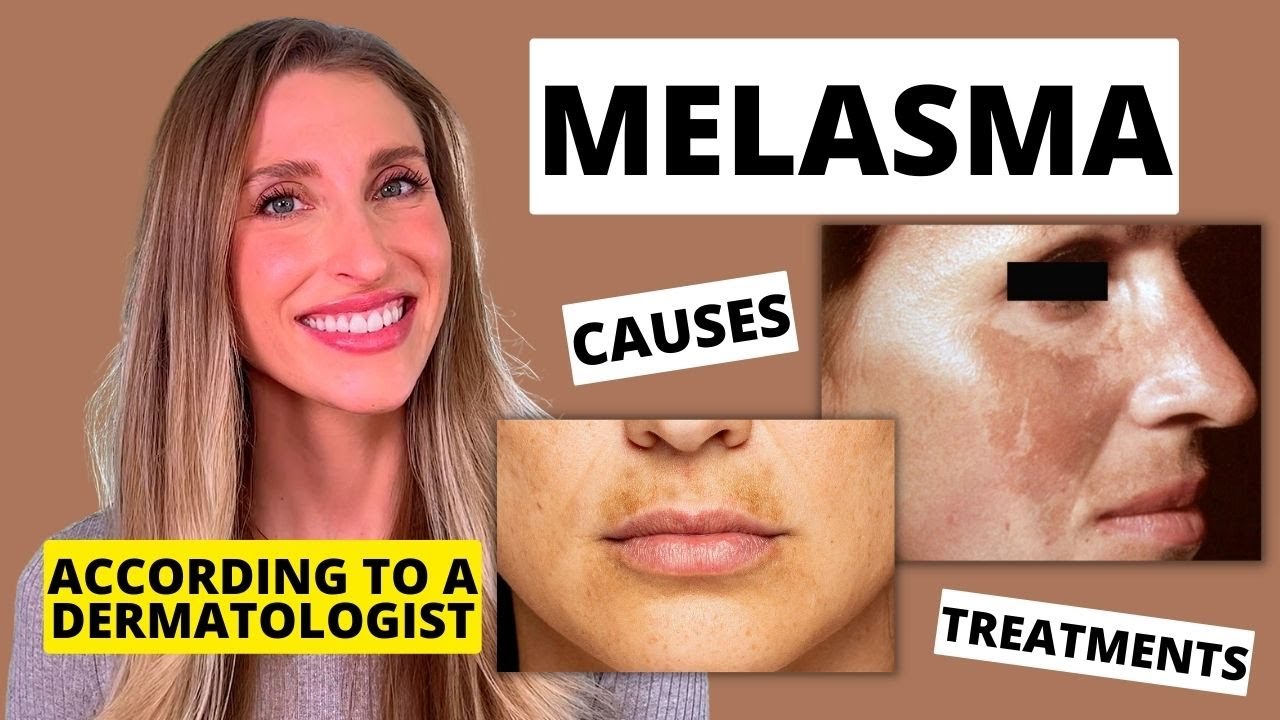
Best Melasma Treatment? Dermatologist Explains Melasma: Causes, At-Home Treatments, & More
Sunscreen Is Important Regardless of the Treatment
Whether someone is using a prescription cream or an OTC brightening product, sun protection remains an important part of managing melasma.
UV exposure can stimulate melanin production and contribute to worsening or recurrence of pigmentation.
A broad-spectrum sunscreen should therefore be part of a consistent routine. Depending on the individual’s needs, additional measures such as hats, shades, and avoiding prolonged direct sun exposure can also help.
For people with melasma, consistency matters because stopping sun protection while continuing pigmentation treatment can undermine the overall routine.
Common Mistakes to Avoid
Regardless of the skincare approach someone chooses, several mistakes can make pigmentation harder to manage.
1. Using too many active ingredients
Adding several strong ingredients at once can increase irritation without necessarily improving results.
2. Skipping sunscreen
Brightening products cannot compensate for ongoing UV exposure.
3. Using prescription creams without supervision
Prescription ingredients can be effective, but their potential side effects mean you should use them under professional guidance.
4. Expecting overnight results
Melasma generally requires patience. Pigmentation can take weeks or months to improve, and it can return.
5. Ignoring irritation
Persistent redness, burning, peeling, or discomfort shouldn’t simply be considered part of successful treatment. Irritated skin may become more pigmentation-prone.
When Should You See a Dermatologist?
A dermatologist can help determine whether pigmentation is actually melasma and recommend treatment based on its severity and the individual’s skin characteristics.
Professional evaluation is particularly useful when:
- Pigmentation is widespread or rapidly changing
- OTC skincare hasn’t produced adequate improvement
- The skin is becoming irritated by treatment
- Prescription-strength treatment is being considered
- Pigmentation repeatedly returns
- The diagnosis is uncertain
A personalized treatment plan can also help determine when an intensive prescription treatment is appropriate and when maintenance skincare may be sufficient.
The Bottom Line
Ocevia and prescription triple combination creams serve different roles in melasma skincare.
Prescription TCC combines hydroquinone, tretinoin, and fluocinolone and can provide a more intensive treatment approach, particularly when prescribed and monitored by a dermatologist. However, its ingredients also carry potential risks, so appropriate duration and supervision matter.
Ocevia takes a different approach, combining ingredients such as TYROSTAT-09, Alpha Arbutin, Niacinamide, Ethyl Ascorbic Acid, and Vitamin E without hydroquinone, tretinoin, or corticosteroids.
For mild pigmentation and ongoing maintenance, an OTC brightening product may be a useful option. For severe or treatment-resistant melasma, professional evaluation and prescription treatment may be more appropriate.
Ultimately, the best approach isn’t simply the strongest cream. It is the treatment strategy that fits the severity of the pigmentation, the individual’s skin, and the intended duration of use.
FAQs
Frequently Asked Questions About Ocevia and Prescription Melasma Creams:
Ocevia and prescription melasma creams. The designs focus on different treatment approaches. Ocevia is an over-the-counter brightening cream that uses non-hydroquinone, non-steroid ingredients, while prescription triple combination cream (TCC) contains hydroquinone, tretinoin, and fluocinolone acetonide.
The main differences include:
- Prescription TCC: A more intensive treatment approach that is generally used under medical guidance.
- Ocevia: A non-prescription brightening option intended for regular skincare use.
- Hydroquinone: Present in traditional prescription TCC but not in Ocevia.
- Tretinoin and corticosteroid: Present in traditional prescription TCC but not in Ocevia.
- Brightening ingredients: Ocevia uses ingredients such as TYROSTAT-09, Alpha Arbutin, Niacinamide, Ethyl Ascorbic Acid, and Vitamin E.
Because the formulations and intended uses are different, these products should not automatically be considered direct substitutes. The most appropriate option depends on the severity of pigmentation, skin sensitivity, and treatment goals.
For someone with mild pigmentation or early melasma, a consistent skincare routine containing appropriate brightening ingredients and daily sun protection may be a reasonable starting point.
Ocevia may be considered as part of that routine because it contains several non-hydroquinone brightening ingredients. However, a product’s suitability depends on the individual’s skin and whether the pigmentation has been correctly diagnosed.
When considering an OTC brightening product, it is important to look at:
- The ingredients and their concentrations
- Whether the formulation is suitable for your skin
- Whether the product causes irritation
- Whether it fits into a consistent skincare routine
- Whether daily sun protection is being used
If pigmentation is widespread, rapidly changing, or not improving, professional evaluation may be appropriate.
Prescription triple combination cream is a more intensive treatment approach because it combines hydroquinone, tretinoin, and fluocinolone acetonide.
Traditional TCC contains:
- Hydroquinone 4%
- Tretinoin 0.05%
- Fluocinolone acetonide 0.01%
These ingredients work through different mechanisms. Hydroquinone helps reduce melanin production, tretinoin is a retinoid that supports epidermal cell turnover, and fluocinolone acetonide is a corticosteroid that helps reduce inflammation.
Ocevia takes a different approach by combining non-hydroquinone, non-steroid brightening ingredients. This means you shouldn’t compare the two products by asking which one is stronger.
A more useful question is which treatment strategy fits the severity of pigmentation, the individual’s skin, and the intended duration of use.
Use prescription melasma treatments as directed by a dermatologist. Triple combination therapy is generally a short-course treatment, with duration and frequency adjusted based on the patient’s response and tolerance.
Medical supervision is necessary because prescription ingredients can cause side effects, especially when used incorrectly or for prolonged periods.
Potential concerns include:
- Hydroquinone: Prolonged or inappropriate use has been associated with exogenous ochronosis, a condition that can cause persistent blue-black or dark pigmentation.
- Tretinoin: May cause dryness, redness, scaling, and irritation, especially as the skin adapts to treatment.
- Topical corticosteroids: Incorrect or prolonged use can cause skin thinning and other steroid-related changes.
- Irritation: Inflammation can contribute to post-inflammatory pigmentation, particularly in pigmentation-prone skin.
For these reasons, prescription treatment is best approached as part of a supervised treatment plan rather than as a cream to use indefinitely without professional guidance.
Ocevia is formulated as an over-the-counter brightening cream intended for regular skincare use. Its formulation uses non-hydroquinone, non-steroid ingredients, unlike prescription triple combination therapy.
However, “designed for ongoing use” does not mean everyone should use it indefinitely without considering their skin’s response.
When using a brightening product as part of a maintenance routine, it is important to consider:
- Whether the skin is tolerating the product
- Whether irritation or dryness is developing
- Whether the product fits into the rest of the skincare routine
- Whether pigmentation is improving, remaining stable, or worsening
- Whether daily sun protection is being maintained
If a product causes persistent redness, burning, peeling, or discomfort, it shouldn’t be considered part of successful treatment. Irritated skin may become more pigmentation-prone.
People with medium-to-deep skin tones may be particularly concerned about irritation because inflammation can contribute to post-inflammatory pigmentation.
This makes skin tolerance an important consideration when selecting skincare.
When comparing non-prescription brightening products, people may want to consider:
- The ingredients and their concentrations
- The formulation and how it feels on the skin
- Their own skin sensitivity
- Whether the product causes irritation
- Whether the product fits into a consistent routine
Ocevia may fit into a pigmentation-focused skincare routine, but no single cream suits everyone. If pigmentation is persistent, worsening, or hard to diagnose, a dermatologist can help determine the best treatment approach.
Yes. Sun protection remains an important part of managing melasma, regardless of whether someone is using a prescription cream or an OTC brightening product.
UV exposure can stimulate melanin production and contribute to worsening or recurrence of pigmentation.
A consistent sun-protection routine may include:
- Using a broad-spectrum sunscreen with SPF 30 or higher
- Reapplying sunscreen as directed, especially after swimming or sweating
- Seeking shade when outdoors
- Wearing sun-protective clothing when possible
- Using tinted sunscreen containing iron oxides when appropriate, particularly for visible-light protection
For people with melasma, consistency matters because stopping sun protection while continuing pigmentation treatment can undermine the overall routine.
A dermatologist can help determine whether pigmentation is actually melasma and recommend treatment based on its severity and the individual’s skin characteristics.
Professional evaluation is particularly useful when:
- Pigmentation is widespread or rapidly changing
- OTC skincare has not produced adequate improvement
- The skin is becoming irritated by treatment
- Prescription-strength treatment is being considered
- Pigmentation repeatedly returns
- The diagnosis is uncertain
A personalized treatment plan can help determine when an intensive prescription treatment is appropriate and when maintenance skincare may be sufficient.
Anyone considering prescription-strength melasma treatment should follow their dermatologist’s instructions rather than extending treatment on their own.
Ultimately, the best approach is not simply the strongest cream. It is the treatment strategy that fits the severity of the pigmentation and the individual’s skin.






- Be Respectful
- Stay Relevant
- Stay Positive
- True Feedback
- Encourage Discussion
- Avoid Spamming
- No Fake News
- Don't Copy-Paste
- No Personal Attacks
- Be Respectful
- Stay Relevant
- Stay Positive
- True Feedback
- Encourage Discussion
- Avoid Spamming
- No Fake News
- Don't Copy-Paste
- No Personal Attacks
