How to Calm Skin After Waxing Face: Easy Ways to Soothe Redness and Irritation
Published: 8 May 2026
Facial skin often becomes red, sensitive, or irritated after waxing because the process removes hair from the root while exfoliating the skin’s surface. Since the skin on the face is thinner and more delicate than other parts of the body, it can react quickly to heat, pulling, and friction during waxing. This is why many people experience how to Calm Skin After Waxing Face, along with itching, stinging, or temporary discomfort.
After facial waxing, common symptoms include mild burning, tiny bumps, dryness, tightness, and increased skin sensitivity. People with sensitive or dry skin may experience these reactions more strongly, especially if harsh skincare products are used before or after waxing. Understanding how to calm skin after facial waxing is important to prevent further irritation and help the skin recover faster.
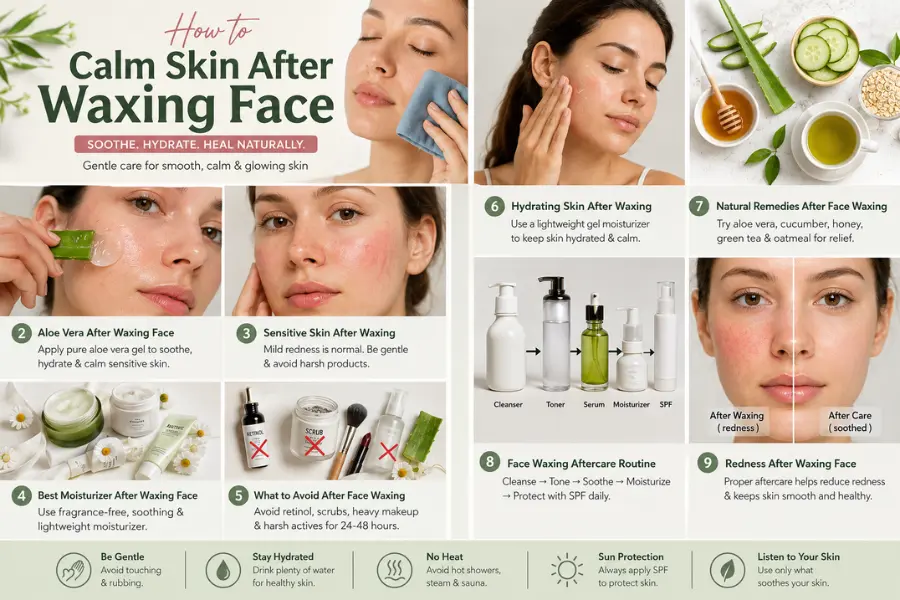
The good news is that proper face waxing aftercare can quickly soothe irritated skin and reduce redness. Using gentle, hydrating, and fragrance-free skincare products can help restore the skin barrier and minimise discomfort. If you are wondering how to soothe skin after face waxing, simple steps like cooling the skin, applying aloe vera, and avoiding harsh ingredients can make a big difference in naturally calming post-wax sensitivity.
Why Your Skin Feels Irritated After Face Waxing
Facial waxing can leave the skin feeling smooth and hair-free, but it can also cause temporary irritation and sensitivity. Since waxing pulls hair directly from the root, it can place stress on the skin and hair follicles. This is why many people experience irritated skin after face waxing, especially if they already have sensitive or dry skin.
The reaction can vary from person to person depending on skin type, the type of wax used, and how the skin is treated before and after waxing. Some people may only notice slight redness, while others can experience bumps, itching, dryness, or burning sensations. Understanding the causes of skin sensitivity after waxing can help you take better care of your skin and reduce discomfort more effectively.
Facial Skin Is More Sensitive Than Body Skin
The skin on your face is naturally thinner, softer, and more delicate than the skin on other parts of the body. As a result, facial skin reacts more quickly to heat, friction, and pulling during the waxing process. Areas such as the upper lip, cheeks, chin, and eyebrows are especially prone to irritation because the skin there is more fragile and exposed.
Waxing removes hair from the root while also lifting away a thin layer of dead skin cells. Although this exfoliating effect can make the skin feel smooth, it can also temporarily weaken the skin barrier. This is one of the main reasons people experience face waxing side effects like redness, dryness, and discomfort immediately after treatment.
Common Reactions After Face Waxing
Mild irritation after facial waxing is very common and usually temporary. The skin often becomes slightly inflamed because hair follicles are disturbed during hair removal. As the skin reacts, you may notice redness, burning, itching, tightness, or small raised bumps.
Some people also develop dry patches or increased sensitivity for a few hours after waxing. These symptoms are usually harmless and improve with gentle skincare and hydration. Using calming products and avoiding harsh ingredients can help soothe the skin faster and reduce post-wax discomfort.
When Post-Wax Irritation Is Normal
In most cases, mild redness and slight tenderness after waxing are completely normal. The skin may look pink or feel warm for several hours, especially for people with fair or sensitive skin. Minor irritation happens because waxing temporarily increases blood flow and leaves the skin more exposed.
Slight itching or sensitivity when touching the face can also occur shortly after waxing. These reactions usually disappear within the same day or by the next morning. Proper moisturising and cooling treatments can help calm the skin and support the natural healing process.
Signs You May Be Having an Allergic Reaction
While temporary irritation is expected, severe reactions may signal an allergy, skin damage, or infection. Symptoms such as intense swelling, severe burning, painful irritation, or a spreading, waxing rash on the face should not be ignored.
Pus-filled bumps, blistering, or redness that lasts for several days may indicate that the skin has become infected or reacted badly to the wax or skincare products used afterward. If these symptoms appear, it is important to stop using active skincare ingredients and seek advice from a dermatologist to prevent further skin damage.
How to Calm Skin After Waxing Face
Facial waxing can leave the skin feeling smooth and hair-free, but it may also cause temporary redness, irritation, burning, and sensitivity. Since facial skin is more delicate than body skin, it reacts quickly to heat, pulling, and friction during waxing. This is why many people experience redness, tightness, or small bumps immediately after facial waxing.
How Do I Soothe My Skin After Waxing? – Skin Savvy Dermatology

Proper face waxing aftercare is essential for calming the skin and preventing further irritation. With the right steps and soothing skincare products, you can reduce discomfort and help your skin recover much faster.
Cool the Skin Immediately
One of the first things you should do after waxing is cool the skin to reduce inflammation and discomfort. Applying a cold compress or ice wrapped in a soft cloth helps calm burning sensations and minimise redness.
This cooling effect also helps soothe open hair follicles and reduce swelling, making it one of the most effective ways to naturally calm skin after facial waxing.
Keep the Skin Hydrated
Hydration is extremely important after waxing, as the skin barrier temporarily becomes weakened. Using gentle and lightweight moisturisers helps restore moisture and reduce dryness or tightness.
Ingredients like hyaluronic acid, glycerin, and ceramides are excellent for supporting skin recovery and maintaining soft, healthy skin after waxing.
Use Soothing Ingredients
Applying calming skincare products can quickly reduce irritation and sensitivity after facial waxing. Ingredients such as aloe vera, chamomile, oatmeal, and niacinamide help soothe inflamed skin and support healing.
These ingredients are especially beneficial for people looking for gentle ways to soothe skin after face waxing without causing further irritation.
Avoid Harsh Skincare Products
After waxing, your skin becomes more sensitive to active ingredients and strong skincare products. Avoid using retinol, exfoliating acids, alcohol-based toners, and heavily fragranced products for at least 24–48 hours.
Using harsh products too soon after waxing the face can worsen irritated skin and increase redness, burning, or peeling.
Protect Skin From Heat and Sun Exposure
Freshly waxed skin is more vulnerable to heat and UV damage. Direct sunlight, hot showers, steam, and saunas can all increase irritation and prolong redness.
Protecting the skin from heat and applying gentle SPF once the skin settles can help prevent further sensitivity and dark spots after waxing.
Let the Skin Recover Naturally
Your skin needs time to heal after waxing, so avoid touching, scrubbing, or applying heavy makeup immediately afterward. Keeping your routine simple and gentle allows the skin barrier to repair itself properly.
Most cases of redness after facial waxing are temporary and improve within a few hours or by the next day with proper care and hydration.
What to Do Immediately After Waxing Your Face
The first few hours after facial waxing are very important for your skin. Since waxing temporarily weakens the skin barrier and opens the hair follicles, your skin becomes more sensitive to heat, bacteria, and harsh skincare products. Following the right facial waxing aftercare tips can help reduce irritation quickly and prevent redness, bumps, or discomfort from worsening.
Simple aftercare steps, like cooling the skin, avoiding friction, and using gentle products, can make a big difference in how quickly your skin recovers. If you are wondering how to reduce redness after waxing your face, the goal is to keep the skin calm, hydrated, and protected while it heals naturally.
Apply a Cold Compress to Reduce Redness
One of the easiest ways to soothe freshly waxed skin is by applying a cold compress. Wrap a few ice cubes in a soft, clean cloth and gently press them against the irritated areas for a few minutes. The cooling effect helps reduce inflammation, calm burning sensations, and minimise redness after waxing.
Cold therapy is especially helpful for people with sensitive skin because it instantly provides relief from heat and irritation. Proper skin cooling after waxing can also help tighten pores and reduce the appearance of small bumps.
Wash Your Face Gently With Cool Water
After waxing, it is important to cleanse the skin carefully without causing further irritation. Wash your face gently with cool or lukewarm water, not hot, as heat can increase redness and skin sensitivity after waxing.
Choose a mild, fragrance-free cleanser that will not strip moisture from the skin. Harsh soaps, exfoliating cleansers, or products containing alcohol should be avoided because they can worsen dryness and irritation after waxing.
Avoid Touching Your Face
Freshly waxed skin is more vulnerable to bacteria and irritation, so try not to touch your face unnecessarily. Rubbing or scratching the skin can transfer dirt and oil from your hands, which may lead to clogged pores, bumps, or breakouts.
Repeatedly touching sensitive skin can also increase redness and slow healing. Keeping your hands away from the waxed area helps protect the skin as it naturally recovers.
Let Your Skin Breathe
Your skin needs time to recover after waxing, so it is best to avoid heavy makeup immediately afterward. Foundation, concealer, and thick beauty products can clog open pores and increase the risk of irritation or breakouts.
Allowing the skin to breathe for at least a few hours can help reduce sensitivity and support faster healing. During this time, focus on gentle hydration, soothing skincare, and lightweight products rather than multiple cosmetic products.
Best Ingredients to Soothe Skin After Face Waxing
After facial waxing, your skin becomes more sensitive, dry, and prone to redness because the protective barrier is temporarily weakened. This is why choosing the right soothing ingredients for irritated skin is crucial for faster recovery and greater comfort. Gentle, hydrating, and anti-inflammatory ingredients can help calm the skin, reduce burning, and restore balance after waxing.
If you are looking for the best products after face waxing, focus on fragrance-free, lightweight, and rich in calming actives. These ingredients help repair the skin barrier while naturally reducing redness and irritation.
Aloe Vera for Cooling and Hydration
Aloe vera is one of the most popular and effective natural remedies for post-wax care. It provides an instant cooling effect that helps reduce heat, redness, and irritation after hair removal.
It also deeply hydrates the skin without feeling heavy or greasy. Using aloe vera after facial waxing can significantly soothe inflamed areas, support faster skin recovery, and keep the skin soft and refreshed.
Cucumber for Refreshing Sensitive Skin
Cucumber is known for its high water content and natural cooling properties. It helps refresh tired, irritated skin and reduces puffiness and discomfort after waxing.
Its mild anti-inflammatory effect makes it ideal for sensitive skin that reacts easily. Applying cucumber-based gels or chilled cucumber slices can gently and naturally soothe the skin.
Chamomile for Redness Relief
Chamomile is a gentle botanical ingredient known for its calming and anti-inflammatory properties. It helps reduce redness, itching, and irritation after facial waxing.
Because it is very mild, chamomile is especially suitable for sensitive skin types that need extra care. It supports skin recovery while minimising post-wax discomfort and visible redness.
Hyaluronic Acid for Hydration
Hyaluronic acid is a powerful hydrating ingredient that helps restore moisture in the skin after waxing. Since waxing can leave the skin feeling dry and tight, this ingredient helps replenish lost hydration.
It attracts and retains water in the skin, making it feel plump, soft, and balanced again. Including hyaluronic acid in your skincare routine after waxing helps maintain a healthy skin barrier.
Niacinamide for Skin Barrier Repair
Niacinamide is an excellent ingredient for calming redness and strengthening the skin barrier. It helps reduce inflammation and improve overall skin texture after waxing.
It also supports skin healing by reducing sensitivity and preventing post-wax breakouts. Regular use can make the skin more resilient to irritation over time.
Oatmeal for Itchy or Burning Skin
Oatmeal is a soothing ingredient that works well for itchy, burning, or highly reactive skin after waxing. It forms a protective layer on the skin and helps lock in moisture.
Its natural calming properties reduce irritation and discomfort, making it ideal for post-wax sensitivity. Oat-based creams or masks can provide deep relief for stressed skin.
Best Moisturisers to Use After Face Waxing
After waxing, your skin barrier becomes temporarily weakened, which can lead to dryness, redness, and increased sensitivity. This is why choosing the right moisturiser is an essential part of any post-waxing skincare routine. A good moisturiser helps lock in hydration, calm irritation, and support faster skin recovery after hair removal.
If you want effective hydration after waxing, focus on gentle, soothing formulas that repair the skin barrier without clogging or stinging. The wrong product can worsen irritation, while the right one can instantly comfort the skin.
Choose Fragrance-Free Moisturisers
One of the most important rules after waxing is to avoid irritating ingredients, such as perfumes and alcohol. Fragrance-free moisturisers are much safer because they reduce the risk of burning, redness, or allergic reactions on freshly waxed skin.
Fragrances may feel pleasant, but they can be too harsh for sensitive post-wax skin. Choosing a simple, gentle formula is key when looking for the best moisturiser after facial waxing.
Lightweight Gel Moisturisers for Oily Skin
If you have oily or combination skin, lightweight gel-based moisturisers are the best choice after waxing. These formulas absorb quickly and hydrate without leaving the skin feeling greasy or heavy.
Look for non-comedogenic products that won’t clog open pores after waxing. Gel moisturisers also help cool the skin, making them ideal for reducing post-wax redness and discomfort.
Rich Creams for Dry or Sensitive Skin
For dry or sensitive skin types, richer creams work better because they provide deeper nourishment and long-lasting hydration. These moisturisers often contain ceramides, panthenol, and calming ingredients that help repair the skin barrier.
They are especially useful if your skin feels tight, flaky, or irritated after waxing. A nourishing cream can significantly improve comfort and speed up recovery.
Ingredients to Avoid in Moisturisers After Waxing
After facial waxing, your skin is more reactive, so it’s important to avoid strong active ingredients that could irritate it. Retinol, exfoliating acids (like AHAs and BHAs), and strong essential oils should not be used immediately after waxing.
These ingredients can increase redness, stinging, and sensitivity, slowing recovery. Instead, stick to gentle, soothing formulations until your skin fully calms down and returns to normal.
Things You Should Avoid After Waxing Your Face
After facial waxing, your skin is in a very delicate and reactive state. The hair has been removed from the roots, and the pores are slightly open, making the skin more vulnerable to irritation, redness, and breakouts. Knowing what not to do after face waxing is just as important as knowing the correct aftercare steps, because small mistakes can easily worsen sensitivity and delay healing.
Avoiding common post-waxing mistakes helps protect your skin barrier, reduce inflammation, and prevent issues like bumps, rashes, or prolonged redness. Following proper waxing aftercare precautions ensures your skin stays calm and recovers smoothly.
Avoid Direct Sun Exposure
After waxing, your skin becomes much more sensitive to UV rays, which can easily trigger redness, dark spots, or irritation. Direct sun exposure may also worsen inflammation and slow down healing.
If you need to go outside, make sure to use gentle sun protection, such as a hat or broad-spectrum sunscreen (only after the skin has settled). Protecting your skin from the sun is one of the most important steps in avoiding irritation after waxing.
Skip Active Skincare Ingredients
Strong skincare ingredients should be avoided immediately after waxing because they can irritate freshly treated skin. Ingredients like AHAs, BHAs, retinoids, and vitamin C may cause stinging, redness, or peeling when applied too soon.
These actives are excellent for regular skincare, but after waxing, your skin needs time to recover. Using gentle, soothing products instead helps prevent inflammation and supports a healthier healing process.
Avoid Hot Showers and Steam
Heat is one of the most common triggers of post-wax irritation. Hot showers, steam rooms, or facial steaming can increase blood flow to the skin, worsening redness.
This extra heat can also make the skin feel more sensitive and uncomfortable. It is better to use cool or lukewarm water until your skin fully calms down.
Stay Away From Heavy Makeup
Right after waxing, your pores are more open and sensitive, making your skin more prone to clogging. Applying heavy makeup too soon can trap dirt and oil inside the pores, leading to bumps or breakouts.
Allow your skin to breathe for a few hours before using foundation or concealer. This is an important step in preventing irritation and maintaining a clean, healthy skin surface.
Avoid Scrubbing or Exfoliating
One of the most important waxing aftercare precautions is to avoid scrubbing or exfoliating the skin immediately after treatment. The skin is already freshly exfoliated by the waxing process, so additional exfoliation can cause damage and irritation.
Scrubbing too soon can lead to redness, sensitivity, and even micro-tears in the skin. Give your skin time to recover fully before resuming exfoliation in your skincare routine.
How Long Does Redness Last After Face Waxing?
Redness after facial waxing is a completely normal skin response and usually a short-term reaction. Since waxing pulls hair directly from the root, it temporarily stimulates the skin and increases blood flow in the treated area. This leads to visible redness after face waxing, mild warmth, and sensitivity, especially in delicate facial areas such as the upper lip and cheeks.
In most cases, this irritation is mild and fades naturally as the skin begins to recover. However, the exact duration of waxing irritation recovery can vary depending on skin type, waxing method, and aftercare routine.
Normal Recovery Time
For most people, redness after facial waxing lasts from a few hours to 24 hours. In some cases, especially with sensitive skin, mild pinkness or slight tenderness may remain until the next day.
This type of reaction is completely normal and is part of the skin’s natural healing process. If proper soothing care is followed, the skin usually calms down much faster and returns to its normal appearance without any lasting effects.
Factors That Affect Healing
The time it takes for redness to fade can vary from person to person. One of the biggest factors is skin sensitivity. People with naturally sensitive or dry skin may experience longer-lasting redness.
The type of wax used also plays an important role. Hard wax is often gentler on the skin compared to strip wax, which can sometimes cause more irritation. In addition, skincare products used before and after waxing can either help soothe the skin or worsen irritation if they contain harsh ingredients.
When to See a Dermatologist
While mild redness is normal, there are certain cases where professional advice may be needed. If you notice severe irritation, persistent swelling, or signs of infection, it may indicate an abnormal reaction.
You should also consult a dermatologist if bumps do not improve after a few days or if the skin becomes painful, inflamed, or develops pus-filled spots. These symptoms are not typical and require proper medical attention to prevent further skin damage.
Home Remedies to Calm Skin After Waxing Face
After facial waxing, the skin often feels warm, sensitive, or slightly irritated because the hair has been removed from the root and the pores are temporarily open. During this phase, using gentle, natural remedies after face waxing can help calm inflammation, reduce redness, and speed healing without further irritating the skin. These simple home treatments are especially helpful for soothing skin naturally after waxing, using safe, easily available ingredients.
Aloe Vera Gel
Aloe vera gel is one of the most effective remedies for post-wax care because it instantly cools and hydrates irritated skin. It helps reduce redness, burning, and inflammation while supporting faster skin recovery.
Applying fresh or pure aloe vera gel can calm discomfort and restore moisture balance, making it one of the best home remedies for waxing irritation.
Cold Milk Compress
Cold milk is a soothing remedy that helps calm sensitive skin after waxing. The natural fats and proteins in milk provide a cooling effect that reduces redness and irritation.
Soak a clean cotton pad in chilled milk and gently place it on the waxed area for a few minutes. This helps relax the skin and naturally ease post-wax sensitivity.
Green Tea Compress
Green tea is rich in antioxidants and has strong anti-inflammatory properties, helping reduce redness and swelling after waxing. It is especially useful for calming sensitive or reactive skin.
After brewing and cooling green tea, soak a cotton pad and apply it to the skin. This helps soothe irritation while protecting the skin from further inflammation.
Honey for Dry Skin
Honey is a natural humectant that helps lock in moisture and prevent dryness after waxing. It also has antibacterial properties that support healing and protect the skin from minor infections.
Applying a thin layer of raw honey can soften the skin and reduce tightness, making it ideal for dry or sensitive skin types after waxing.
Coconut Oil for Mild Dryness
Coconut oil can help with mild dryness and flakiness after facial waxing. It nourishes the skin and helps restore softness by locking in moisture.
However, it should be used sparingly, especially on oily or acne-prone skin, to avoid clogging pores. When used correctly, it provides gentle hydration and comfort during the healing phase.
Best Post-Wax Skincare Routine for Sensitive Skin
After facial waxing, your skin becomes more delicate, reactive, and prone to redness because the hair has been removed from the root, temporarily weakening the protective barrier. This is why a proper calming skincare routine is essential for restoring balance, reducing irritation, and supporting faster healing. A gentle routine also helps prevent breakouts, dryness, and long-lasting sensitivity in sensitive skin after waxing.
Following a simple, consistent skincare routine after waxing your face helps keep your skin hydrated, protected, and calm without overwhelming it with harsh or active ingredients.
Gentle Cleansing
Start your routine with a mild, fragrance-free cleanser that removes dirt and excess oil without stripping the skin. After waxing, your skin is more vulnerable, so avoid foaming cleansers with strong sulfates or exfoliating particles.
Gentle cleansing helps keep pores clean while preventing irritation or further redness. Always use lukewarm or cool water to avoid increasing sensitivity.
Hydrating Toner
A hydrating toner helps refresh the skin and restore moisture after waxing. Look for alcohol-free formulas with soothing ingredients like rose water or glycerin.
This step helps calm tightness and prepares the skin to absorb serum and moisturiser more effectively, supporting overall skin recovery.
Soothing Serum
A soothing serum can deeply calm irritation and reduce redness after waxing. Ingredients such as hyaluronic acid, niacinamide, and panthenol are especially beneficial for repairing and hydrating the skin barrier.
This step is important for reducing post-wax discomfort, supporting faster skin healing, and keeping the skin soft and balanced.
Barrier Repair Moisturiser
A barrier-repair moisturiser is essential after waxing because it helps lock in hydration and restore the skin’s protective barrier. Choose a lightweight or creamy formula depending on your skin type.
Ingredients like ceramides and glycerin help strengthen the skin barrier and prevent dryness or flakiness, making it a key part of your post-wax care routine.
SPF Protection
Sun protection is especially important after waxing, as the skin becomes more sensitive to UV rays. Applying a gentle, broad-spectrum sunscreen helps prevent redness, dark spots, and further irritation.
Even short sun exposure can worsen sensitivity, so SPF is a crucial final step in maintaining healthy, calm skin after facial waxing.
How to Prevent Irritation Before Your Next Face Waxing Session
Preventing irritation begins even before the waxing session. If your skin is properly prepared, you are less likely to experience redness, bumps, or discomfort afterward. Following simple face-waxing tips can make a big difference in keeping your skin calm and reducing the risk of post-wax sensitivity. Proper preparation is one of the most effective ways to prevent waxing irritation and ensure smoother results.
Taking care of your skin before waxing helps strengthen the skin barrier, reduce sensitivity, and support a safer, more comfortable experience overall.
Exfoliate Gently Before Waxing
Gently exfoliating your skin 24–48 hours before waxing helps remove dead skin cells and allows the wax to grip hair more effectively. This reduces the chances of ingrown hairs and uneven hair removal.
However, exfoliation should be very mild. Avoid harsh scrubs or strong exfoliating acids right before waxing, as they can make the skin more sensitive and increase irritation.
Avoid Retinol Before Waxing
Retinol and other strong active ingredients should be avoided for at least a few days before waxing. These products increase skin cell turnover, which can make the skin more fragile and prone to tearing or redness during waxing.
Skipping retinol helps ensure a safer facial waxing experience and reduces the risk of excessive irritation or skin damage.
Patch Test New Wax Products
If you are trying a new wax product for the first time, always perform a patch test on a small area of skin. This helps you check for allergic reactions or sensitivity before applying it to your entire face.
Patch testing is a simple yet important step to ensure safe facial waxing and avoid unexpected skin reactions such as rashes or swelling.
Wax Clean Skin Only
Always make sure your skin is clean and free from oils, makeup, or heavy skincare products before waxing. Dirt, oil, or product buildup can interfere with wax adhesion and increase the risk of irritation.
Clean skin allows the wax to grip hair properly, reducing unnecessary pulling and making the process smoother and less harsh on the skin.
Choose Wax Designed for Sensitive Facial Skin
Using the right type of wax is very important for preventing irritation. Wax specially designed for facial or sensitive skin is usually gentler and less likely to cause redness or burning.
Hard wax is often preferred for the face because it sticks to the hair rather than the skin, reducing discomfort and making the waxing process more comfortable and skin-friendly.
FAQs
Facial waxing can sometimes leave the skin feeling red, sensitive, or uncomfortable, especially if you have delicate or reactive skin. Below are answers to some of the most common questions about face waxing aftercare, including how to soothe irritation, reduce redness, and properly care for your skin after waxing.
Yes, ice is one of the fastest and safest ways to calm the skin after facial waxing.
Applying cold helps reduce inflammation, soothe burning, and control redness after face waxing.
How to do it properly:
- Wrap ice cubes in a clean soft cloth (never apply directly on skin)
- Gently press on waxed areas for 2–5 minutes
- Repeat after short breaks if needed
This simple step is very effective for immediate relief and is a key part of a basic post-waxing skincare routine.
Yes, aloe vera is highly recommended because it naturally cools and heals irritated skin.
It is especially useful for people looking for gentle, natural remedies after face waxing.
Benefits of aloe vera after waxing:
- Reduces redness and inflammation
- Cool burning or itching sensation
- Hydrates without clogging pores
- Supports faster skin recovery
Apply a thin layer of pure aloe vera gel 2–3 times a day for best results.
Yes, but it must be done very gently to avoid worsening sensitivity.
Right after waxing, your pores are more open, and the skin is reactive, so rough cleansing can trigger irritation.
Safe way to wash your face:
- Use cool or lukewarm water only
- Choose a fragrance-free, mild cleanser
- Clean with soft hands (no scrubbing or exfoliating)
- Pat dry with a clean towel instead of rubbing
Avoid hot water or steam for at least 24 hours, as it can increase irritation.
Small bumps after waxing are very common and usually not serious. They happen because the hair follicles become temporarily inflamed after hair is pulled from the root.
Common causes include:
- Skin sensitivity after waxing
- Temporary follicle inflammation
- Bacterial irritation from touching the face
- Clogged pores from heavy products
How long do they last?
- Usually disappear within a few hours to 24 hours
- Sensitive skin may take slightly longer
If bumps are painful, filled with pus, or last more than a few days, they may indicate an infection or reaction and should be checked.
Yes, using moisturiser is one of the most important steps after waxing.
A good moisturiser helps restore hydration and strengthens the skin barrier, which is essential after hair removal.
The best moisturiser after waxing the face should be:
- Fragrance-free
- Alcohol-free
- Lightweight or soothing cream-based
- Contains ceramides, glycerin, or panthenol
Benefits:
- Reduces dryness and tightness
- Helps calm irritation
- Supports faster healing
- Improves hydrating skin after waxing
Apply gently 2–3 times daily, depending on the level of dryness.
Burning sensation after waxing is common, especially on sensitive facial skin. The goal is to cool and soothe the skin without triggering more irritation.
Best ways to calm burning skin:
Immediate relief:
- Apply a cold compress for 5–10 minutes
- Use aloe vera gel
- Splash face with cool water
Avoid:
- Hot showers or steam
- Scratching or rubbing
- Active skincare (retinol, acids, vitamin C)
Extra soothing care:
- Apply a gentle moisturiser
- Keep skin clean and hydrated
- Avoid makeup for a few hours
These steps are highly effective for calming skin after facial waxing and help it return to normal faster.
Taking proper care of your skin after waxing can make a huge difference in reducing irritation and speeding up recovery. By following a gentle post-waxing skincare routine and avoiding harsh products, you can keep your skin calm, healthy, and smooth after every waxing session.
Conclusion
Understanding how to calm skin after facial waxing is important for keeping your skin healthy, comfortable, and irritation-free after hair removal. Since facial skin becomes more delicate and sensitive after waxing, gentle care is essential to reduce discomfort and support faster healing. Proper face waxing aftercare can help prevent dryness, bumps, and prolonged irritation while keeping the skin smooth and balanced.
Using hydrating and soothing ingredients like aloe vera, hyaluronic acid, chamomile, and gentle moisturisers can make a big difference in calming the skin naturally. A simple and consistent post-waxing skincare routine helps restore the skin barrier and reduces the risk of further sensitivity or breakouts.
It is also important to avoid harsh skincare products immediately after waxing. Strong ingredients like retinol, exfoliating acids, and heavily fragranced products can worsen irritated skin after facial waxing and delay recovery. Instead, focus on cooling, hydrating, and protecting the skin until it fully settles. Most importantly, remember that mild redness after facial waxing is usually temporary and fades within a few hours or by the next day. By learning how to properly soothe skin after face waxing, you can enjoy smoother skin with less irritation and a more comfortable waxing experience every time.





- Be Respectful
- Stay Relevant
- Stay Positive
- True Feedback
- Encourage Discussion
- Avoid Spamming
- No Fake News
- Don't Copy-Paste
- No Personal Attacks
- Be Respectful
- Stay Relevant
- Stay Positive
- True Feedback
- Encourage Discussion
- Avoid Spamming
- No Fake News
- Don't Copy-Paste
- No Personal Attacks
