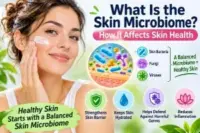
What Is the Skin Microbiome? How It Affects Skin Health
Published: 19 Nov 2026
Your skin is home to millions of tiny living organisms, including bacteria, fungi, and viruses. These microorganisms form a natural community known as the skin microbiome. Although many people think bacteria are harmful, some skin bacteria help protect the skin and support its natural defenses.
A healthy skin microbiome helps maintain the skin barrier, supports the immune system, and protects against harmful microorganisms. When this natural environment changes, it may be associated with certain skin problems, including acne and eczema.
Understanding the skin microbiome can help you make better skincare choices and avoid habits that may unnecessarily irritate your skin.
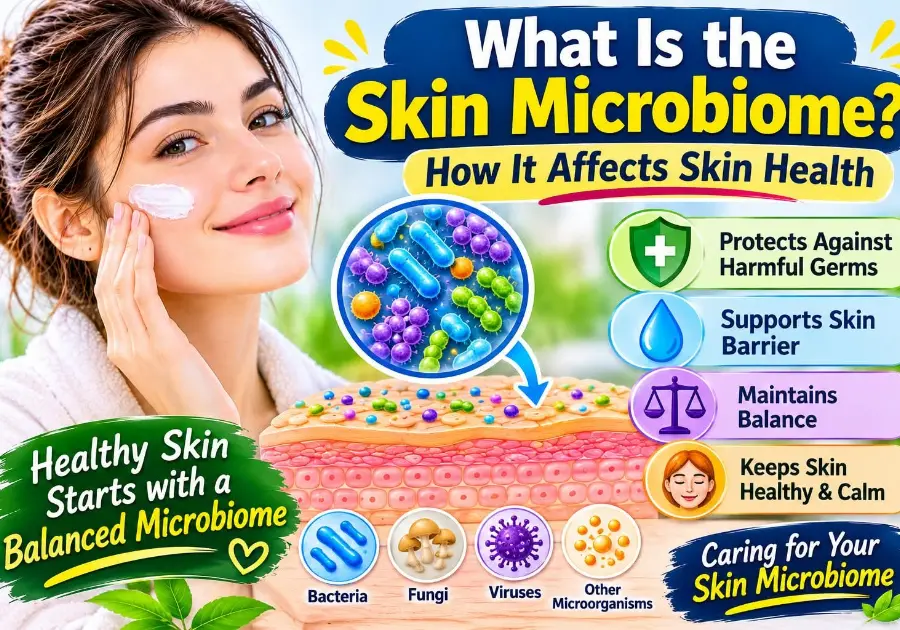
In this guide, you will learn what the skin microbiome is, why it matters, what can affect its balance, and how to support healthier skin through a gentle skincare routine.
What Is the Skin Microbiome?
The skin microbiome refers to the community of microorganisms that live on the surface of your skin and in its different layers and structures. These microorganisms include bacteria, fungi, viruses, and other microscopic life forms.
Your skin is not completely sterile. Instead, it provides a natural environment where different microorganisms live together and interact with your body.
Many of these microorganisms are harmless or beneficial. They can help protect your skin, interact with your immune system, and support the skin’s natural balance.
The skin microbiome is different from person to person. It can also change with age, environment, lifestyle, skin type, and body location.
What Microorganisms Live on Your Skin?
Several types of microorganisms make up the skin microbiome.
1. Bacteria
Bacteria are among the most common microorganisms found on human skin. Some species help protect the skin by competing with potentially harmful microbes.
Examples include:
- Staphylococcus epidermidis
- Cutibacterium acnes
- Corynebacterium species
Not all bacteria have the same effects. Some strains may support skin health, while others may contribute to problems under certain conditions.
2. Fungi
Fungi are another natural part of the skin microbiome. One well-known example is Malassezia, a group of yeasts commonly found on human skin.
These microorganisms are usually harmless, but changes in their growth or the skin environment may be associated with conditions such as dandruff and seborrheic dermatitis.
3. Viruses
Viruses can also be present in the skin microbiome. Some viruses infect bacteria and are known as bacteriophages.
They are part of the complex relationships between microorganisms living on the skin.
4. Other Microorganisms
Other microscopic organisms may also be found on the skin. Their presence and activity depend on the skin’s environment and other factors.
Together, these microorganisms form a changing ecosystem that interacts with your body.
Is the Skin Microbiome the Same for Everyone?
No. Every person has a somewhat different skin microbiome.
Several factors influence which microorganisms live on your skin, including:
- Age: The skin microbiome changes as you grow older.
- Skin type: Oily, dry, and moist areas can support different microorganisms.
- Body location: The face, hands, feet, and underarms have different microbial environments.
- Environment: Temperature, humidity, and pollution may influence microbial communities.
- Lifestyle: Hygiene habits, clothing, and skincare routines can affect the skin environment.
- Health: Certain skin conditions and medical treatments may change the skin microbiome.
This is why a skincare routine that works well for one person may not produce the same results for someone else.
Why Is the Skin Microbiome Important for Skin Health?
The skin microbiome does more than simply live on your skin. Its microorganisms interact with the skin barrier and immune system in several important ways.
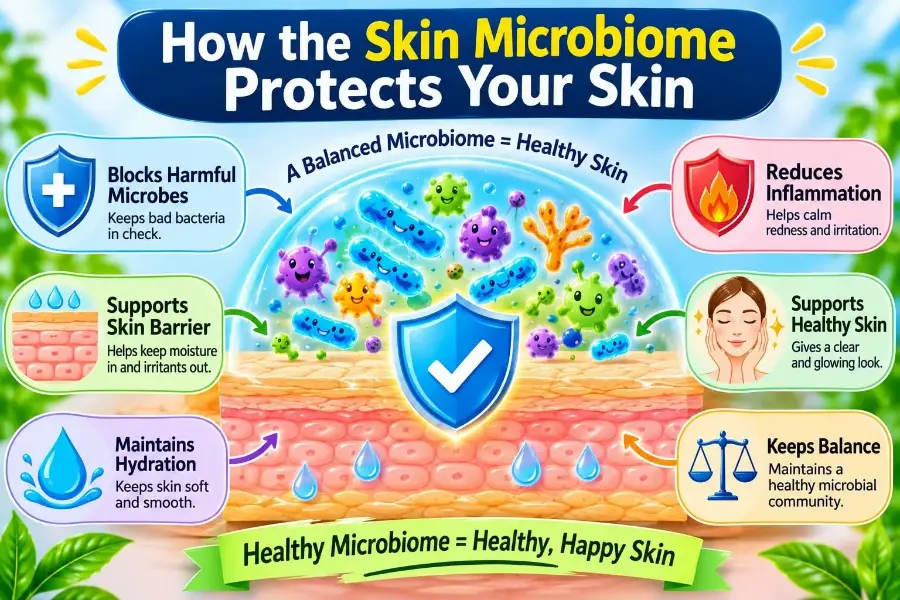
Here are some of its main roles.
1. Protects Against Harmful Microorganisms
One important function of the skin microbiome is helping protect the skin against potentially harmful microorganisms.
Beneficial and harmless microbes compete with unwanted microorganisms for space and nutrients. Some also produce substances that can limit the growth of certain harmful microbes.
This natural competition helps support the skin’s protective environment.
However, it does not mean that skin bacteria can prevent every infection. Your skin barrier and immune system also play important roles in protection.
2. Supports the Skin’s Natural Defense System
Your skin has an immune system that helps recognize and respond to potential threats.
The skin microbiome interacts with this immune system, helping it respond to microorganisms and environmental changes.
Some normal skin bacteria can influence immune activity and help maintain a balanced response.
This relationship is important because excessive inflammation can contribute to redness, irritation, and certain skin conditions.
3. Helps Maintain a Healthy Skin Barrier
The skin barrier is the outer protective layer of your skin. It helps keep moisture inside and protects against irritants, allergens, and environmental damage.
The skin microbiome works alongside this barrier.
Some skin microorganisms produce substances that interact with the skin’s natural defense system. The skin barrier also creates an environment that influences which microorganisms can live on its surface.
When the skin barrier is damaged, the skin environment may change. This can affect microbial communities and contribute to a cycle of irritation and inflammation.
4. Supports Skin Hydration and Comfort
A balanced skin environment helps maintain comfortable, healthy-looking skin.
The skin microbiome interacts with the skin’s surface chemistry, including natural oils, sweat, and other substances.
These interactions may influence the skin’s environment and how it responds to external conditions.
However, skin hydration mainly depends on factors such as the skin barrier, natural moisturizing factors, and lipids. The microbiome is one part of this larger system.
5. Helps Regulate Skin Inflammation
The skin microbiome also interacts with the immune system to help regulate inflammation.
Some microorganisms may encourage balanced immune responses, while changes in microbial communities may be associated with increased inflammation in certain skin conditions.
Maintaining a healthy relationship between the skin, its microorganisms, and the immune system is important for overall skin health.
Good and Bad Skin Bacteria: Understanding the Difference
People often divide skin bacteria into two groups: good bacteria and bad bacteria. However, this explanation is a little too simple.
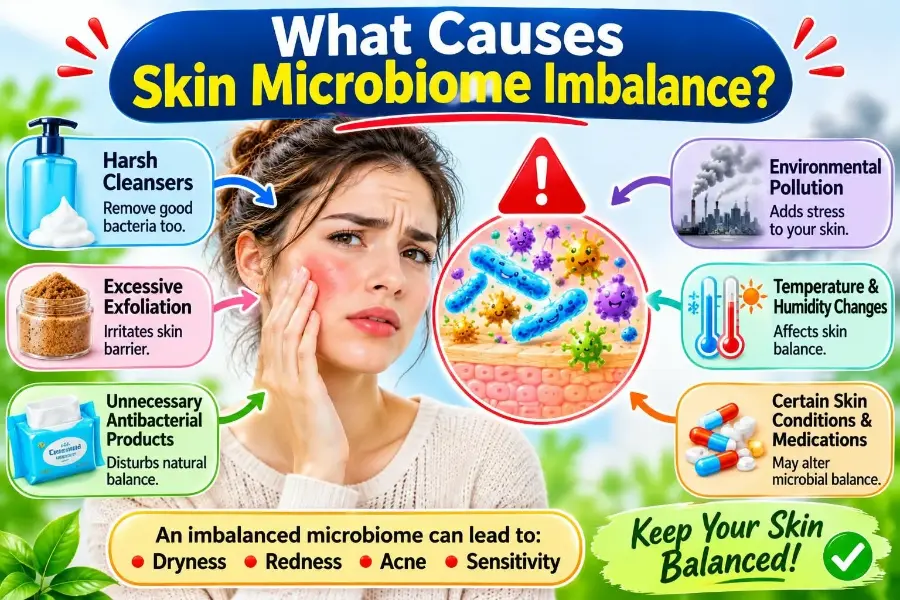
Bacteria’s effects depend on their species, strain, location, and skin condition.
Some bacteria normally live on healthy skin without causing problems. Others may cause infections or contribute to inflammation under certain conditions.
What Are Beneficial Skin Bacteria?
Some skin bacteria help maintain the skin’s natural protective environment.
For example, Staphylococcus epidermidis is a common skin bacterium that can compete with harmful microorganisms and interact with the immune system.
Certain strains may also produce antimicrobial substances that help limit the growth of unwanted bacteria.
These activities can support the skin’s natural defenses.
Can Skin Bacteria Become Harmful?
Yes. Some microorganisms that normally live on the skin can contribute to problems when their environment changes or when they enter areas where they should not be.
For example:
- Certain strains of Staphylococcus aureus can contribute to skin infections and are commonly associated with atopic dermatitis.
- Changes in Cutibacterium acnes activity and strain composition may contribute to acne.
- An increase in certain Malassezia species may be associated with seborrheic dermatitis.
This does not mean that every microorganism mentioned is harmful. The relationship between microorganisms and skin health is complex.
Why Microbial Diversity Matters
Microbial diversity refers to the variety of microorganisms living in a particular environment.
A diverse skin microbiome can contribute to a stable microbial community. However, having more types of microorganisms does not automatically mean healthier skin.
Different body areas naturally have different levels of microbial diversity. For example, oily areas and dry areas support different microbial communities.
The goal is not to achieve the highest possible diversity. It is to support a balanced microbial environment that works well with your skin.
What Can Disrupt the Skin Microbiome?
The skin microbiome is influenced by several internal and external factors. Some everyday habits and environmental changes may affect its composition.
Here are some factors worth understanding.
1. Overusing Harsh Cleansers
Harsh cleansers and frequent washing can strip too much of the skin’s natural oil, causing dryness or irritation.
This can weaken the skin barrier and change the environment where microorganisms live.
Choose a gentle cleanser that removes dirt, excess oil, and sunscreen without leaving your skin feeling tight or uncomfortable.
2. Excessive Exfoliation
Exfoliation can help remove dead skin cells, but doing it too often may irritate the skin.
Frequent use of strong exfoliating acids or rough scrubs can damage the skin barrier and increase sensitivity.
To avoid unnecessary irritation:
- Choose an exfoliant suitable for your skin type.
- Follow the product’s instructions.
- Avoid combining too many strong exfoliating products.
- Reduce or stop exfoliation if your skin becomes irritated.
3. Unnecessary Use of Antibacterial Products
Antibacterial products are useful in certain situations, but using strong antibacterial cleansers without a clear need may be unnecessary.
The skin naturally contains many harmless and beneficial microorganisms. Removing all bacteria is neither possible nor desirable.
Use antibacterial treatments when recommended for a specific reason rather than trying to make your skin bacteria-free.
4. Environmental Pollution
Your skin is regularly exposed to environmental factors such as dust, pollution, smoke, and changing weather conditions.
These factors may affect the skin barrier and the environment in which microorganisms live.
A gentle cleansing routine, moisturizer, and regular sunscreen use can help protect your skin from everyday environmental stress.
5. Changes in Temperature and Humidity
Weather conditions can influence the skin’s moisture levels and natural oil production.
For example:
- Cold weather may contribute to dryness.
- Hot and humid conditions can increase sweating.
- Dry indoor air may affect skin comfort.
- Seasonal changes may alter skincare needs.
These changes can also influence the skin microbiome by changing the conditions in which microorganisms live.
6. Certain Skin Conditions and Medications
Some skin conditions are associated with changes in the skin microbiome.
For example, eczema may involve changes in microbial communities, including increased levels of Staphylococcus aureus on affected skin.
Certain medications, including antibiotics and treatments that affect skin inflammation, may also influence the microbial environment.
Never stop a prescribed medication because of concerns about the microbiome. Speak with a healthcare professional if you have questions about your treatment.
Signs of an Unbalanced Skin Microbiome
You may see articles claiming that dryness, redness, or acne always means your skin microbiome is unbalanced. However, these symptoms can have many different causes.
No simple at-home test can diagnose an unhealthy skin microbiome based on appearance alone.
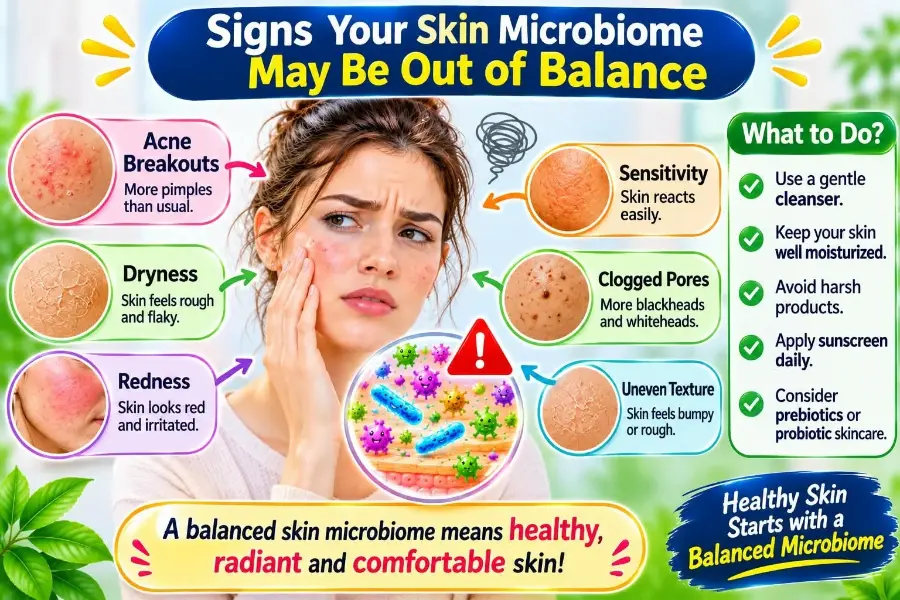
Some skin changes that may occur alongside microbiome changes include:
1. Increased Skin Dryness
Dryness may occur when the skin barrier loses too much moisture.
Changes in the skin microbiome may be associated with barrier problems, but dryness alone does not prove that your microbiome is unbalanced.
2. Redness and Irritation
Redness, itching, and irritation can occur when the skin becomes inflamed or reacts to a skincare product.
These symptoms may be associated with certain skin conditions, but they are not specific signs of microbiome imbalance.
3. Increased Skin Sensitivity
If your skin suddenly reacts to products that you previously tolerated, your skin barrier may be irritated or damaged.
However, allergies, environmental conditions, and other skin problems can also cause increased sensitivity.
4. Changes in Skin Comfort and Appearance
Some people experience more irritation, breakouts, or dryness when their skin health changes.
These issues may involve the skin microbiome, but they can also result from hormones, genetics, product ingredients, and other factors.
If skin problems continue or become severe, consult a dermatologist rather than trying to diagnose a microbiome problem yourself.
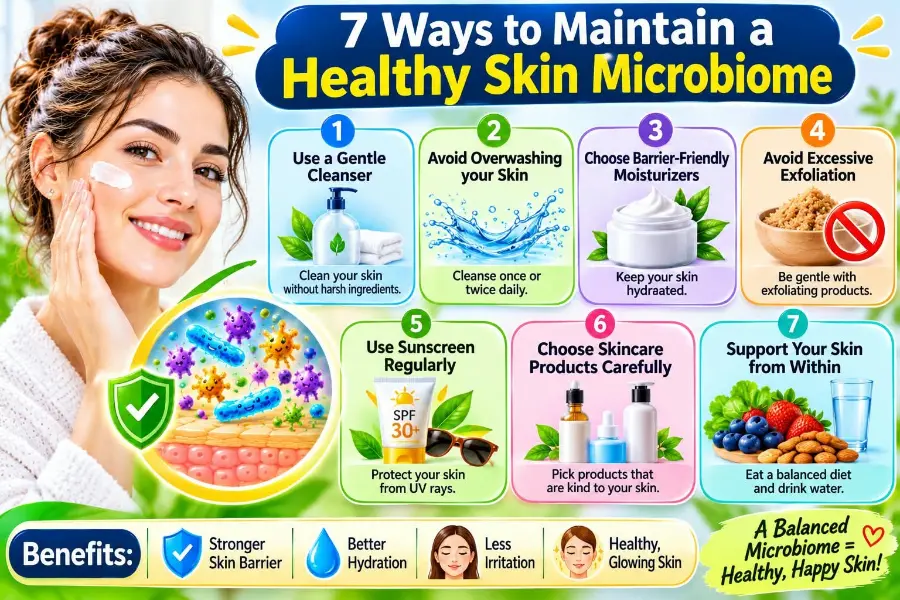
How to Maintain a Healthy Skin Microbiome
You do not need an expensive skincare routine to support your skin microbiome. Start with simple habits that protect the skin barrier and reduce unnecessary irritation.
Here are practical ways to care for your skin.
1. Use a Gentle Skin Cleanser
Choose a mild cleanser that suits your skin type.
A good cleanser should remove dirt, sweat, excess oil, and sunscreen without leaving your skin feeling overly dry.
Look for products that are:
- Gentle and suitable for daily use.
- Appropriate for your skin type.
- Free from ingredients that you know irritate your skin.
- Easy to rinse off without excessive rubbing.
You don’t need a strong antibacterial cleanser for everyday skincare.
2. Avoid Overwashing Your Skin
Washing your face too frequently may cause dryness and irritation.
For many people, cleansing once or twice daily is enough, with additional cleansing when needed after heavy sweating or other activities.
Use lukewarm water rather than very hot water, and gently pat your skin dry with a clean towel.
3. Choose Barrier-Friendly Moisturizers
Moisturizers help reduce water loss and support the skin barrier.
Look for products containing helpful moisturizing ingredients such as:
- Ceramides: Help support the skin’s natural lipid barrier.
- Glycerin: Attracts water and helps keep the skin hydrated.
- Hyaluronic acid: Helps attract and retain moisture.
- Colloidal oatmeal: Can help soothe dry and irritated skin.
A suitable moisturizer can help maintain skin comfort and reduce dryness.
4. Avoid Excessive Exfoliation
Exfoliating products can be useful, but too much exfoliation may weaken the skin barrier.
Use exfoliating acids or scrubs carefully and avoid combining multiple strong products without understanding how your skin responds.
If you experience burning, redness, or persistent irritation, simplify your routine and allow your skin to recover.
5. Use Sunscreen Regularly
Sun exposure can damage the skin and weaken its protective functions over time.
Use a broad-spectrum sunscreen with SPF 30 or higher during the day.
Apply it to exposed skin and reapply as directed, especially after swimming, sweating, or prolonged outdoor activity.
Sunscreen supports overall skin health, even though it doesn’t directly treat microbiome imbalance.
6. Choose Skincare Products Carefully
You don’t need to buy products just because they are advertised as microbiome-friendly.
Instead, focus on products that suit your skin and don’t cause unnecessary irritation.
Before introducing a new product:
- Check its ingredient list.
- Consider your skin type and concerns.
- Introduce one new product at a time.
- Patch-test when appropriate.
- Stop using products that cause persistent irritation.
A simple and consistent routine is often more helpful than using many products at once.
Ingredients That May Support Skin Microbiome Balance
Some skincare ingredients are being studied for their potential effects on the skin microbiome.
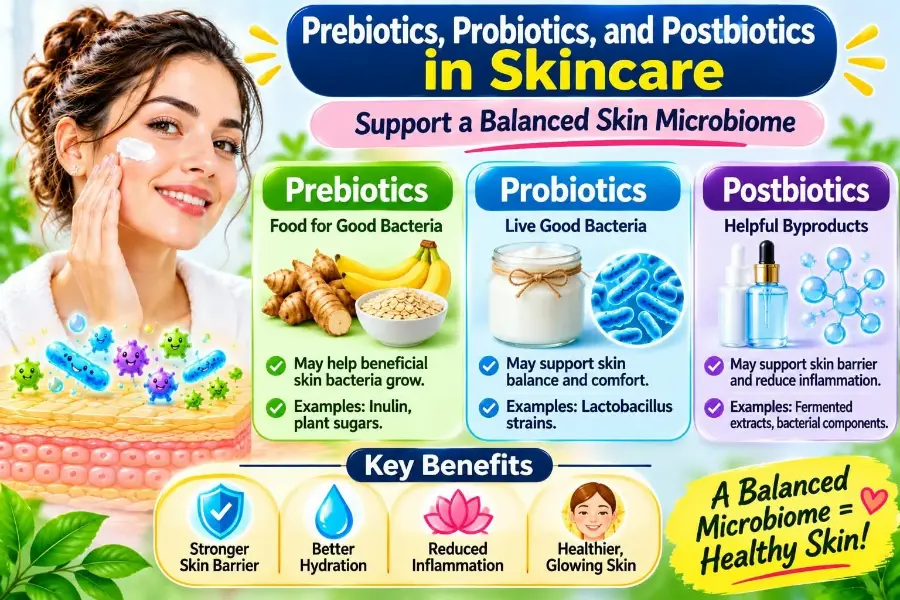
These include prebiotics, probiotics, postbiotics, and ingredients that support the skin barrier.
However, the evidence is still developing, and not every product containing these ingredients has proven microbiome benefits.
1. Prebiotics
Prebiotics are substances that can be used by microorganisms and may selectively support beneficial microbial activity.
In skincare, certain prebiotic ingredients are being explored for their potential to support a balanced skin environment.
Examples include:
- Inulin
- Alpha-glucan oligosaccharide
- Certain plant-derived sugars
Their effects depend on the formulation and the microorganisms present on the skin.
2. Probiotics
Probiotics are live microorganisms that provide a health benefit when used in adequate amounts.
In skincare, probiotic ingredients are being studied for their potential to support skin comfort, barrier function, and microbial balance.
However, a key difference exists between live probiotics and products containing bacterial extracts or fermented ingredients.
Many cosmetic products marketed as probiotic skincare do not contain live, clinically proven probiotic organisms.
Research is promising, but more well-designed human studies are needed to confirm the benefits of different topical formulations.
3. Postbiotics
Postbiotics are preparations made from non-living microorganisms or their components that may provide health benefits.
In skincare products, they may include:
- Fermented ingredients
- Bacterial lysates
- Microbial cell components
- Substances produced by microorganisms
Postbiotic ingredients are being researched for their potential to support the skin barrier and help maintain skin comfort.
Their effects depend on the specific ingredient, concentration, and formulation.
4. Ceramides
Ceramides are natural lipids found in the skin barrier.
They help hold skin cells together and reduce water loss, supporting a strong and healthy-looking skin surface.
Ceramides do not directly introduce beneficial bacteria, but they can help maintain the skin barrier, which is closely connected to the skin’s microbial environment.
5. Glycerin and Other Moisturizing Ingredients
Ingredients such as glycerin, hyaluronic acid, and other humectants help attract and retain water in the skin.
They support hydration and help improve skin comfort.
Although these ingredients are not probiotics or prebiotics, maintaining good skin hydration can support the overall skin environment.
Skin Microbiome and Common Skin Conditions
Researchers have found connections between changes in the skin microbiome and several skin conditions.
However, these relationships are complex. A microbial change may contribute to a skin problem, result from the condition, or occur alongside other factors.
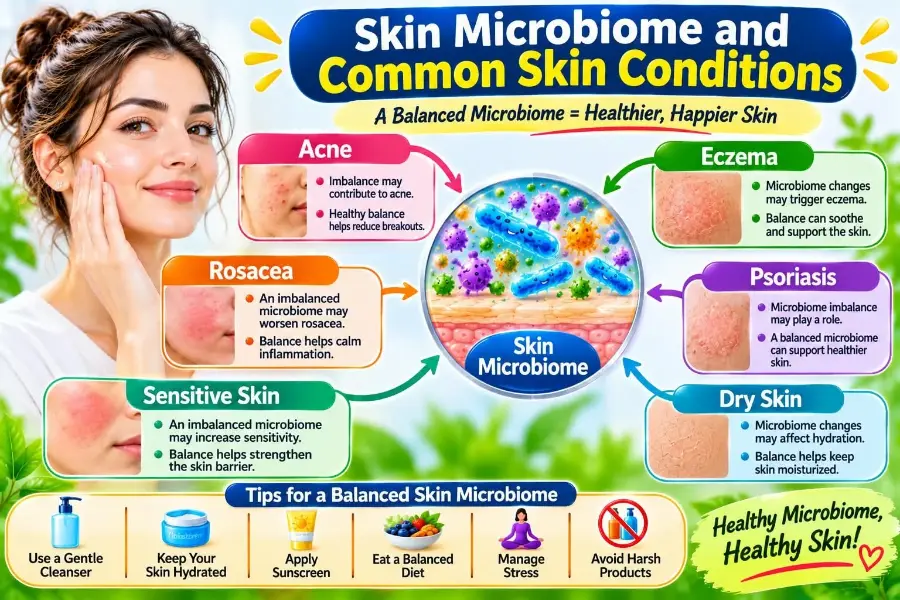
1. Acne and the Skin Microbiome
Acne is a common skin condition involving clogged pores, excess oil, inflammation, and changes in the hair follicles.
The bacterium Cutibacterium acnes naturally lives on human skin, particularly in areas with more oil glands.
It is not accurate to say that this bacterium always causes acne. Different strains may have different effects, and the overall hair-follicle environment also matters.
Acne treatment may include ingredients such as benzoyl peroxide, salicylic acid, retinoids, or prescribed medications, depending on the condition.
Do not replace proven acne treatments with unproven microbiome products.
2. Eczema and Skin Microbiome Changes
Eczema, particularly atopic dermatitis, is associated with a weakened skin barrier and inflammation.
People with atopic dermatitis may have increased levels of Staphylococcus aureus on affected skin.
This bacterium can contribute to inflammation and may worsen eczema symptoms.
A gentle skincare routine, regular moisturizing, and appropriate medical treatment can help manage eczema.
3. Rosacea and Skin Sensitivity
Rosacea is a chronic inflammatory skin condition that can cause facial redness, visible blood vessels, bumps, and increased sensitivity.
Researchers are studying the relationship between rosacea and the skin microbiome, including microorganisms associated with facial skin and tiny skin mites.
However, rosacea has several possible contributing factors, and microbiome changes are not considered its only cause.
People with rosacea should choose gentle skincare products and seek medical advice about appropriate treatment.
4. Dry Skin and Skin Barrier Problems
Dry skin can occur when the skin loses too much moisture or lacks enough protective lipids.
A weakened skin barrier can change the skin’s surface environment and may influence its microbial community.
Using moisturizers containing ingredients such as ceramides, glycerin, and colloidal oatmeal can help support hydration and skin comfort.
Are Probiotic Skincare Products Worth Using?
Probiotic skincare products are becoming popular as interest in the skin microbiome grows.
Some products contain probiotic-related ingredients, fermented extracts, or bacterial lysates.
These formulations are being studied for their potential to support skin hydration, barrier function, and microbial balance.
However, the results are not yet strong enough to recommend every probiotic skincare product for everyone.
What Are Probiotic Skincare Products?
Probiotic skincare products are cosmetic formulations marketed to support the skin microbiome.
They may contain live microorganisms, non-living bacterial components, or fermentation-derived ingredients.
These products are not all the same, so check the ingredient list rather than relying only on the word “probiotic” on the packaging.
Potential Benefits and Limitations
Potential benefits being studied include:
- Supporting the skin’s natural barrier.
- Helping maintain skin hydration.
- Supporting a balanced microbial environment.
- Improving skin comfort in certain formulations.
However, there are limitations:
- Research on many topical products is still limited.
- Different products use different strains and ingredients.
- Some formulations contain non-living microbial ingredients rather than live probiotics.
- Long-term benefits are not fully established.
Choose products based on your skin’s needs, ingredient quality, and available evidence, not marketing claims alone.
What to Check Before Buying
Before purchasing a microbiome-focused skincare product, consider the following:
- Ingredient list: Check which probiotic-related ingredients are included.
- Product claims: Be cautious of promises to cure acne, eczema, or other skin conditions.
- Skin compatibility: Avoid ingredients that have previously irritated your skin.
- Brand information: Choose brands that clearly explain their ingredients and product purpose.
- Customer feedback: Reviews may help you understand user experiences, but they do not prove clinical effectiveness.
A microbiome-focused product is optional. A gentle cleanser, suitable moisturizer, and sunscreen remain useful foundations of everyday skincare.
Best Skin Microbiome-Friendly Skincare Products Available on Amazon
Choosing suitable skincare products can help support your skin barrier and maintain a healthy skin environment. Look for gentle cleansers, hydrating moisturizers, and products formulated with barrier-supporting ingredients.
Here are some skincare products worth considering:
1. La Roche-Posay Toleriane Hydrating Gentle Cleanser
This gentle facial cleanser is designed for normal-to-dry, sensitive skin. Its formula includes niacinamide, ceramides, and prebiotic thermal spring water to help cleanse while supporting the skin’s natural moisture barrier.
Why consider it?
- Helps remove dirt and impurities gently.
- Supports skin barrier care.
- Suitable for normal to dry skin.
Check La Roche-Posay Toleriane Cleanser on Amazon
2. CeraVe Hydrating Facial Cleanser
CeraVe Hydrating Facial Cleanser is a popular option for people with normal to dry skin. It contains ceramides, hyaluronic acid, and glycerin, which help cleanse the skin while maintaining moisture.
Why consider it?
- Helps cleanse without excessive dryness.
- Supports the skin’s natural moisture barrier.
- Suitable for everyday skincare routines.
Check CeraVe Hydrating Facial Cleanser on Amazon
3. TULA 24-7 Moisture Day and Night Cream
This moisturizer contains prebiotic ingredients, peptides, and antioxidants. It is designed to provide hydration and help maintain soft, comfortable-looking skin.
Why consider it?
- Provides daily skin hydration.
- Contains prebiotic ingredients.
- Can be used in a morning or evening skincare routine.
Check TULA 24-7 Moisture Cream on Amazon
4. Glowbiotics Probiotic Revitalizing Cleanser
This cleanser is formulated with microbial-derived ingredients, including Lactobacillus and Saccharomyces ingredients, along with soothing and moisturizing components.
Why consider it?
- Offers an option for people interested in microbiome-focused skincare.
- Contains fermented microbial ingredients.
- Combines cleansing with moisturizing ingredients.
Check Glowbiotics Probiotic Revitalizing Cleanser on Amazon
How to Choose the Right Product
Before purchasing a skincare product, consider your skin type and individual needs.
- Dry skin: Look for glycerin, hyaluronic acid, and ceramides.
- Sensitive skin: Prefer gentle, fragrance-free formulas.
- Oily skin: Choose lightweight, non-comedogenic moisturizers.
- Microbiome-focused skincare: Look for products with prebiotic or microbe-derived ingredients.
Important: No skincare product can guarantee that it will restore or balance everyone’s skin microbiome. Choose products based on their ingredients, your skin’s tolerance, and your skincare needs. Introduce new products gradually and patch-test when appropriate.
Product availability, prices, and delivery options may change. Check the current Amazon listing before purchasing.
Skin Microbiome Myths and Facts
Many misunderstandings surround the skin microbiome.
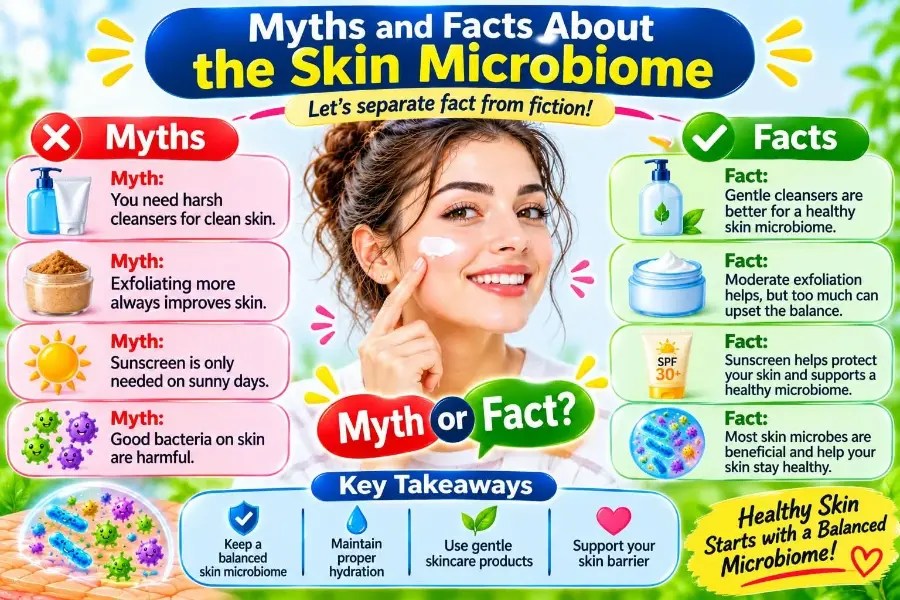
Let’s look at some common myths.
Myth 1: All Skin Bacteria Are Harmful
Fact: Many microorganisms naturally live on healthy skin. Some help protect the skin and interact with its immune system.
Myth 2: Washing More Often Always Improves Skin Health
Fact: Excessive washing can cause dryness and irritation. Gentle cleansing is generally better than repeatedly using strong cleansers.
Myth 3: Probiotic Skincare Works for Everyone
Fact: Research on probiotic-related skincare is still developing. Different formulations may produce different results, and not every product has proven benefits.
Myth 4: A Healthy Skin Microbiome Means Bacteria-Free Skin
Fact: Healthy skin naturally contains microorganisms. The goal is to maintain a balanced relationship between the skin and its microbial community, not eliminate all bacteria.
Myth 5: You Can Diagnose Microbiome Imbalance by Looking at Your Skin
Fact: Dryness, acne, redness, and irritation can have many causes. These symptoms alone cannot confirm a skin microbiome imbalance.
Conclusion
The skin microbiome is an important part of overall skin health. It includes bacteria, fungi, viruses, and other microorganisms that interact with the skin barrier and immune system.
A balanced microbial environment may help protect the skin, support its natural defenses, and maintain healthy skin function.
You do not need complicated or expensive products to care for your skin microbiome. Start with simple habits:
- Use a gentle cleanser.
- Avoid excessive washing and exfoliation.
- Apply a suitable moisturizer.
- Protect your skin from the sun.
- Choose skincare products that do not cause irritation.
Remember that healthy skin does not mean bacteria-free skin. It means supporting the natural relationship between your skin, its protective barrier, and the microorganisms that live on it.
You May Also Like
Explore these related skincare guides to learn more about skin health, skincare ingredients, and choosing suitable products.
1. Hypochlorous Acid Spray for Skin: Benefits, Uses, and Safety
Learn about hypochlorous acid spray, its potential skincare benefits, how it is used, and important safety considerations.
Read more about hypochlorous acid spray for skin
2. Azelaic Acid in Skincare: Benefits, Side Effects, and How to Use It
Discover how azelaic acid may help with acne, redness, inflammation, and uneven skin tone, along with tips for safe use.
Explore the benefits and uses of azelaic acid
3. Blue Light Effects on Skin: Does Screen Exposure Cause Skin Damage?
Understand how blue light exposure may affect skin health, what research says about screen exposure, and how to protect your skin.
Learn about blue light effects on skin
FAQs
The following FAQs explain the skin microbiome, its role in skin health, and simple ways to support a balanced skin environment.
The skin microbiome is the community of microorganisms that naturally live on your skin.
It includes:
- Bacteria
- Fungi
- Viruses
- Other microscopic organisms
These microorganisms interact with your skin and immune system, helping maintain its natural environment.
The skin microbiome helps support the skin’s natural protective functions.
Its roles include:
- Competing with potentially harmful microorganisms.
- Interacting with the immune system.
- Supporting a healthy skin environment.
- Working alongside the skin barrier.
These functions contribute to overall skin health.
Several factors may influence the skin microbiome, including:
- Harsh or irritating skincare products.
- Excessive washing and exfoliation.
- Environmental changes.
- Certain skin conditions.
- Some medications.
The effects vary from person to person, and symptoms alone cannot confirm an imbalance.
You can support a healthy skin environment by following simple skincare habits.
Try to:
- Use a gentle cleanser.
- Avoid excessive exfoliation.
- Apply a suitable moisturizer.
- Protect your skin from sun exposure.
- Avoid products that cause irritation.
Consistency and skin barrier care are more important than buying expensive microbiome products.
Not all skin bacteria cause acne. Cutibacterium acnes naturally lives on the skin, but certain strains and changes in the hair follicle environment may contribute to acne development.
Acne also involves excess oil, clogged pores, and inflammation. Proper acne treatment should address these factors rather than trying to remove all skin bacteria.
Probiotics are being studied for their potential to support skin health and microbial balance.
Potential benefits include:
- Supporting the skin barrier.
- Helping maintain skin comfort.
- Influencing microbial activity.
However, research on topical probiotic products is still developing, so their benefits are not guaranteed.
Harsh skincare products can irritate the skin and damage its protective barrier.
This may change the environment in which skin microorganisms live. To reduce irritation, choose gentle cleansers and avoid overusing strong exfoliating products.
The skin microbiome and skin barrier work together to protect your body.
- The skin barrier helps prevent moisture loss.
- It protects against external irritants.
- Skin microorganisms interact with the immune system.
- Changes in barrier health can influence the microbial environment.
Both are important for maintaining healthy skin.
These terms describe different approaches to microbiome-related skincare.
- Prebiotics: Ingredients that may support the growth or activity of certain beneficial microorganisms.
- Probiotics: Live microorganisms that provide a health benefit when used in adequate amounts.
- Postbiotics: Preparations made from non-living microorganisms or their components that may provide health benefits.
These ingredients are being researched, but their effects depend on the formulation and available scientific evidence.
The skin microbiome is dynamic and can change over time. Its microbial community may recover from some temporary changes as the skin environment returns to normal.
You can support this process by:
- Avoiding unnecessary irritation.
- Maintaining a gentle skincare routine.
- Supporting the skin barrier.
- Following appropriate treatment for skin conditions.
Persistent skin problems should be evaluated by a dermatologist rather than treated as a microbiome issue alone.
Maintaining a gentle and consistent skincare routine is a practical way to support your skin’s natural protective environment.
Recommended External References
For more information about the skin microbiome and its role in skin health, explore these trusted scientific resources:
- The Skin Microbiome: Current Landscape and Future Opportunities – PubMed
Learn about the microorganisms living on human skin, their functions, and their importance in maintaining skin health. - Skin Barrier Function and the Microbiome – PubMed
Explore the relationship between the skin barrier, microbial communities, and the skin’s natural protective functions. - Human Skin Bacterial Microbiota Homeostasis – PubMed Central
Learn how skin bacteria interact and help maintain a balanced skin environment. - Cosmetic Interventions for Skin Microbiome Modulation – PubMed Central
Discover how skincare products may influence the skin microbiome and what current research says about microbiome-focused skincare.
These scientific resources provide additional information about skin bacteria, microbiome balance, and the relationship between the skin microbiome and overall skin health.




- Be Respectful
- Stay Relevant
- Stay Positive
- True Feedback
- Encourage Discussion
- Avoid Spamming
- No Fake News
- Don't Copy-Paste
- No Personal Attacks
- Be Respectful
- Stay Relevant
- Stay Positive
- True Feedback
- Encourage Discussion
- Avoid Spamming
- No Fake News
- Don't Copy-Paste
- No Personal Attacks
