Common Hand Skin Diseases: Causes, Symptoms, and Treatment
Published: 26 Oct 2026
Hand skin diseases are common problems that can affect people of all ages. Conditions such as hand eczema, contact dermatitis, fungal infections, and psoriasis may cause itching, redness, dryness, and irritation. Understanding these skin conditions can help you choose the right care.
Common causes of hand skin problems include frequent handwashing, harsh soaps, cleaning chemicals, allergens, and environmental changes. Some conditions may also cause painful cracks, peeling, or small blisters that interfere with daily activities.
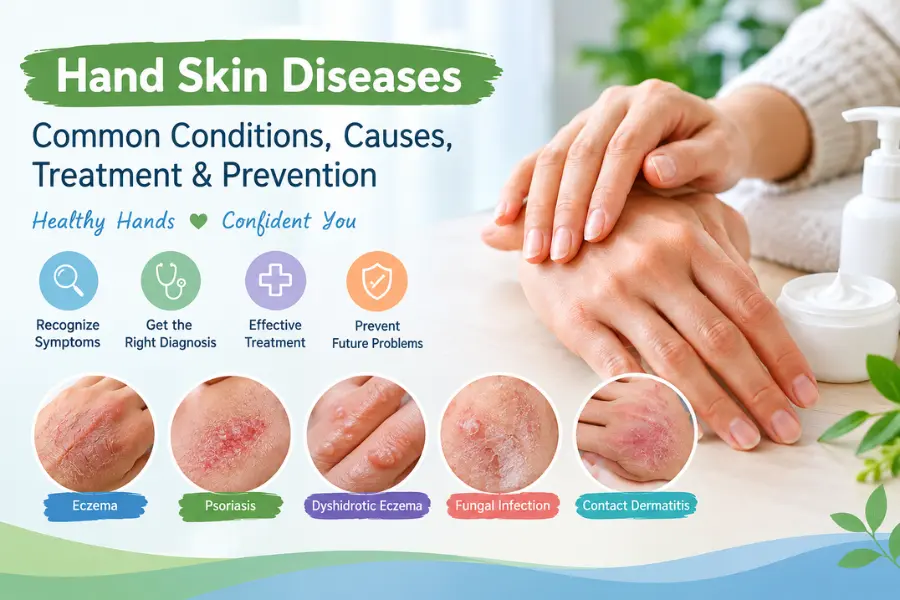
Treatment for hand skin disease depends on the underlying cause. Gentle cleansers, a suitable moisturizer, avoiding irritants, and seeking medical advice when needed can help protect your hands. Early diagnosis helps manage symptoms and keep skin healthy.
What Are Hand Skin Diseases?
Hand skin diseases affect the skin on the palms, fingers, knuckles, and backs of the hands. They can develop due to irritation, allergic reactions, infections, or inflammatory skin conditions. Common symptoms include redness, itching, dryness, peeling, swelling, blisters, and painful cracks.
Common Areas Affected by Hand Skin Diseases
Hand skin problems can affect different areas of the hands, including:
- Palms: Dryness, thickened skin, peeling, and painful cracks.
- Fingers: Itching, redness, blisters, and irritation.
- Knuckles: Roughness, inflammation, and cracked skin.
- Backs of the hands: Rashes, dryness, and allergic reactions.
- Between the fingers: Redness, scaling, and sometimes fungal infections.
Common Types of Hand Skin Conditions
Several conditions can contribute to common hand skin problems, including hand eczema, contact dermatitis, fungal infections, psoriasis, and excessive dryness. Each condition has different causes and symptoms, so identifying the underlying problem is important for choosing appropriate care.
Why Is Proper Diagnosis Important?
Different hand skin diseases require different treatments. For example, eczema may require prescribed anti-inflammatory medication, while fungal infections generally need antifungal treatment. Using the wrong cream can sometimes worsen symptoms or delay recovery.
If you experience persistent itching, spreading redness, painful cracks, swelling, or signs of infection, consult a dermatologist. An accurate diagnosis can help you find the right treatment and protect your skin from further irritation.
Common Types of Hand Skin Diseases
Several skin conditions can affect the hands, causing symptoms ranging from mild dryness to severe itching, inflammation, and painful cracks. Understanding the different types of hand skin diseases can help you recognize possible causes and seek appropriate treatment.
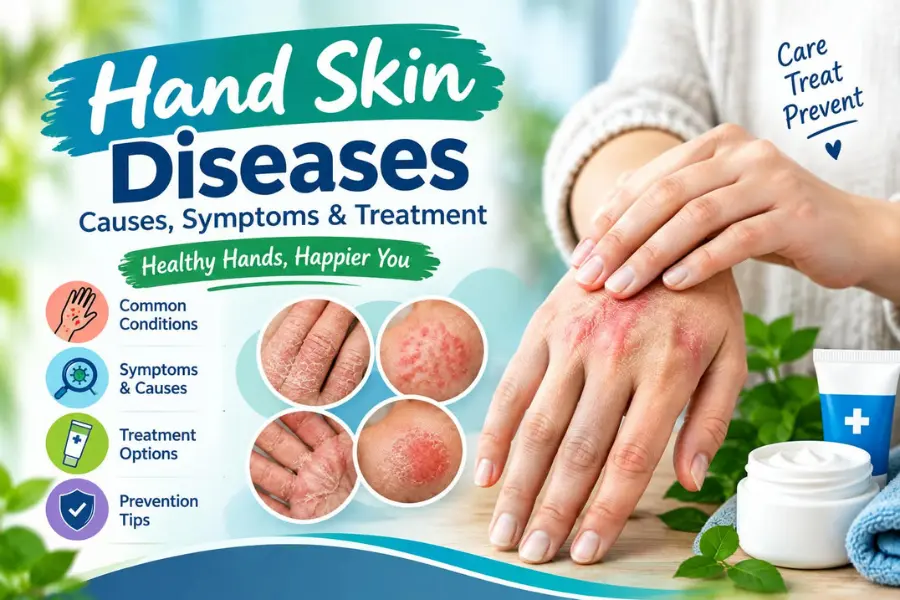
However, similar symptoms can occur in different conditions, so a healthcare professional may be needed for an accurate diagnosis.
1. Hand Eczema
Hand eczema is a common inflammatory skin condition that causes dryness, redness, itching, and sometimes painful cracks. In some cases, small blisters may develop on the fingers or palms. Frequent handwashing, detergents, and exposure to irritating substances can trigger or worsen symptoms.
Treatment: Apply a fragrance-free moisturizer regularly, avoid harsh soaps, and protect your hands from irritating chemicals. A dermatologist may recommend topical corticosteroids or other medications as needed.
2. Contact Dermatitis
Contact dermatitis occurs when the skin reacts to an irritant or allergen. Common triggers include cleaning products, detergents, fragrances, nickel, and certain rubber chemicals found in gloves. Symptoms may include redness, itching, swelling, dryness, and blisters.
Treatment: Identify and avoid the trigger whenever possible. Use gentle cleansers and moisturizers to support the skin barrier. A healthcare professional may recommend appropriate anti-inflammatory treatment or patch testing to identify an allergy.
3. Fungal Infections of the Hands
A fungal infection of the hands, sometimes called tinea manuum, is caused by fungi that affect the outer layer of the skin. It may cause scaling, dryness, itching, and redness, often affecting one hand more than the other. Some people also have fungal infections on their feet or nails.
Treatment: Antifungal creams may be effective for many localized infections. More extensive or persistent cases may require prescription treatment. Avoid using steroid creams alone for a suspected fungal infection because they can mask symptoms and let the infection worsen.
4. Hand Psoriasis
Hand psoriasis is a chronic inflammatory skin condition that can cause thickened patches, scaling, redness, and painful cracks. When the palms are affected, the skin may become dry and uncomfortable, making everyday tasks difficult. Psoriasis is not contagious.
Treatment: Management may include moisturizers, prescribed topical corticosteroids, vitamin D-based treatments, or other therapies depending on severity. A dermatologist can recommend the most suitable treatment for the affected areas.
5. Dyshidrotic Eczema
Dyshidrotic eczema, also known as pompholyx, causes small, intensely itchy blisters that commonly appear on the sides of the fingers, palms, and sometimes the soles of the feet. The blisters may dry out, leaving the skin peeling, cracked, or sore.
The exact cause isn’t always clear, but sweating, stress, and certain skin sensitivities may trigger flare-ups in some people.
Treatment: Keep the skin moisturized, avoid known triggers, and do not burst the blisters. A healthcare professional may prescribe topical corticosteroids or other treatments to control inflammation and itching.
6. Dry, Cracked, and Irritated Hands
Dry hands are among the most common hand skin problems. Frequent washing, cold weather, low humidity, and repeated contact with soaps or chemicals can damage the skin’s protective barrier. This may lead to roughness, flaking, tightness, and painful cracks.
Treatment: Apply a thick, fragrance-free cream or ointment after washing and before bedtime. Use lukewarm, not hot, water; choose gentle cleansers; and wear protective gloves when handling cleaning products.
When Should You Seek Medical Advice?
Although some mild hand skin problems improve with basic skincare, persistent or severe symptoms need professional attention. See a dermatologist if the rash spreads, becomes increasingly painful, doesn’t improve, or keeps coming back. Seek prompt medical care if you notice pus, rapidly spreading redness, significant swelling, or fever, as these may indicate an infection.
Correctly identifying the type of hand skin disease is an important step toward effective treatment and healthier skin.
Causes of Hand Skin Problems
Understanding the causes of hand skin diseases is essential to prevent irritation and choose the right treatment. Hand skin problems can develop because of environmental factors, allergic reactions, frequent washing, chemical exposure, or underlying skin conditions. Identifying and avoiding common triggers can help protect the skin’s natural barrier and reduce recurring symptoms.
1. Frequent Handwashing and Harsh Soaps
Regular handwashing helps prevent germ spread, but excessive washing or harsh cleansers can strip the skin’s natural oils. This may lead to dryness, itching, redness, and cracking. Strong fragrances or irritating ingredients in soaps can worsen sensitive skin problems.
Prevention tip: Use a gentle, fragrance-free cleanser and apply moisturizer after washing your hands.
2. Cleaning Products and Chemical Exposure
Household cleaning products, detergents, disinfectants, and industrial chemicals can irritate the skin. Repeated exposure may damage the skin barrier and cause irritant contact dermatitis. People who frequently clean, wash dishes, or handle chemicals may be more likely to experience these symptoms.
Prevention tip: Wear suitable protective gloves when handling cleaning products, follow product safety instructions, and avoid prolonged contact with irritating substances.
3. Allergies to Skincare Products and Other Materials
Some people develop allergic contact dermatitis when their skin reacts to particular ingredients or materials. Common triggers include fragrances, preservatives, nickel, and certain rubber chemicals found in gloves. Symptoms may include itching, redness, swelling, and an itchy rash that develops after contact.
Prevention tip: Stop using products that appear to trigger a reaction. A dermatologist may recommend patch testing to identify the specific allergen.
4. Environmental Factors and Cold Weather
Cold temperatures, low humidity, wind, and indoor heating can dry out the skin. When the skin loses moisture, it may become rough, flaky, itchy, and more likely to crack. These environmental factors can also worsen existing hand eczema.
Prevention tip: Apply a thick moisturizer regularly, wear suitable gloves outdoors in cold weather, and avoid excessively hot water.
5. Occupational Exposure and Repeated Irritation
Some occupations involve frequent handwashing, wet work, or chemical exposure. Healthcare workers, cleaners, hairdressers, food handlers, and construction workers may experience increased skin irritation because of repeated contact with potential triggers.
Prevention tip: Follow workplace skin-protection guidelines, use appropriate protective equipment, and moisturize your hands throughout the day.
6. Underlying Skin Conditions
Some hand skin problems are caused by underlying inflammatory or infectious conditions rather than simple dryness. Hand eczema, psoriasis, and fungal infections can produce overlapping symptoms, including redness, scaling, itching, and cracked skin.
Prevention tip: Don’t assume every hand rash is eczema or an allergy. If symptoms persist or worsen, consult a healthcare professional to determine the cause and receive appropriate treatment.
7. Excessive Sweating and Moisture
Prolonged moisture, sweaty hands, and occlusive gloves may irritate some people. Excessive sweating can also trigger or worsen dyshidrotic eczema in susceptible individuals. However, moisture alone does not explain every case of itchy or blistered hands.
Prevention tip: Keep your hands comfortably dry, change damp gloves when appropriate, and choose breathable protective options whenever workplace safety permits.
How to Identify the Cause of Hand Skin Problems
Pay attention to when symptoms begin, which areas of your hands are affected, and whether certain products or activities make them worse. Keeping a simple record of possible triggers can help you and your dermatologist identify patterns.
A healthcare professional may examine your skin, review your medical and occupational history, or recommend tests when necessary. Patch testing can help identify allergic contact dermatitis, while skin scrapings may be used when a fungal infection is suspected.
Important: You can’t always identify the cause of a hand rash from its appearance alone. Professional assessment is especially important when symptoms persist, are severe, or are accompanied by signs of infection.
Symptoms of Hand Skin Diseases
Symptoms of hand skin diseases vary depending on the underlying condition, its severity, and the person’s skin sensitivity. Some people experience mild dryness and occasional itching, while others develop painful cracks, swelling, blisters, or persistent rashes. Recognizing these symptoms early can help you seek appropriate care and prevent further irritation.
1. Redness and Skin Irritation
Redness is common in hand eczema, contact dermatitis, and other inflammatory skin conditions. The affected skin may look irritated, feel uncomfortable, or become more sensitive after exposure to soaps, detergents, and chemicals.
If redness continues or spreads despite avoiding possible triggers, consult a healthcare professional for an accurate diagnosis.
2. Itching and Burning Sensations
Itching is one of the most common symptoms of hand skin problems. It may occur with eczema, allergic reactions, fungal infections, and other skin conditions. Some people also experience stinging or burning, especially when the skin is dry, cracked, or inflamed.
Scratching can damage the skin further and increase the risk of infection. Using a fragrance-free moisturizer and avoiding suspected irritants may help reduce discomfort.
3. Dryness, Scaling, and Peeling
Dry skin can become rough, flaky, or scaly when its protective barrier loses moisture. Frequent handwashing, cold weather, harsh soaps, and certain skin conditions may contribute to these symptoms.
Peeling can also occur with eczema, fungal infections, and psoriasis. Because these conditions may look similar, persistent scaling should be assessed by a healthcare professional rather than treated with random creams.
4. Blisters on the Fingers and Palms
Small, fluid-filled blisters may develop on the palms or sides of the fingers in people with dyshidrotic eczema. These blisters can cause intense itching and may later dry out, leaving peeling or cracked skin.
Blisters can have other causes, so avoid bursting them or using unverified home remedies. Seek medical advice if they are severe, recurrent, painful, or show signs of infection.
5. Cracked and Painful Skin
Deep cracks, also called fissures, can develop when the skin becomes extremely dry or inflamed. They may appear around the fingertips, knuckles, or palms and can make washing, writing, and other daily activities uncomfortable.
Applying a thick, fragrance-free moisturizer or ointment regularly may help protect the skin. Persistent, deep, or bleeding cracks may require medical treatment to address the underlying condition.
6. Swelling and Thickened Skin
Some inflammatory skin conditions cause swelling, tenderness, or thickened patches. Hand psoriasis, for example, may produce well-defined areas of thickened, scaly skin on the palms or fingers. Contact dermatitis may cause swelling after exposure to an irritating substance or allergen.
If swelling develops suddenly or is accompanied by severe pain, warmth, or spreading redness, seek prompt medical assessment.
7. Changes in Skin Color and Texture
Affected areas may appear red, darker, lighter, or otherwise discolored, depending on skin tone and the type of skin condition. Repeated inflammation can also leave temporary pigmentation changes after a rash improves.
Persistent discoloration, scaling, or changes in skin texture should be evaluated if the cause is unclear or the affected area continues to worsen.
8. Signs of a Possible Skin Infection
Cracked or damaged skin can sometimes become infected. Warning signs include increasing pain, warmth, swelling, pus, spreading redness, or yellowish crusting. Fever alongside a worsening skin problem may indicate a more serious infection.
Seek prompt medical care if you notice these symptoms. Avoid self-treating a suspected infection with leftover antibiotics or steroid creams without professional guidance.
When Should You Take Hand Skin Symptoms Seriously?
Mild dryness may improve with regular moisturizing and gentle skincare. However, symptoms that persist, return repeatedly, spread, interfere with daily activities, or don’t respond to basic care warrant professional evaluation.
Understanding your symptoms is an important first step, but an accurate diagnosis is necessary to choose the right treatment for hand skin diseases.
How Are Hand Skin Diseases Diagnosed?
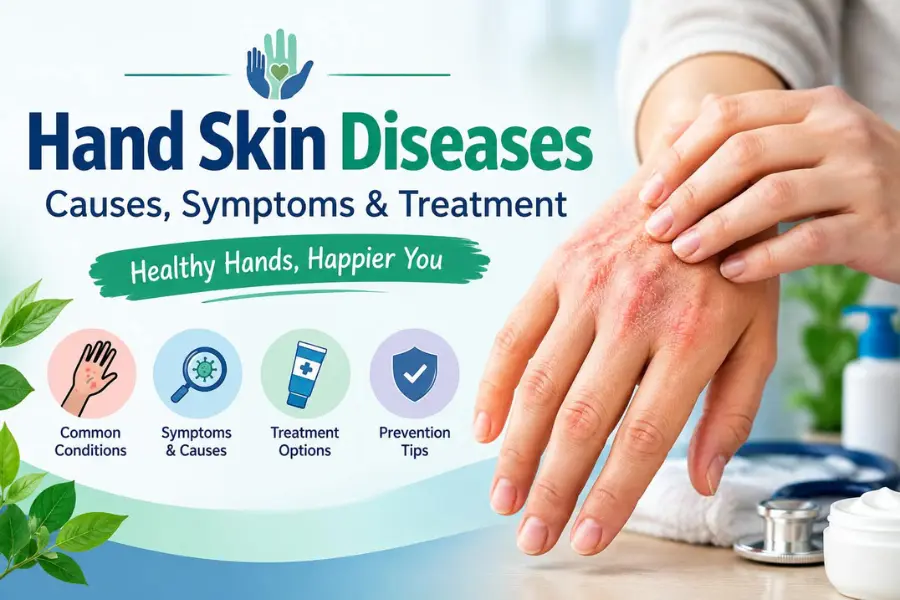
A proper diagnosis is an important step in finding the right treatment for hand skin disease. Many skin conditions, including hand eczema, contact dermatitis, psoriasis, and fungal infections, can cause similar symptoms. A dermatologist or other qualified healthcare professional can examine the affected skin, identify possible triggers, and recommend appropriate treatment based on the underlying cause.
1. Physical Examination of the Hands
A healthcare professional will examine the palms, fingers, knuckles, and backs of the hands for signs of redness, dryness, scaling, blisters, swelling, or cracked skin. The rash’s location and appearance can provide useful clues about the possible condition.
For example, small, itchy blisters may suggest dyshidrotic eczema, while thickened, scaly patches may be associated with psoriasis. However, appearance alone is not always enough to confirm a diagnosis.
2. Reviewing Medical History and Possible Triggers
Your healthcare professional may ask when symptoms started, how often they occur, and whether certain activities worsen them. Information about your skincare products, soaps, detergents, workplace exposures, allergies, and previous skin conditions can help identify potential causes.
Keeping a record of flare-ups and products used may also help reveal patterns. If a particular substance appears to trigger symptoms, avoiding it may be an important part of managing the condition.
3. Patch Testing for Allergic Contact Dermatitis
Patch testing may be recommended when an allergic reaction is suspected. In this test, healthcare professionals place small amounts of selected substances on the skin under special patches to check for a delayed allergic reaction.
The healthcare professional examines the test sites at scheduled intervals to determine whether a particular allergen may be responsible for the rash. Patch testing differs from ordinary skin-prick allergy testing and is particularly useful for investigating allergic contact dermatitis.
4. Skin Scraping for Fungal Infections
When a fungal infection is suspected, a healthcare professional may collect a small sample of skin scales from the affected area. The sample can be examined for fungal evidence, and additional laboratory testing may be recommended when needed.
This can help distinguish fungal hand infections from eczema, psoriasis, and other similar-looking conditions. Accurate identification matters because fungal infections require antifungal treatment, not eczema treatment alone.
5. Additional Tests When Necessary
Most hand skin conditions can initially be assessed through a physical examination and medical history. However, further investigations may be appropriate if the diagnosis remains uncertain or symptoms do not improve with treatment.
Depending on the situation, a healthcare professional may recommend additional laboratory tests or, less commonly, a skin biopsy. These tests help investigate unusual, persistent, or difficult-to-diagnose skin problems.
When Should You See a Dermatologist?
Consider seeing a dermatologist if your hand rash persists, returns repeatedly, becomes painful, spreads, or interferes with everyday activities. Seek medical attention if you notice pus, increasing warmth, significant swelling, or rapidly spreading redness, as these may indicate an infection.
An accurate diagnosis helps ensure that hand skin diseases are treated appropriately. Avoid relying on appearance alone or using multiple medicated creams without guidance, because the wrong treatment can sometimes worsen the condition or delay recovery.
Treatment for Common Hand Skin Diseases
Treatment for hand skin disease depends on the underlying cause, symptom severity, and the affected area. Some conditions improve with gentle skincare and regular moisturizing, while others require prescription medication or specific treatments. Identifying the correct condition is essential because eczema, contact dermatitis, fungal infections, and psoriasis respond differently to treatment.
1. Treatment for Hand Eczema
Hand eczema can cause dryness, redness, itching, inflammation, and painful cracks. Treatment focuses on restoring the skin barrier, reducing inflammation, and avoiding substances that trigger flare-ups.
Common treatment options include:
- Moisturizers: Apply fragrance-free creams or ointments regularly to reduce dryness and protect the skin.
- Gentle cleansers: Choose mild, fragrance-free products instead of harsh soaps.
- Topical corticosteroids: A healthcare professional may prescribe these medications to control inflammation during flare-ups.
- Trigger avoidance: Reduce contact with detergents, cleaning chemicals, and other known irritants.
Persistent or severe hand eczema may require additional prescription treatments from a dermatologist.
2. Treatment for Contact Dermatitis
Contact dermatitis develops when the skin reacts to an irritant or allergen. Effective treatment starts with identifying and avoiding the substance causing the reaction.
Recommended approaches may include:
- Stop using products you suspect are causing irritation or an allergic reaction.
- When appropriate, gently wash exposed skin with lukewarm water.
- Apply a fragrance-free moisturizer to support the skin barrier.
- Use prescribed topical corticosteroids when recommended by a healthcare professional.
- Consider patch testing if allergic contact dermatitis is suspected.
Avoiding the trigger is particularly important because symptoms may return with repeated exposure.
3. Treatment for Fungal Infections of the Hands
Fungal infections, including tinea manuum, can cause itching, scaling, redness, and peeling. These infections require antifungal treatment rather than treatment for eczema.
Depending on the infection, treatment may include:
- Topical antifungal medication: Suitable creams may treat many localized infections.
- Prescription oral antifungals: These may be necessary for extensive, persistent, or otherwise complicated infections.
- Keep the skin dry: Dry hands thoroughly after washing to reduce persistent moisture.
- Avoid inappropriate steroid use: Steroid creams used alone can mask symptoms and allow some fungal infections to worsen.
Consult a healthcare professional if the diagnosis is uncertain or symptoms do not improve with appropriate treatment.
4. Treatment for Hand Psoriasis
Hand psoriasis is a chronic inflammatory condition that can produce thickened skin, scaling, redness, and painful cracks. Treatment aims to reduce inflammation, soften thickened skin, and improve comfort.
Possible treatment options include:
- Regular use of thick, fragrance-free moisturizers.
- Prescription topical corticosteroids for appropriate cases.
- Vitamin D-based topical medications when recommended.
- Other prescription treatments for persistent or severe disease.
- Specialist care when the palms or fingers are significantly affected.
Because hand psoriasis can resemble eczema, a professional assessment can help determine the best treatment.
5. Treatment for Dyshidrotic Eczema
Dyshidrotic eczema causes small, itchy blisters that commonly develop on the palms and sides of the fingers. After the blisters dry, the skin may peel, become sore, or crack.
Treatment may include:
- Applying fragrance-free moisturizers regularly.
- Avoiding known irritants and personal triggers.
- Using cool compresses to help soothe itching.
- Applying prescribed topical corticosteroids to control inflammation.
- Seeking further treatment if flare-ups are severe or frequent.
Avoid bursting blisters, as this can damage the skin and increase infection risk.
6. Treatment for Dry and Cracked Hands
Dry, cracked hands often develop because of frequent washing, cold weather, harsh cleansers, or repeated chemical exposure. Mild cases may improve with consistent skincare.
Helpful measures include:
- Apply a thick cream or ointment after every handwashing session.
- Use lukewarm water instead of hot water.
- Choose gentle, fragrance-free cleansers.
- Wear suitable protective gloves when handling cleaning products.
- Apply moisturizer before bedtime to reduce overnight moisture loss.
If cracks become deep, bleed, or remain painful despite regular care, seek medical advice to check for an underlying skin condition.
7. When Is Medical Treatment Necessary?
Home skincare may help mild dryness and irritation, but persistent hand rashes often need professional assessment. A dermatologist can recommend the right medication based on the diagnosis and severity.
Seek prompt medical care if you develop rapidly spreading redness, increasing warmth, significant swelling, pus, severe pain, or fever. These symptoms may indicate an infection that requires medical attention.
Important: Do not use prescription creams, oral antifungals, antibiotics, or strong steroid preparations without appropriate medical guidance. The wrong treatment can worsen certain conditions or delay recovery.
How Long Does Treatment Take?
Recovery time varies depending on the skin condition, its severity, and whether the triggering factors can be avoided. Mild dryness may improve within days of consistent moisturizing, while eczema and psoriasis may require ongoing management. Fungal infections can take several weeks to clear, depending on the treatment and extent of infection.
Following the recommended treatment plan, protecting the skin, and attending follow-up appointments when necessary can help improve symptoms and reduce recurrence.
Home Care Tips for Healthier Hands
Following a consistent hand-care routine can help protect your skin, reduce dryness, and prevent irritation. Although home care cannot cure every type of hand skin disease, simple habits can support the skin’s natural barrier and complement treatments recommended by a healthcare professional. The best approach is to use gentle products, keep skin moisturized, and avoid substances that trigger skin problems.
1. Use Gentle, Fragrance-Free Cleansers
Harsh soaps and heavily fragranced products can irritate sensitive skin and strip it of its natural protective oils. Choose a mild, fragrance-free cleanser to wash your hands without causing unnecessary dryness.
Wash your hands with lukewarm water, not hot, and gently pat them dry with a clean towel. Avoid vigorous rubbing, especially if your skin is already irritated or cracked.
2. Moisturize Your Hands Regularly
Moisturizing is one of the most effective ways to manage dry hands and support the skin barrier. Frequent handwashing can remove moisture, making the skin more vulnerable to itching, peeling, and cracks.
Choose a thick, fragrance-free cream or ointment containing ingredients such as petrolatum, ceramides, or glycerin. Apply it after washing your hands, whenever your skin feels dry, and before bedtime.
For very dry hands, ointments may provide longer-lasting protection than lightweight lotions.
3. Protect Your Hands from Cleaning Chemicals
Cleaning products, detergents, disinfectants, and other chemicals can irritate skin or worsen existing hand problems. Repeated exposure can cause dryness, redness, and painful cracks.
Wear appropriate protective gloves when cleaning, washing dishes, or handling irritating substances. Follow the product’s safety instructions and avoid prolonged chemical contact. If gloves get wet inside or cause sweating and irritation, change them as needed.
4. Avoid Scratching and Picking the Skin
Scratching itchy skin can damage its protective barrier and increase the risk of infection. Picking peeling skin or bursting blisters can also delay healing and cause additional irritation.
To manage itching, try a cool compress for a short period and apply a suitable moisturizer. If itching persists or disrupts your sleep, consult a healthcare professional about appropriate treatment.
5. Wear Suitable Gloves in Cold Weather
Cold temperatures, wind, and low humidity can dry out your hands and aggravate eczema. Wearing suitable gloves outdoors can help protect your skin from harsh weather.
Choose comfortable gloves that do not irritate your skin. If wool or certain glove materials trigger itching, consider a softer alternative that you tolerate well.
6. Choose Skincare Products Carefully
People with sensitive skin may react to fragrances, preservatives, or other skincare ingredients. Introducing several new products at once can also make it harder to identify the cause of irritation.
Choose fragrance-free products and avoid ingredients that have previously triggered a reaction. If you suspect an allergy, a dermatologist may recommend patch testing to identify the specific allergen.
Remember, products marketed as natural or herbal aren’t automatically safe for sensitive skin.
7. Keep Your Hands Clean and Dry
Good hand hygiene helps reduce germ spread, but leaving your hands wet for long periods may contribute to irritation. After washing, gently dry your hands, including the spaces between your fingers.
If your hands sweat excessively or you wear protective gloves for extended periods, change damp gloves when possible. Avoid over-washing or using harsh disinfectants unnecessarily, as these can worsen dryness.
8. Follow Your Prescribed Treatment Plan
Home care is helpful, but conditions such as hand eczema, psoriasis, and fungal infections may require specific medication. Follow your healthcare professional’s instructions and use prescribed treatments for the recommended duration.
Don’t assume every rash is eczema, and don’t apply steroid creams to an undiagnosed rash without medical advice. Steroids can worsen or disguise certain fungal infections.
If your symptoms persist, become painful, or spread despite treatment, arrange a medical review.
9. Maintain a Consistent Daily Hand-Care Routine
Consistency helps keep your hands healthy. A simple routine can reduce exposure to common irritants and help prevent excessive dryness.
Morning:
- Wash your hands with a gentle cleanser when needed.
- Apply a fragrance-free moisturizer.
- Wear suitable protective gloves when working outdoors in cold weather or handling irritating substances.
During the day:
- Reapply moisturizer after handwashing.
- Avoid known irritants and unnecessary exposure to harsh chemicals.
- Dry your hands gently, and change damp gloves as needed.
Before bedtime:
- Apply a thick moisturizer or ointment to dry areas.
- Follow any prescribed treatment as directed.
- Avoid scratching or picking irritated skin.
When Is Home Care Not Enough?
Seek medical advice if your hand skin problems don’t improve, keep returning, or interfere with everyday activities. Persistent rashes may need a professional diagnosis and targeted treatment.
Get prompt medical attention if you notice rapidly spreading redness, increasing warmth, pus, significant swelling, severe pain, or fever, as these may indicate an infection.
By following gentle skincare practices and avoiding common triggers, you can help keep your hands healthier and reduce the risk of recurring irritation.
How to Prevent Hand Skin Diseases
Preventing hand skin diseases starts with protecting the skin’s natural barrier and reducing exposure to common irritants. Although not every skin condition can be prevented, following healthy skincare habits may reduce dryness, irritation, and flare-ups. A consistent routine helps people who frequently wash their hands or work with cleaning products and chemicals.
1. Maintain a Gentle Handwashing Routine
Frequent handwashing supports hygiene, but harsh soaps and very hot water can worsen dryness and irritation. Use a mild, fragrance-free cleanser and lukewarm water whenever possible.
After washing, gently pat your hands dry instead of rubbing them vigorously. This simple habit helps reduce unnecessary friction and protects sensitive skin.
2. Apply Moisturizer Throughout the Day
Regular moisturizing helps maintain the skin barrier and reduces moisture loss. Dry skin is more likely to become rough, itchy, flaky, and cracked, particularly during cold weather.
Choose a fragrance-free cream or ointment containing ingredients such as petrolatum, glycerin, or ceramides. Apply it after washing your hands and whenever your skin feels dry.
3. Avoid Harsh Chemicals and Irritating Products
Cleaning products, detergents, solvents, and certain skincare ingredients may trigger hand skin problems, especially with repeated exposure. Some substances directly irritate the skin, while others can trigger allergic contact dermatitis.
Read product labels carefully and avoid ingredients that have caused reactions before. When handling cleaning products, follow safety instructions and use suitable protective gloves.
4. Wear Appropriate Protective Gloves
Protective gloves can reduce contact with chemicals, detergents, and other irritants. They may be particularly useful for cleaners, healthcare workers, hairdressers, and people who frequently handle water or cleaning products.
Choose gloves suited to the substance you’re handling and follow workplace safety guidance. If gloves cause sweating or irritation, change them as needed and consider a comfortable cotton liner, if compatible with the required protection.
5. Protect Your Hands from Cold Weather
Cold air, wind, and low humidity can dry out and crack skin. People with eczema or sensitive skin may experience more frequent flare-ups during colder months.
Wear comfortable gloves outdoors in cold weather and apply moisturizer regularly. Avoid prolonged exposure to very hot water, which can further dry the skin.
6. Identify and Avoid Allergens
Allergic contact dermatitis occurs when the immune system reacts to a particular substance. Common triggers include fragrances, nickel, certain preservatives, and some rubber chemicals.
If a particular product repeatedly causes a rash, stop using it and seek advice if symptoms persist. A dermatologist may recommend patch testing to identify the allergen and help you avoid future reactions.
7. Avoid Sharing Personal Items
Some fungal infections can spread through direct contact or contaminated personal items. Avoid sharing towels, gloves, and other items that frequently contact affected skin.
Keep personal items clean and dry, and seek appropriate treatment if you suspect a fungal infection. Not all hand skin diseases are contagious, so prevention measures should reflect the actual condition.
8. Treat Skin Problems Early
Addressing persistent dryness, itching, redness, or peeling early can help prevent symptoms from worsening. Use gentle skincare products and avoid known irritants, but don’t assume every rash has the same cause.
If symptoms persist, recur frequently, or become painful, consult a healthcare professional. Appropriate treatment can help manage conditions such as hand eczema, psoriasis, and fungal infections.
9. Maintain a Consistent Hand-Care Routine
A daily routine makes it easier to protect your skin and reduce exposure to common triggers.
Morning:
- Apply a fragrance-free moisturizer.
- Wear appropriate gloves in cold weather.
- Check your hands for unusual dryness or irritation.
During the day:
- Use gentle cleansers when washing your hands.
- Reapply moisturizer after washing.
- Protect your hands when handling chemicals or detergents.
Before bedtime:
- Apply a thick cream or ointment to dry areas.
- Follow any prescribed treatment as directed.
- Avoid scratching or picking irritated skin.
Can All Hand Skin Diseases Be Prevented?
No. Some conditions, including psoriasis and certain forms of eczema, may develop because of genetic, immune, or other underlying factors. However, reducing exposure to triggers, maintaining the skin barrier, and following appropriate treatment can help manage symptoms and reduce flare-ups.
The key to preventing many hand skin problems is consistent skincare, protecting your hands from irritants, and seeking early medical advice if symptoms don’t improve.
When Should You See a Dermatologist?
Many mild hand skin problems can improve with gentle skincare and regular moisturizing. However, some conditions require professional diagnosis and medical treatment. Knowing when to see a dermatologist can help prevent complications, relieve discomfort, and ensure you get the right treatment.
1. Persistent Skin Rashes
If a rash on your hands lasts several days without improving, keeps returning, or gradually worsens, consider seeing a healthcare professional. Persistent redness, itching, peeling, or scaling may indicate hand eczema, contact dermatitis, psoriasis, or a fungal infection.
A dermatologist can examine your skin, identify possible triggers, and recommend appropriate treatment based on the underlying cause.
2. Severe Itching or Painful Cracks
Occasional itching and mild dryness may respond to moisturizing, but severe itching or deep cracks require closer attention. Painful fissures can interfere with everyday activities, including washing, writing, and handling objects.
Seek medical advice if the skin becomes increasingly painful, cracks bleed repeatedly, or symptoms interfere with sleep or daily life. Avoid scratching and use a gentle moisturizer while arranging appropriate care.
3. Blisters, Swelling, or Spreading Redness
Small, itchy blisters can occur with dyshidrotic eczema, while swelling and redness may develop with contact dermatitis or other conditions. However, these symptoms can sometimes have different causes that require specific treatment.
Consult a healthcare professional if blisters are severe, keep returning, or are accompanied by significant discomfort. Seek prompt medical attention if redness spreads rapidly, the skin becomes hot and swollen, or pain increases.
4. Signs of a Possible Skin Infection
Cracked or damaged skin can sometimes become infected. Warning signs include pus, yellowish crusting, increasing warmth, worsening pain, or spreading redness. Fever accompanying these symptoms may indicate a more serious infection.
Seek prompt medical care if you notice these signs. Do not use leftover antibiotics or prescription steroid creams without medical guidance, as inappropriate treatment may worsen certain conditions.
5. Skin Problems That Do Not Respond to Treatment
If your symptoms continue despite regular moisturizing, avoiding known irritants, or following a recommended treatment plan, your diagnosis or treatment may need to be reviewed.
For example, a fungal infection may resemble eczema but require antifungal medication. A dermatologist may recommend additional examinations or tests to determine the cause and adjust your treatment.
6. Repeated Allergic Reactions
If your hands develop a rash after using soaps, cosmetics, gloves, cleaning products, or workplace materials, an allergic reaction may be responsible.
A dermatologist may recommend patch testing to identify specific allergens. Once the trigger is identified, avoiding it can help reduce future reactions and support healthier skin.
7. Hand Skin Problems That Affect Daily Activities
Some hand skin diseases cause significant discomfort and make routine tasks difficult. Severe eczema, psoriasis, or persistent inflammation may affect your ability to work, prepare food, wash your hands, or perform other everyday activities.
Professional assessment can help identify treatment options that reduce symptoms and improve your quality of life.
How Can You Prepare for a Dermatology Appointment?
To help your dermatologist understand your symptoms, consider preparing the following information:
- Symptom history: Note when the problem began and whether it has improved or worsened.
- Possible triggers: List soaps, skincare products, cleaning chemicals, gloves, or workplace exposures that may affect your skin.
- Current treatments: Bring a list of creams, medications, and home remedies you have tried.
- Photographs: If the rash comes and goes, photographs may help show how it changes over time.
- Previous skin conditions: Mention any history of eczema, psoriasis, allergies, or fungal infections.
This information helps your healthcare professional assess your condition and choose the right next steps.
Final Advice on Seeking Medical Care
Do not ignore persistent, worsening, or unexplained hand skin diseases. Mild dryness may respond to basic skincare, but ongoing inflammation, painful cracks, recurring blisters, or suspected infection may require medical treatment.
Seek urgent medical attention for rapidly spreading redness, severe pain, significant swelling, pus, or fever associated with a worsening hand rash. Early assessment can help identify the cause and reduce the risk of complications.
Medicines for Common Hand Skin Diseases
Treatment for hand skin diseases depends on the underlying cause, symptoms, and severity. Some products are available over the counter (OTC), while others require a prescription from a healthcare professional. Many of the active ingredients listed below are used internationally, including in Pakistan, although product availability and brand names vary by country.
1. Moisturizers for Dry, Cracked, and Irritated Hands
Moisturizers and emollients are among the most useful products for dry hands and hand eczema. They help protect the skin barrier, reduce moisture loss, and relieve dryness.
Common ingredients include:
- Petroleum jelly (petrolatum): Helps protect very dry, rough, and cracked skin.
- Glycerin: Helps attract and retain moisture in the skin.
- Ceramides: Help support the skin’s natural protective barrier.
- Urea cream: May help soften rough, thick, and dry skin. Lower-strength products are often used for dryness, while stronger formulations may irritate cracked or inflamed skin.
These products are commonly sold in pharmacies and skincare stores worldwide. Choose fragrance-free products whenever possible, and apply them after washing your hands and whenever your skin feels dry.
2. Medicines for Hand Eczema and Contact Dermatitis
Hand eczema and contact dermatitis can cause redness, itching, dryness, inflammation, and painful cracks.
A dermatologist may recommend a topical corticosteroid, such as hydrocortisone, or another corticosteroid suitable for the affected area and severity. Stronger prescription options may be necessary for certain cases of hand eczema.
Important precautions:
- Use steroid creams only for the condition and duration recommended by a healthcare professional.
- Avoid prolonged or repeated use without medical guidance because these medicines can thin the skin and cause other side effects.
- Do not apply steroid creams to a suspected fungal infection unless a clinician specifically advises an appropriate treatment plan.
- Fragrance-free moisturizers and avoiding irritants or allergens are important parts of treatment.
Some countries allow hydrocortisone products without a prescription, while others require one for higher strengths and certain formulations. Rules differ between Pakistan and other countries.
3. Antifungal Medicines for Fungal Infections of the Hands
A fungal infection may cause scaling, itching, peeling, or a rash on one hand or the fingers. However, eczema and psoriasis can produce similar symptoms, so the diagnosis should be confirmed when uncertain.
Common topical antifungal ingredients include:
- Clotrimazole
- Terbinafine
- Miconazole
These ingredients are used in various antifungal creams and other formulations internationally. Some products are available over the counter, depending on the country and product.
Follow the product instructions and complete the recommended treatment course. Seek medical advice if the rash spreads, affects the nails, becomes painful, or does not improve.
Important: Do not use steroid-containing combination creams to treat an undiagnosed rash. Steroids can worsen certain fungal infections or make them harder to recognize.
4. Treatment for Hand Psoriasis
Hand psoriasis may cause thickened, scaly patches, redness, and painful cracks. Treatment depends on the severity and location of the affected skin.
A dermatologist may prescribe topical corticosteroids, vitamin D analogue preparations such as calcipotriol, or other treatments when appropriate. Severe or persistent cases may require specialist treatment.
Do not start prescription psoriasis medicines without a proper diagnosis, as other hand skin conditions can look similar.
5. Medicines for Itchy Blisters and Dyshidrotic Eczema
Dyshidrotic eczema often causes small, itchy blisters on the palms and sides of the fingers.
Treatment may include frequent use of fragrance-free moisturizers and a prescribed topical corticosteroid to control inflammation. A healthcare professional may recommend other medicines if the condition is severe or keeps returning.
Avoid scratching or popping blisters, as this can damage the skin and increase the risk of infection.
6. Oral Medicines and Prescription Treatments
Some hand skin diseases require oral medicines or specialist treatment rather than an ordinary cream. Depending on the diagnosis, a healthcare professional may prescribe:
- Oral antifungal medicines for selected fungal infections that are extensive or difficult to treat.
- Antibiotics when a bacterial infection is diagnosed.
- Antihistamines in selected cases to help manage associated itching or allergy symptoms, although they do not treat the underlying cause of most hand eczema.
- Specialist prescription treatments for severe or persistent eczema or psoriasis.
Oral antifungals, antibiotics, and stronger prescription medicines may have important side effects or interactions. They should only be used under appropriate medical supervision.
7. Which Hand Skin Medicines Are Available Over the Counter?
Depending on local regulations, pharmacies in Pakistan and other countries may stock products containing petroleum jelly, glycerin, ceramides, urea, or topical antifungal ingredients such as clotrimazole and terbinafine. Some low-strength hydrocortisone products may also be available without a prescription in certain locations.
Availability does not mean that a product is suitable for every rash. Ask a pharmacist or dermatologist to help identify the correct product, especially if the skin is blistered, bleeding, infected, or persistently inflamed.
When Should You See a Dermatologist?
Seek professional advice if symptoms are severe, keep returning, spread quickly, or fail to improve with appropriate care. Urgent medical assessment is recommended for rapidly spreading redness, increasing warmth or swelling, pus, severe pain, or fever.
Medical disclaimer: This information is for educational purposes and is not a substitute for professional diagnosis or individualized treatment. Always check the product label and follow a qualified healthcare professional’s advice before using medication.
References and Medical Sources
For reliable information about hand skin diseases, their symptoms, diagnosis, treatment, and prevention, consult these trusted dermatology resources:
- American Academy of Dermatology (AAD): https://www.aad.org/
- DermNet: https://dermnetnz.org/
- National Health Service (NHS): https://www.nhs.uk/
- MedlinePlus: https://medlineplus.gov/
These resources provide information about common skin conditions, including eczema, contact dermatitis, psoriasis, and fungal infections. Medical information should be reviewed against relevant guidance before publication to ensure accuracy and safety.
Conclusion
Hand skin diseases can cause itching, redness, dryness, blisters, peeling, and painful cracks. Common conditions such as hand eczema, contact dermatitis, fungal infections, and psoriasis may have similar symptoms, but each requires appropriate care and, in some cases, specific medical treatment.
Maintaining a consistent hand-care routine can help protect your skin. Use gentle cleansers, apply a fragrance-free moisturizer regularly, avoid known irritants, and wear suitable protective gloves when handling chemicals. These simple habits may reduce dryness and help prevent irritation from recurring.
If your symptoms persist, worsen, or interfere with daily activities, consult a dermatologist for an accurate diagnosis and suitable treatment. Understanding the cause of your hand skin problems is the first step toward healthier, more comfortable hands.
FAQs
The following frequently asked questions about hand skin diseases cover common symptoms, causes, treatments, and prevention tips to help you maintain healthy skin.
Common hand skin diseases include hand eczema, contact dermatitis, fungal infections, psoriasis, and dyshidrotic eczema. These conditions can affect the palms, fingers, knuckles, and skin around the nails. Although some symptoms are similar, each condition may have different causes and require a specific treatment approach.
Common hand skin conditions include:
- Hand eczema: Causes dry, itchy, red, irritated, or cracked skin.
- Contact dermatitis: Develops when the skin reacts to irritants or allergens, such as detergents, soaps, fragrances, or certain metals.
- Fungal infections: May cause scaling, peeling, itching, and patches of irritated skin.
- Psoriasis: Can produce thickened, inflamed patches with dry scales and painful cracks.
- Dyshidrotic eczema: Causes small, intensely itchy blisters, often on the palms and sides of the fingers.
The severity can range from mild dryness to painful inflammation. Because these conditions can look alike, consult a healthcare professional if symptoms persist or worsen.
Mild hand skin problems may improve with gentle skincare and by avoiding skin irritants. A proper home care routine helps maintain the skin barrier, reduce dryness, and protect your hands from further damage. However, home remedies cannot treat every underlying skin condition.
To care for your hands at home:
- Use a gentle cleanser: Choose a fragrance-free product and avoid harsh soaps that may increase dryness.
- Moisturize frequently: Apply a thick cream or ointment after washing your hands and whenever the skin feels dry.
- Protect your hands: Wear suitable protective gloves when handling cleaning products, detergents, or other irritants. Avoid prolonged sweating inside gloves.
- Avoid scratching: Scratching can worsen inflammation and increase infection risk.
- Use lukewarm water: Hot water may remove natural oils and make irritated skin feel worse.
- Avoid unverified remedies: Lemon juice, undiluted essential oils, and harsh scrubs may irritate damaged skin.
If your symptoms persist, spread, become painful, or develop blisters or signs of infection, seek medical advice. For example, fungal infections may require antifungal treatment rather than eczema creams.
Itchy blisters on the hands may be caused by dyshidrotic eczema, a condition characterized by small, fluid-filled blisters that commonly appear on the palms and sides of the fingers. The blisters can cause intense itching and may later dry out, peel, or leave the skin cracked.
Possible causes and contributing factors include:
- Dyshidrotic eczema: Often associated with recurring episodes of itchy blisters.
- Contact dermatitis: Exposure to certain chemicals, fragrances, metals, or other irritants may trigger an inflammatory reaction.
- Excessive sweating and heat: These may aggravate symptoms in some people.
- Fungal infections: Certain infections can cause scaling, irritation, and occasionally blister-like changes.
To manage the affected skin, avoid scratching or bursting the blisters, use a fragrance-free moisturizer, and limit contact with suspected triggers. A cool compress may temporarily relieve itching.
Seek medical advice if the blisters are severe, return frequently, interfere with daily activities, or show increasing redness, warmth, swelling, pus, or significant pain. A healthcare professional can determine the cause and recommend suitable treatment.
Hand eczema can often be controlled effectively, but it may recur, especially when the skin continues to encounter irritating substances or allergens. Some people experience occasional flare-ups, while others have more persistent symptoms. Long-term resolution depends on the underlying cause, severity, and how you respond to treatment.
You can help control hand eczema by:
- Moisturizing regularly: Use a thick, fragrance-free cream or ointment to support the skin barrier.
- Avoiding irritants: Reduce unnecessary contact with detergents, solvents, harsh soaps, and other known triggers.
- Wearing protective gloves: Use appropriate gloves for wet work or chemical exposure, and remove them if moisture or sweating causes irritation.
- Following prescribed treatment: A healthcare professional may recommend topical corticosteroids or other medicines depending on the severity.
- Identifying triggers: Tracking flare-ups can help identify whether certain products, work activities, or allergens contribute.
If eczema repeatedly returns despite these measures, a dermatologist may investigate possible allergic contact dermatitis or other contributing conditions. Early treatment can help reduce inflammation, prevent painful cracking, and improve everyday comfort.
Hand eczema and fungal infections can both cause itching, redness, dryness, and peeling. Because their symptoms overlap, it may be difficult to identify the condition by appearance alone. An accurate diagnosis matters because treatments differ, and using the wrong product may delay improvement.
Some common differences include:
- Hand eczema: Often causes dry, inflamed skin, itching, irritation, and painful cracks. It may affect both hands, particularly after repeated exposure to water or irritants.
- Fungal infection: May cause scaling, peeling, or a more defined area of rash. A fungal infection may affect one hand more than the other.
- Possible nail involvement: Some fungal infections can also affect the nails, causing discoloration, thickening, or crumbling.
These are general patterns, not definitive diagnostic signs. A dermatologist may examine the skin and, when needed, perform a skin scraping to check for fungus.
Avoid using steroid creams alone on a suspected fungal infection without medical guidance, because steroids can mask symptoms and allow certain fungal infections to worsen. If the rash persists or repeatedly returns, seek an appropriate diagnosis.
A thick, fragrance-free moisturizer is generally a good choice for dry, cracked hands. Creams and ointments often protect better than lightweight lotions because they reduce moisture loss and support the skin’s natural barrier.
Look for products containing ingredients such as:
- Petrolatum: Helps seal in moisture and protect damaged skin.
- Ceramides: Help support the skin barrier.
- Glycerin: Attracts and retains moisture in the skin.
- Dimethicone: Forms a protective layer that can help reduce moisture loss.
For best results, follow these simple steps:
- Wash your hands with a gentle cleanser and lukewarm water.
- Pat them dry without rubbing aggressively.
- Apply moisturizer while the skin is still slightly damp.
- Reapply after washing your hands and whenever they feel dry.
- Apply a thicker ointment before bedtime if your skin is especially dry.
Choose fragrance-free products if your skin is sensitive, and avoid ingredients that have previously caused irritation. If your hands have deep cracks, bleeding, severe pain, or wounds that don’t heal, see a healthcare professional to check for eczema, infection, or another underlying condition.
Most hand skin diseases are not contagious. Conditions such as hand eczema, contact dermatitis, and psoriasis do not spread from person to person through ordinary contact. They generally involve inflammation, skin-barrier damage, immune activity, or reactions to specific substances.
However, some hand infections can spread. For example:
- Fungal infections: Certain types can spread through direct contact or contaminated towels and other personal items.
- Bacterial skin infections: Some infections may spread through contact with infected skin or drainage, depending on the organism and circumstances.
- Viral skin conditions: Certain viral infections affecting the hands can spread through direct contact.
To reduce the risk of spreading an infection, avoid sharing towels or nail-care tools, keep affected areas clean, and wash your hands appropriately. Do not share personal items if a contagious infection is suspected.
If you are unsure whether a rash is contagious, seek medical advice rather than assuming it is eczema or another noncontagious condition. A correct diagnosis helps determine whether treatment and extra precautions are needed.
Although not every hand skin disease can be prevented, a consistent skincare routine can reduce irritation, protect the skin barrier, and lower the risk of many common hand problems. Prevention is especially important for people who wash their hands frequently or work with water, detergents, chemicals, or other irritants.
Follow these practical prevention tips:
- Wash gently: Use a mild cleanser and lukewarm water instead of harsh soaps or very hot water.
- Moisturize consistently: Apply a fragrance-free cream or ointment after washing and whenever your skin feels dry.
- Limit exposure to irritants: Avoid direct contact with cleaning products, solvents, and substances known to trigger your symptoms.
- Wear appropriate gloves: Protect your hands when cleaning, gardening, or doing wet work. Choose suitable materials and avoid prolonged sweating inside gloves.
- Dry your hands carefully: Pay attention to the spaces between your fingers.
- Avoid scratching and picking: These habits can damage the skin and increase infection risk.
- Identify personal triggers: Keep a record of products or activities that appear to cause flare-ups.
If you develop recurring rashes, persistent itching, or painful cracks despite following these precautions, consult a dermatologist. You may need specific treatment or testing for an allergy, fungal infection, or another skin condition.
Consult a dermatologist if symptoms persist, return repeatedly, spread, or interfere with your work, sleep, or daily activities. If a rash doesn’t improve with gentle skincare, you may need a medical assessment to identify the underlying cause.
Arrange a medical appointment if you experience:
- Persistent itching, redness, or swelling.
- Repeated episodes of blisters or peeling skin.
- Deep cracks, bleeding, or painful skin.
- A rash that spreads or does not improve with appropriate home care.
- Nail changes or suspected fungal infection.
- Symptoms that worsen after using a particular product or wearing certain gloves.
Seek prompt medical attention if you notice rapidly spreading redness, increasing warmth, significant swelling, pus, severe pain, red streaks, or fever. These symptoms can indicate an infection that needs timely assessment.
A healthcare professional may examine your hands and, when appropriate, recommend allergy testing, a fungal skin scraping, or other investigations. Treatment may include moisturizers, prescription creams, antifungal medicines, or other therapies depending on the diagnosis. Avoid self-prescribing strong steroid creams or combining treatments without guidance.
Yes. Frequent handwashing can contribute to dry, irritated skin and hand eczema, particularly when you repeatedly use harsh soaps, hot water, or cleaning products. Washing can remove some of the skin’s natural oils, weakening its protective barrier and allowing moisture to escape more easily.
Common symptoms of irritation include:
- Dryness and rough skin.
- Redness, itching, or a burning sensation.
- Flaking and peeling.
- Painful cracks around the fingers or knuckles.
- Increased sensitivity to soaps and other products.
To protect your hands while maintaining good hygiene:
- Wash with a gentle cleanser and lukewarm water.
- Avoid excessive scrubbing or unnecessary harsh products.
- Pat your hands dry with a clean towel.
- Apply a fragrance-free moisturizer after washing.
- Use a protective cream or ointment before bed if dryness persists.
- Follow appropriate workplace precautions if your job involves frequent washing or chemical exposure.
When handwashing is necessary for hygiene, do not skip it to avoid dryness. Instead, focus on gentle cleansing and regular moisturizing. If your skin remains persistently inflamed, develops deep cracks, or doesn’t improve, consult a healthcare professional for assessment and treatment.
Understanding these common hand skin conditions can help you recognize symptoms early and take appropriate steps to protect your hands. If symptoms persist or worsen, consult a qualified healthcare professional for proper diagnosis and treatment.






- Be Respectful
- Stay Relevant
- Stay Positive
- True Feedback
- Encourage Discussion
- Avoid Spamming
- No Fake News
- Don't Copy-Paste
- No Personal Attacks
- Be Respectful
- Stay Relevant
- Stay Positive
- True Feedback
- Encourage Discussion
- Avoid Spamming
- No Fake News
- Don't Copy-Paste
- No Personal Attacks
