Why Does My Sunscreen Pill on My Face? Causes, Fixes, and Prevention Tips
Published: 11 May 2026
Applying sunscreen should leave your skin smooth, protected, and comfortable, but sometimes it does the exact opposite. Instead of blending evenly, the product may start to form tiny flakes, clumps, or rolled-up bits on your skin’s surface. This frustrating skincare issue, known as sunscreen pilling, is more common than many people realise.
If you have ever asked yourself, “Why does my sunscreen pill on my face?”, you are not alone. Sunscreen pilling happens when SPF products do not absorb properly and begin to separate or roll off the skin after application. In many cases, the sunscreen may look like it is peeling, balling up, or creating a flaky texture, especially around the cheeks, jawline, forehead, or under makeup.
One of the main reasons sunscreen pills are applied to the face is because of how skincare products interact with each other. Layering multiple products like serums, moisturisers, primers, foundation, and sunscreen can sometimes create too much buildup on the skin. When these products do not fully absorb or contain incompatible ingredients, they may start rubbing together and form small particles on the skin surface.
Sunscreen pilling is especially common in modern skincare routines where people use several products at once. Heavy moisturisers, silicone-based primers, thick sunscreens, and makeup products can all increase the chances of SPF rolling or flaking during the day. Even the way you apply sunscreen, such as rubbing too hard or applying too much product, can make pilling worse.
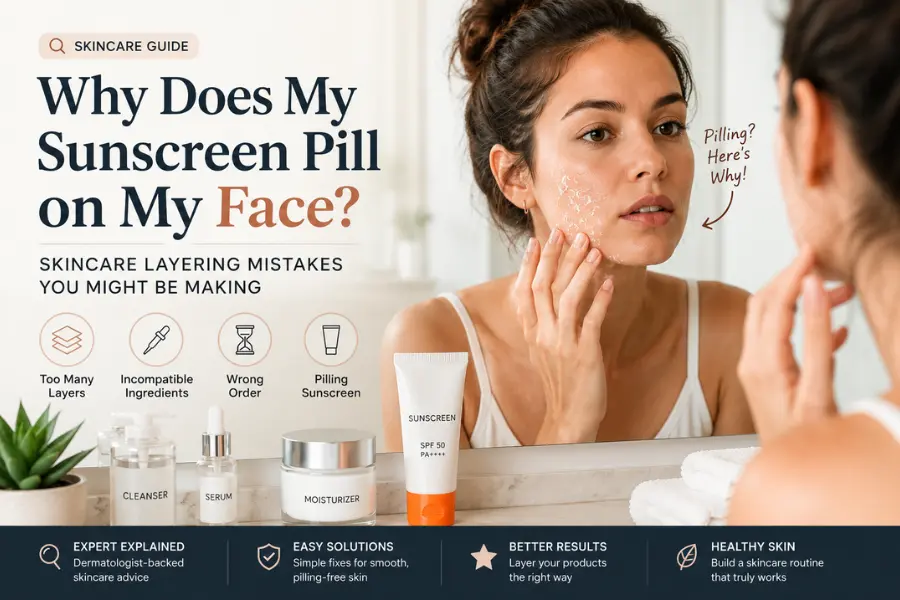
Although sunscreen pilling can be annoying, the good news is that it is usually easy to fix once you understand the causes. Making small changes to your skincare routine, product layering order, and application technique can help your sunscreen apply smoothly without clumping or rolling off your face.
What Is Sunscreen Pilling?
Many people notice their SPF forming tiny flakes or rolling pieces on the skin after application and immediately wonder what went wrong. This skincare issue is called sunscreen pilling. It happens when sunscreen does not settle properly on the skin and instead clumps, flakes, or breaks down into small particles. Rather than forming a smooth, protective layer, the product sits on the skin and begins to separate during application or throughout the day.
What Does Sunscreen Pilling Look Like?
Sunscreen pilling usually appears as:
- Tiny white flakes on the face
- Small balls of product are rubbing off the skin
- Clumps around the cheeks, nose, or jawline
- Product rolling off when touched
- Uneven sunscreen texture under makeup
Some people describe it as their sunscreen balls up on the skin or feels like it is peeling away after blending. This often happens when applying sunscreen over moisturiser, serums, or makeup products.
In many cases, the sunscreen may initially look smooth, but once you start rubbing it in or layering additional products, the SPF begins forming soft rolls or crumbs on the skin surface. This is especially common with thick sunscreens, silicone-based formulas, and overloaded skincare routines.
Why Does Sunscreen Roll Off the Face?
When people experience sunscreen rolling off the face, it is usually because the product cannot properly absorb into the skin. Instead, it mixes with oils, dead skin cells, or other skincare products sitting on the surface. Friction from rubbing the skin can cause the sunscreen to lift and form flakes or small balls.
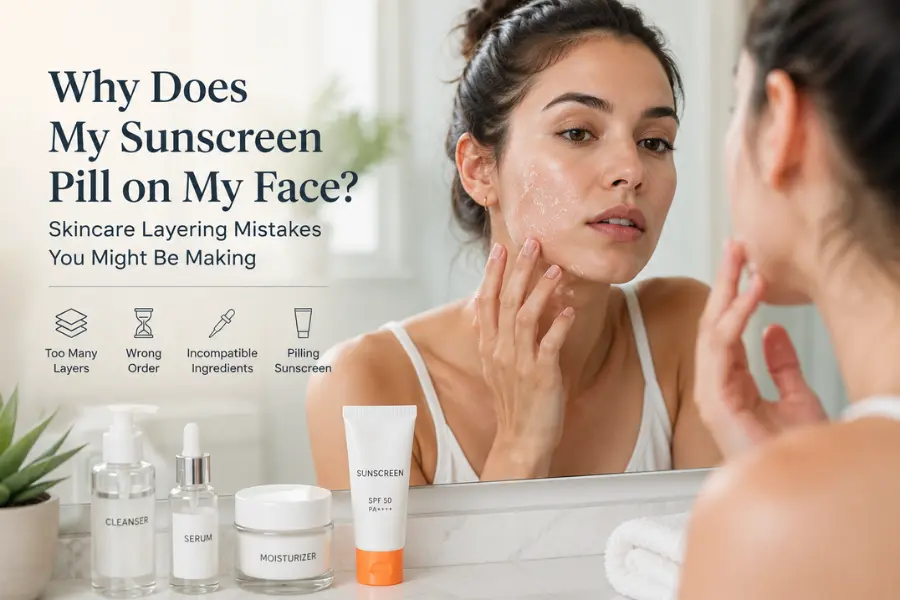
Several factors can contribute to this problem, including:
- Applying too much sunscreen at once
- Layering too many skincare products
- Not waiting between skincare steps
- Mixing incompatible ingredients
- Using heavy or silicone-rich formulas
- Dry skin and dead skin buildup
Even though sunscreen pilling can look messy, it does not necessarily mean the product itself is bad. Often, the issue stems from how products interact with each other on the skin.
Sunscreen Pilling vs Peeling Skin
Many people confuse sunscreen peeling with actual skin peeling, but the two are very different.
Sunscreen Pilling
- Product forms soft flakes or rolls
- Happens after applying skincare or makeup
- Caused by product buildup or friction
- Usually wipes away easily
Peeling Skin
- Actual skin cells are shedding
- Often caused by dryness, irritation, or sun damage
- Skin may feel tight, sensitive, or rough
- Does not disappear by simply rubbing it away
If the flakes feel soft and look like rolled-up product, it is most likely sunscreen pilling rather than peeling skin. Understanding this difference can help you choose the right solution and avoid unnecessary changes to your skincare routine.
Is Sunscreen Pilling Common?
Yes, sunscreen pilling is extremely common, especially among people who follow multi-step skincare routines. Using products like moisturiser, serum, primer, sunscreen, and foundation together can sometimes create too much texture on the skin. When products are layered incorrectly or do not work well together, the sunscreen may clump or roll throughout the day.
The good news is that sunscreen pilling can usually be prevented by improving skincare layering, using compatible products, and applying sunscreen correctly.
Why Does Sunscreen Pill Under Makeup?
A very common skincare frustration is noticing that your base starts to look uneven or flaky right after applying foundation. This issue is known as sunscreen under makeup pilling, and it usually occurs when sunscreen and makeup products do not layer well. Instead of creating a smooth base, the products start to separate, roll, or form tiny clumps on the skin.
When you apply makeup over sunscreen, the texture of both products plays a huge role. If the sunscreen has not fully absorbed or if the foundation formula clashes with it, the result is often visible sunscreen clumping or rolling under the makeup layer.
Primer Conflicts
One of the biggest reasons for sunscreen under makeup pilling is product conflict between sunscreen and primer. Many primers are silicone-heavy, creating a smooth, slippery layer on the skin. If your sunscreen also contains silicones or has not fully set, both layers may start to move against each other.
This mismatch can cause:
- Product lifting off the skin
- Small rolled-up patches under the foundation
- Uneven base texture
When sunscreen and primer do not blend well, they essentially “push” each other off the skin rather than sitting smoothly.
Foundation Texture Issues
Another major cause of pilling is foundation compatibility. Some foundations are thick, matte, or quick-drying, while others are lightweight and hydrating. If the texture of your foundation does not match that of your sunscreen, it can disrupt the SPF layer beneath.
This often leads to:
- Patchy foundation application
- Visible flakes or clumps
- Product separation on the cheeks or forehead
Thick foundations applied over slightly wet or tacky sunscreen are especially prone to causing texture issues.
Powder Over Wet Sunscreen
Applying powder too early is another common mistake. If sunscreen is still damp or not fully absorbed, pressing powder on top can trap moisture underneath and create friction between layers.
This can result in:
- Sunscreen rolling off the face
- Cakey or uneven makeup finish
- Visible dry patches mixed with oily areas
Letting sunscreen fully settle before powder application is very important for a smooth base.
Silicone-Heavy Makeup Products
Many modern makeup products contain silicones to create a smooth, blurred finish. However, when layered incorrectly, silicone-heavy formulas can conflict with sunscreen or primer underneath.
This can lead to:
- Product sliding on the skin
- Small rolled particles form on the surface
- Makeup separating throughout the day
When multiple silicone-based products are stacked without proper absorption time, sunscreen under makeup pilling becomes more noticeable.
How to Apply Makeup Over Sunscreen Properly
To avoid makeup over sunscreen issues like pilling, clumping, or patchiness, application technique matters just as much as product choice.
Wait Time Recommendations
One of the most important steps is allowing sunscreen to fully absorb before applying makeup.
- Wait 1–2 minutes minimum after sunscreen
- Ensure skin feels set, not sticky or wet
- Give thicker sunscreens even more time to settle
This waiting period helps prevent product mixing, which is a major cause of pilling under makeup.
Patting vs Rubbing Techniques
How you apply makeup also affects whether sunscreen will pill underneath.
✔ Patting technique (recommended):
- Gently press foundation into skin
- Use a sponge or brush with soft tapping motions
- Helps preserve the sunscreen layer underneath
✘ Rubbing technique (not recommended):
- Can break down the sunscreen layer
- Causes friction and product lifting
- Increases chances of visible clumping
Using a light patting motion ensures that your makeup over sunscreen application stays smooth, even, and long-lasting without disturbing the SPF layer underneath.
How to Stop Sunscreen Pilling on Your Face
If you are struggling with sunscreen pilling, the good news is that it is usually fixable with a few simple changes in your routine. Once you understand the main triggers, it becomes much easier to prevent sunscreen pilling and achieve a smooth, even finish. The key is to focus on how you layer products, which textures you use, and how you apply your SPF.
Apply Thin Layers
One of the most effective ways to prevent sunscreen pilling is to apply thin, even layers rather than too much product at once. Thick layers of sunscreen or moisturiser often sit on top of the skin and fail to absorb properly, leading to rolling or flaking.
Instead:
- Apply a small amount of sunscreen first
- Spread it evenly across the face
- Build coverage gradually if needed
Thin layers absorb better, reducing the chance of sunscreen clumping on the skin.
Let Each Product Absorb Fully
A major cause of pilling is rushing through your skincare routine. When products are layered too quickly, they mix on the surface instead of settling into the skin.
To avoid this:
- Wait 30–60 seconds between skincare steps
- Let the moisturiser and serum fully sink in
- Only apply sunscreen when skin feels dry, not sticky
This simple habit greatly helps prevent sunscreen pilling during the day.
Use Compatible Skincare Products
Product incompatibility is another common reason for sunscreen pills. Some formulas simply do not work well together, especially when combining different textures.
Be careful with:
- Silicone-based products + water-based sunscreen
- Heavy creams under lightweight SPF
- Layering too many thick products
Using a consistent skincare system with compatible textures can significantly reduce sunscreen pilling on your face.
Avoid Over-Rubbing
Many people unknowingly cause pilling by rubbing their skincare too aggressively. Excess friction breaks down the sunscreen layer, causing it to flake off.
Instead:
- Use gentle smoothing motions
- Pat sunscreen lightly into the skin
- Avoid repeated rubbing over the same area
Being gentle helps maintain an even SPF layer and prevents sunscreen from rolling off the face.
Exfoliate Gently
Dead skin buildup can make sunscreen sit unevenly on the skin surface. When SPF clings to dry patches, it often flakes or clumps.
To improve skin texture:
- Exfoliate 1–2 times per week
- Use mild chemical exfoliants (AHAs or BHAs)
- Avoid harsh scrubs that irritate skin
Smooth skin allows sunscreen to spread evenly and reduces dryness, which can cause pilling.
Choose Lightweight Sunscreens
Heavy or thick sunscreens are more likely to sit on the skin and pill, especially when layered with other skincare products.
Better options include:
- Gel-based sunscreens
- Water-based formulas
- Lightweight, fast-absorbing SPF
These textures blend more easily and are less likely to cause sunscreen clumping or rolling.
Use fewer silicone-based products
Silicones are common in primers, moisturisers, and sunscreens because they create a smooth finish. However, too many silicone-heavy products can increase the risk of layering issues.
To reduce pilling:
- Avoid stacking multiple silicone-based products
- Balance with water-based skincare
- Keep your routine simple and minimal
Reducing silicone overload helps stabilise your routine and makes it easier to consistently prevent sunscreen pilling.
Why Does My Sunscreen Pill on My Face?
If you are struggling with a rough, flaky, or uneven base after applying SPF, you are probably dealing with sunscreen pills on the face. This happens when sunscreen does not blend properly with the skin or other skincare and starts forming tiny clumps or rolling particles instead of sitting smoothly. It is often described as sunscreen clumping or SPF pills on skin, and it usually becomes more visible when makeup is applied on top.
Why Your Sunscreen Peels (And How to Fix It Fast)
The main reason this happens is that different skincare and makeup layers are not interacting well. When products sit on the surface instead of absorbing properly, they start separating, especially when rubbed or layered too quickly.
Applying Too Much Sunscreen
One of the most common causes of sunscreen pilling is using too much product at once. While SPF is essential, applying a thick layer can prevent it from absorbing properly into the skin.
When this happens:
- The excess product sits on the surface
- It mixes with other skincare layers
- It starts rolling into small flakes or balls
Thick application often leads to visible texture and makes sunscreen feel like it is sliding or breaking apart on the skin.
Skincare Products Not Compatible
A major reason for sunscreen and moisturiser pilling is using products that do not match in texture or formulation. This is one of the most overlooked mistakes in skincare layering.
Silicone-Based vs Water-Based Products
Silicone-based products create a smooth film on the skin, while water-based products absorb differently. When these layers are misaligned, they can repel each other rather than blend.
Heavy Creams Under Sunscreen
Thick moisturisers or rich creams can prevent sunscreen from adhering properly to the skin, causing it to lift or roll off rather than setting evenly.
Not Waiting Between Skincare Layers
Many people rush their routine, which is a major trigger for why SPF pills on skin. If your moisturiser or serum is still wet, sunscreen cannot sit properly on top.
Importance of absorption time:
- Serums need time to settle
- Moisturiser should feel slightly dry before SPF
- Sunscreen needs a stable base to adhere properly
This step is crucial for effectively stopping sunscreen pilling.
Rubbing Sunscreen Too Hard
Applying sunscreen with too much force is another common mistake that can cause it to rub off the face.
When you rub aggressively:
- You disturb the product layers underneath
- You create friction that lifts the sunscreen
- The formula starts breaking into small clumps
Gentle application always works better than harsh rubbing when dealing with SPF.
Dead Skin Buildup
Another hidden cause of dry skin and sunscreen pilling is uneven skin texture. When dead skin cells build up on the surface, sunscreen cannot spread evenly.
This leads to:
- Product sticking to dry patches
- Uneven absorption
- Visible flaking or rolling
Regular gentle exfoliation helps smooth the skin, allowing sunscreen to glide on properly without clumping.
Using Too Many Skincare Products
Layer overload is a very common issue in modern routines. Using too many products increases the chance of sunscreen clumping.
When too many layers are stacked:
- Products start competing on the skin
- Each layer may not fully absorb
- Friction increases during application
Simplifying your routine can significantly help prevent sunscreen pilling and improve overall skin finish.
Common Sunscreen Application Mistakes
Even with a high-quality SPF, how you apply it can make a huge difference. Many cases of sunscreen application mistakes lead directly to issues like pilling, uneven coverage, or reduced protection. If your sunscreen feels patchy, rolls off, or does not sit well under makeup, chances are the problem lies not in the product but in the application method.
Applying to Wet Skin
One of the most common sunscreen application mistakes is applying SPF on skin that is still wet from moisturiser, serum, or even water.
When skin is not dry:
- Sunscreen cannot properly adhere to the surface
- Products mix instead of layering
- It increases the chance of sunscreen pilling
For best results, make sure your skin feels dry and settled before applying SPF.
Mixing Products Together
Some people try to save time by mixing sunscreen with moisturiser or foundation. While it may feel convenient, this often leads to sunscreen clumping and uneven protection.
Mixing products can:
- Break down the sunscreen formula
- Reduce SPF effectiveness
- Create texture issues on the skin
Instead, always apply sunscreen as a separate layer for proper protection and a smoother finish.
Using Expired Sunscreen
Using expired sunscreen is another serious, but often-ignored, mistake. Over time, SPF formulas break down and lose stability.
This can result in:
- Poor texture and separation
- Increased sunscreen rolling off the face
- Reduced sun protection effectiveness
Always check the expiration date before use to ensure your sunscreen performs properly.
Using Too Much Moisturiser Underneath
A heavy layer of moisturiser underneath sunscreen can easily lead to pilling and uneven absorption under makeup.
When too much moisturiser is applied:
- It creates a slippery base
- Sunscreen cannot properly bond with skin
- Layers start moving and separating
A light, fast-absorbing moisturiser works much better under SPF.
Reapplying Incorrectly
Reapplying sunscreen incorrectly is another common mistake that affects both protection and texture. Many people rub new layers of makeup or SPF directly over existing makeup or SPF without first preparing the skin.
This can cause:
- Patchy buildup
- Visible clumps or flakes
- Disturbed base makeup
Instead, reapply gently using tapping motions or blotting methods to maintain an even finish without disturbing the skin layers underneath.
Can Moisturiser Cause Sunscreen Pilling?
Yes, in many cases, your moisturiser can be one of the main reasons behind moisturiser and sunscreen pilling. While moisturiser is an essential step in any skincare routine, the type you use, how much you apply, and how you layer it with sunscreen can directly affect whether your SPF sits smoothly or rolls and clumps on your skin.
When sunscreen does not bond properly with the layer underneath, it often leads to visible flakes, tiny balls, or uneven texture, especially on the cheeks, nose, and forehead.
Heavy Moisturisers
One of the biggest triggers of sunscreen pilling on the face is using a heavy or thick moisturiser underneath SPF.
Heavy moisturisers:
- Sit on the skin surface for longer
- Take more time to absorb
- Create a thick layer between skin and sunscreen
When sunscreen is applied over a rich cream, it may not properly adhere to the skin. Instead, it starts sliding over the moisturiser layer, which can lead to sunscreen clumping or rolling during application.
This is especially common in dry-skin routines where very rich creams are used in large amounts.
Occlusive Ingredients
Occlusive ingredients are designed to lock moisture into the skin, but they can sometimes interfere with sunscreen application if not used correctly.
Common occlusive ingredients include:
- Petrolatum
- Dimethicone
- Shea butter
- Mineral oils
While these ingredients are great for hydration, they can leave the skin feeling slippery or sealed. When sunscreen is applied on top, it may struggle to settle properly, increasing the risk of pilling between sunscreen and moisturiser.
This does not mean occlusives are bad. The issue is usually how they are layered in the routine.
Incorrect Layering Order
Another major reason why sunscreen pills on skin is applying products in the wrong order or too quickly without allowing absorption time.
A correct layering routine is important because each product needs time to sit properly before the next one is added.
Common mistakes include:
- Applying sunscreen immediately after thick moisturiser
- Not waiting for skincare to absorb
- Layering multiple heavy products before SPF
When the moisturiser is still wet or sticky, the sunscreen mixes with it rather than forming a stable layer. This leads to visible pilling, uneven texture, and sometimes reduced sunscreen effectiveness.
How to Avoid Moisturiser-Related Pilling
To reduce moisturiser and sunscreen pilling, you can:
- Use a lightweight, fast-absorbing moisturiser
- Apply only a thin layer of cream
- Wait at least 1–2 minutes before sunscreen
- Avoid mixing moisturiser and sunscreen directly
By adjusting your layering routine, you can significantly improve the smoothness of your sunscreen application and prevent unwanted texture throughout the day.
Can Certain Ingredients Cause Sunscreen Pilling?
Yes, certain skincare and sunscreen formulas contain ingredients that can cause pilling, especially when layered with incompatible products. Pilling isn’t always about how much product you use; sometimes it’s the interaction between specific ingredients that creates texture issues like clumping, rolling, or flaking on the skin.
When these ingredients don’t blend well, they can sit on the skin’s surface rather than absorb properly, leading to visible clumping or uneven application.
Silicones
Silicones are among the most common culprits of sunscreen pilling on the face, especially in modern skincare and makeup products.
Silicone-based ingredients (like dimethicone) create a smooth, silky layer on the skin. While this helps improve texture and blur pores, it can also create a barrier that prevents other products from properly bonding.
When silicone-heavy products are layered incorrectly:
- Sunscreen may slide instead of absorbing
- Layers may start separating
- Small rolls or flakes may appear
This is especially noticeable when mixing silicone primers with lightweight sunscreens.
Dimethicone
Dimethicone is a specific type of silicone widely used in moisturisers, sunscreens, and primers.
Although it helps lock in moisture and create a smooth finish, it can also be one of the main reasons for sunscreen and moisturiser pilling when used in excess or combined with incompatible textures.
Dimethicone can:
- Create a slippery surface on the skin
- Prevent even product absorption
- Cause product buildup during rubbing
When too many dimethicone-based products are layered, the skin may struggle to hold everything in place, leading to visible pilling.
Carbomer
Carbomer is a thickening agent used in gels, creams, and sunscreens to improve texture and stability. However, in some cases, it can contribute to why SPF pills on skin.
When carbomer-based formulas are layered with silicone-heavy or oily products, they may not mix well. This mismatch can lead to:
- Product separation
- Small clumps are forming during blending
- Uneven texture on the skin surface
Carbomer itself is not harmful, but its compatibility with other ingredients is crucial.
Oils
Oils are commonly used in moisturisers and facial products, but they can sometimes interfere with sunscreen application, especially when used in excess.
Heavy facial oils may:
- Sit on top of the skin instead of absorbing
- Create a slippery base layer
- Prevent sunscreen from adhering properly
This can increase the chance of sunscreen rolling off the face, particularly in oily skin types or layered routines.
Thick Polymers
Many modern sunscreens and skincare products contain thick polymers to improve spreadability and water resistance. However, these same ingredients can sometimes contribute to pilling.
Thick polymers may:
- Form a film on the skin
- React poorly with other layered products
- Create texture buildup when rubbed
When multiple polymer-heavy products are used together, they can start lifting off the skin during application, leading to visible flakes or clumps.
Not all of these ingredients are “bad”. In fact, they are widely used in skincare for good reasons. The real issues are usually ingredient interactions and layering order. When silicones, oils, carbomers, and thick polymers are combined incorrectly, they increase the chances of sunscreen pilling on the face and reduce the smooth finish of your skincare routine.
How to Layer Skincare Products Without Pilling
One of the most effective ways to stop sunscreen pilling is to follow a proper skincare layering routine. When products are applied in the correct order and given enough time to absorb, they work together more smoothly, reducing the risk of clumping, rolling, or flaking on the skin.
A well-structured skincare routine order helps each product settle properly so your sunscreen can form an even protective layer instead of sitting unevenly on top of other products.
Correct Skincare Order to Prevent Pilling
Here are some correct skincare orders to prevent pilling on the face.
1. Cleanser
Your routine should always start with a clean base. A gentle cleanser removes oil, dirt, and leftover skincare from the skin surface.
- Prepares skin for better absorption
- Prevents product buildup
- Helps reduce uneven texture later
Clean skin allows every product that follows to sit more evenly.
2. Toner
Toner helps rebalance the skin and lightly hydrate it after cleansing. It also improves the absorption of serums and moisturisers.
- Adds light hydration
- Prepares skin for active ingredients
- Helps improve layering performance
Avoid heavy or sticky toners, as they may cause sunscreen to pill on the face when layered incorrectly.
3. Serum
Serums contain active ingredients that target specific skin concerns, such as acne, dryness, or pigmentation.
- Always apply in a thin layer
- Let it fully absorb before the next step
- Avoid layering too many serums at once
Overloading serums can lead to layering mistakes, which may increase the risk of pilling.
4. Moisturiser
Moisturiser locks in hydration and creates a smooth base for sunscreen.
- Use a lightweight, fast-absorbing formula
- Avoid heavy or greasy creams if you are prone to pilling
- Apply a thin, even layer
This step is important because the wrong moisturiser can cause pilling with moisturiser and sunscreen.
5. Sunscreen
Sunscreen should always be the final skincare step before makeup.
- Apply to dry, fully absorbed skin
- Use gentle patting motions instead of rubbing
- Do not mix it with other products
Applying sunscreen correctly is key to preventing sunscreen from rolling off the face and maintaining an even protective layer.
6. Makeup
If you wear makeup, it should always come after sunscreen has fully settled.
- Wait 1–2 minutes after SPF
- Use light layers of foundation
- Prefer patting instead of rubbing techniques
This helps prevent makeup from pilling over sunscreen and keeps your base smooth throughout the day.
Even if you follow the correct skincare routine order, the most important factor is patience. Allowing each layer to absorb properly prevents product from mixing on the surface, reducing the risk of sunscreen pilling on the face and giving you a clean, smooth, and long-lasting finish.
Does Sunscreen Pilling Mean It Is Not Working?
Many people panic when they see their SPF forming flakes or rolling off the skin and immediately wonder, “Does sunscreen still work after pilling?” The good news is that sunscreen pilling does not always mean your sun protection has completely failed. However, it can affect how evenly the sunscreen is applied to your skin, which is very important for proper protection.
Does Sunscreen Still Work After Pilling?
In most cases, sunscreen still offers some level of protection even if sunscreen pilling occurs. The active UV filters are still present on your skin, but they may not be evenly distributed.
This means:
- Some areas may have enough SPF coverage
- Other areas may have thinner or missing protection
- The overall layer may not be smooth or consistent
So, does sunscreen still work after pilling? Yes, in a basic sense, but the protection may not be reliable across the entire face.
SPF Protection Concerns
The biggest concern with sunscreen clumping or pilling is uneven coverage. Sunscreen is designed to form a uniform protective film on the skin, but when it pills:
- The protective layer can break apart
- Certain spots may lose full coverage
- UV protection may become inconsistent
This is especially risky in areas like the nose, cheeks, and forehead, where sun exposure is strongest.
If sunscreen is visibly rolling off or separating, it’s a sign that the application method or product layering needs improvement to ensure proper protection.
When to Reapply Sunscreen
Reapplication becomes very important if your sunscreen has pilled or rubbed off during the day.
You should reapply when:
- You notice visible sunscreen rolling off your face
- Your skin feels uneven or patchy
- You have been sweating or touching your face
- It has been 2–3 hours since the initial application
If your sunscreen has already started pilling, gently remove the uneven layer (if possible) and reapply a fresh, even coat.
For makeup wearers:
- Use light patting motions with SPF
- Try SPF sprays or cushions for touch-ups
- Avoid heavy rubbing over existing makeup
While sunscreen pilling on the face does not automatically mean your SPF is useless, it is a clear sign that the product is not sitting properly on your skin. For best protection, aim for an even, smooth layer that stays stable throughout the day without clumping, rolling, or separating.
When to Change Your Sunscreen
Not every sunscreen works well for every skin type, and sometimes the issue is not your routine. It’s the product itself. If you keep experiencing repeated issues even after adjusting your skincare layering order, it may be time to consider whether your SPF is actually suitable for your skin. Understanding the signs that your sunscreen is not suitable can help you avoid ongoing problems like pilling, breakouts, or uneven makeup application.
Persistent Pilling
One of the clearest signs you need to change your sunscreen is persistent sunscreen pilling, even when you apply it correctly.
If your sunscreen keeps rolling or forming flakes despite:
- Using thin layers
- Waiting between skincare steps
- Avoiding heavy products underneath
Then the formula itself may not be compatible with your skin or routine. Some sunscreens simply do not layer well with certain moisturisers or makeup products, leading to repeated clumping of sunscreen, no matter what you do.
Irritation
If your sunscreen causes redness, stinging, or discomfort, it is a strong indication that it may not be suitable for your skin type.
Signs of irritation include:
- Burning sensation after application
- Red or inflamed patches
- Itching or sensitivity throughout the day
Even if a sunscreen looks fine cosmetically, irritation means your skin is reacting negatively to one or more ingredients. In this case, switching to a gentler formula is important for long-term skin health.
Greasy Texture
A heavy or greasy finish is another common reason people stop using a sunscreen. While some hydration is normal, overly oily sunscreens can feel uncomfortable and affect how other products behave on the skin.
Greasy sunscreen can:
- Sit heavily on the skin surface
- Increase the chances of sunscreen rolling off the face
- Interfere with makeup application
- Make skin feel sticky or congested
If your sunscreen consistently feels too oily or never fully absorbs, it may not be the right match for your skin type.
Makeup Separation
If your foundation or base makeup keeps breaking apart after applying sunscreen, this is a major warning sign.
Makeup separation often looks like:
- Patchy foundation
- Visible texture underneath makeup
- Products sliding or breaking apart
- Uneven finish within minutes of application
This usually means your sunscreen is not compatible with your makeup formulas or is not setting properly before application. In such cases, switching to a lighter or faster-absorbing sunscreen can significantly improve your makeup performance.
If you consistently experience persistent pilling, irritation, greasiness, or makeup separation, your sunscreen may not be suitable for your routine. Choosing a better-matched formula based on your skin type, whether oily, dry, or sensitive, can help you achieve smoother application, better comfort, and more reliable daily sun protection.
FAQs
Here are the most common questions people ask when dealing with sunscreen pilling on the face, along with simple, practical answers to help you fix the issue.
Your sunscreen may roll off your face due to skincare layering mistakes, applying too much product, or using incompatible formulas. When sunscreen does not absorb properly into the skin, it sits on the surface and can slide or form small rolls when rubbed.
Common reasons include:
- Applying sunscreen over wet moisturiser
- Using heavy skincare underneath
- Rubbing the product too aggressively
- Product incompatibility (especially silicone-based layers)
When sunscreen balls up on the skin, it is usually a sign of sunscreen clumping caused by friction or layering issues. Instead of absorbing evenly, the product forms small particles that roll together.
This often happens when:
- Too many skincare layers are applied
- Sunscreen is not given enough time to settle
- The skin surface has product buildup or dryness
Yes, moisturiser and sunscreen pilling is very common. Heavy or thick moisturisers can create a slippery layer that prevents sunscreen from bonding properly to the skin.
This is more likely when:
- You use rich, occlusive creams
- You apply sunscreen too quickly after moisturiser
- The textures of both products are incompatible
Yes, if your sunscreen has visibly pilled or broken apart, it is best to reapply. Pilling can create uneven coverage, leaving some areas unprotected.
Before reapplying:
- Gently remove excess rolled product if possible
- Ensure skin is clean and dry
- Apply sunscreen in a thin, even layer
Sunscreen under makeup pilling occurs when SPF is not fully absorbed or when it conflicts with makeup products like primer or foundation.
Common causes include:
- Applying makeup too soon after sunscreen
- Silicone-heavy primers or foundations
- Powder applied on damp sunscreen
- Rubbing instead of patting makeup into skin
Oily skin does not directly cause pilling, but excess oil can contribute to sunscreen rolling off the face if combined with heavy or incompatible products.
Oily skin may increase pilling risk when:
- Using thick creams or oily moisturisers
- Layering multiple heavy products
- Skipping proper cleansing or exfoliation
Certain ingredients are more likely to contribute to sunscreen clumping when layered incorrectly. These include:
- Silicones (like dimethicone)
- Carbomer (thickening agent)
- Heavy oils
- Thick polymer-based formulas
The issue is usually not the ingredient itself, but how it interacts with other layers of skincare.
You should wait about 1–2 minutes after applying sunscreen before starting makeup. This allows the SPF to settle properly and reduces the risk of makeup pilling on top of sunscreen.
For best results:
- Ensure sunscreen feels dry, not sticky
- Use light patting motions for foundation
- Avoid rubbing or layering too quickly
Proper waiting time helps maintain a smooth base and improves makeup performance throughout the day.
Conclusion
Sunscreen pilling on the face is a common skincare issue, but it usually comes down to a few simple causes rather than the sunscreen being “bad.” Most of the time, pilling happens because of skincare layering mistakes, using too many products, applying sunscreen too quickly, or mixing formulas that do not work well together. Factors like heavy moisturisers, silicone-based products, and rubbing the skin too much can all contribute to sunscreen clumping or rolling on the surface.
The key to preventing this problem is maintaining a proper skincare layering routine. Applying products in the correct order, using thin layers, and allowing each step to fully absorb can make a huge difference in how smoothly your sunscreen sits on the skin. Choosing lightweight, compatible formulas and avoiding overloading your routine also helps reduce texture issues and improve overall skin finish.
It may take some trial and error to find products that work well together, so testing different compatible skincare products is important. Every skin type is different, and what works for one person may not work for another. Most importantly, even if you experience sunscreen pilling, you should not skip sunscreen altogether. Daily SPF use is essential for protecting your skin from UV damage, premature aging, and pigmentation. Instead of stopping sunscreen, focus on adjusting your routine until you find a combination that gives you smooth application and reliable sun protection every day.






- Be Respectful
- Stay Relevant
- Stay Positive
- True Feedback
- Encourage Discussion
- Avoid Spamming
- No Fake News
- Don't Copy-Paste
- No Personal Attacks
- Be Respectful
- Stay Relevant
- Stay Positive
- True Feedback
- Encourage Discussion
- Avoid Spamming
- No Fake News
- Don't Copy-Paste
- No Personal Attacks
